Six of 9 planetary boundaries have been breached because of human activities: Study
Summary
TLDRA recent study reveals that humanity has breached six out of the nine planetary boundaries crucial for Earth's stability. These include climate change, biosphere integrity, land system change, freshwater change, biogeochemical flows, and novel entities like microplastics. The study warns that while crossing these thresholds doesn't guarantee immediate disaster, it significantly raises the risk of irreversible environmental changes. The research calls for stricter environmental limits and advocates for a circular economy to mitigate further damage. This study highlights the urgent need for action to ensure Earth's resilience for future generations.
Takeaways
- 🌍 The concept of planetary boundaries defines safe environmental limits for human activity to maintain Earth's stability and resilience.
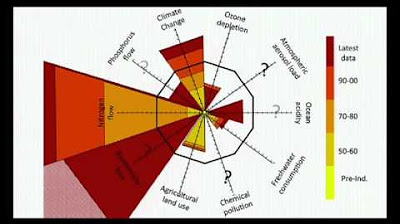
- ⚠️ Humans have breached 6 of the 9 planetary boundaries, increasing the risk of irreversible environmental changes.
- 🌡️ Breached boundaries include climate change, biosphere integrity, land system change, freshwater change, biogeochemical flows, and novel entities.
- 🧬 Biosphere integrity is critically at risk, with extinction rates exceeding safe limits and around 1 million species threatened.
- 🌳 Land system change has pushed forest cover below safe levels, dropping from 75% to 60% of the original forest area.
- 💧 Freshwater boundaries were breached in 1905 and 1929, affecting both blue and green water cycles.
- ♻️ Novel entities, such as microplastics and chemical pollutants, have already exceeded safe limits.
- 🌪️ Boundaries still within safe limits include stratospheric ozone depletion, aerosol loading, and ocean acidification.
- 📊 Researchers used computer simulations to identify thresholds where human activities trigger systemic environmental risks.
- 💡 Solutions include negotiating environmental limits and implementing a strong circular economy to reduce waste and preserve resources.
- 🩺 The study likens boundary breaches to high blood pressure—risk increases but immediate disaster is not guaranteed.
Q & A
What are planetary boundaries and why are they important?
-Planetary boundaries define the environmental limits within which humanity can safely operate to maintain Earth's stability and resilience. Crossing these boundaries increases the risk of dramatic and irreversible changes to the environment that could threaten human civilization.
How many planetary boundaries have been breached according to the recent study?
-The study found that six of the nine planetary boundaries have been breached.
Which boundaries have been breached and what do they involve?
-The breached boundaries are climate change, biosphere integrity, land system change, freshwater use, biogeochemical flows, and novel entities. They involve risks such as rising global temperatures, species extinctions, deforestation, overuse of water, disruption of nutrient cycles, and pollution from chemicals and microplastics.
What analogy did Catherine Richardson use to explain the impact of breaching planetary boundaries?
-She compared it to high blood pressure: just as a BP over 120/80 does not guarantee a heart attack but raises the risk, breaching a planetary boundary increases the risk of triggering processes that could dramatically change Earth's environmental conditions.
When did humans first breach the climate and land system boundaries?
-According to the study, humans first breached the climate and land system boundaries in 1988.
What is the current state of forested land as a percentage of original cover?
-The global forested land has declined from 75% to 60% of its original forest cover, exceeding the safe boundary.
How does the study measure biosphere integrity and what are the findings?
-Biosphere integrity is measured by the extinction rate of species. The safe limit is fewer than 10 extinctions per million species years, but the current rate exceeds 100, with around 1 million of 8 million plant and animal species threatened with extinction.
What does it mean that the planetary boundary for novel entities is calculated to be zero?
-It means humans have fully transgressed this limit, which includes pollutants like microplastics, endocrine disruptors, and organic chemicals, indicating no safe level remains for these entities in the environment.
Which planetary boundaries are still within safe limits?
-Stratospheric ozone depletion, aerosol loading, and ocean acidification are currently within safe boundaries.
What solutions does the study suggest to address breached boundaries?
-The study recommends respecting environmental limits and implementing a strong circular economy to reduce waste and maintain ecosystem health.
Why is breaching individual boundaries concerning even if immediate disaster does not occur?
-Breaching individual boundaries increases the likelihood of processes that could lead to systemic disruptions in Earth's ecosystems, potentially causing long-term and irreversible changes that threaten human civilization.
Outlines

Esta sección está disponible solo para usuarios con suscripción. Por favor, mejora tu plan para acceder a esta parte.
Mejorar ahoraMindmap

Esta sección está disponible solo para usuarios con suscripción. Por favor, mejora tu plan para acceder a esta parte.
Mejorar ahoraKeywords

Esta sección está disponible solo para usuarios con suscripción. Por favor, mejora tu plan para acceder a esta parte.
Mejorar ahoraHighlights

Esta sección está disponible solo para usuarios con suscripción. Por favor, mejora tu plan para acceder a esta parte.
Mejorar ahoraTranscripts

Esta sección está disponible solo para usuarios con suscripción. Por favor, mejora tu plan para acceder a esta parte.
Mejorar ahoraVer Más Videos Relacionados




5.0 / 5 (0 votes)

