EP. 008 (Hukum Termodinamika) | Pembelajaran Termodinamika | Syaiful Karim
Summary
TLDRThis lecture introduces the First Law of Thermodynamics by integrating the concepts of work, heat, and internal energy within closed systems. Beginning with adiabatic processes, it resolves the apparent contradiction of work being path-dependent by introducing internal energy as a state function. The discussion then generalizes to non-adiabatic processes, establishing the fundamental relation between heat, work, and energy change. The lecture further explores infinitesimal formulations and emphasizes the importance of sign conventions. It concludes by examining heat capacity, particularly for gases, highlighting its dependence on conditions like constant volume or pressure and its role in explaining real-world thermal phenomena such as temperature differences between land and sea.
Takeaways
- 😀 The first law of thermodynamics is discussed, focusing on concepts like work and heat in a closed system.
- 😀 An adiabatic process is explained as a process where no heat enters or exits the system, but work can still occur.
- 😀 The relationship between work and heat is emphasized, with the work being a transfer of energy that does not depend on the path, but rather the change in energy within the system.
- 😀 The first law of thermodynamics can be applied to adiabatic and non-adiabatic processes, both of which involve energy changes within the system.
- 😀 The concept of energy within a system is introduced as the sum of various forms of energy such as kinetic, chemical, and electrical energy.
- 😀 Work in an adiabatic system depends on the internal energy of the system and is not a path-dependent function.
- 😀 The concept of internal energy is defined as the total energy contained within a system, influenced by the energy of the system's individual particles.
- 😀 Practical difficulties in creating a perfectly adiabatic process are mentioned, as energy leaks are often inevitable in real-world systems.
- 😀 The capacity to perform work and heat transfer depends on material properties, and this is demonstrated using the example of water versus land in terms of heat absorption and temperature changes.
- 😀 Heat capacity is explained as the relationship between the heat added to a substance and its change in temperature. It differs for materials like water and land.
- 😀 The importance of understanding heat capacity for different types of gases and substances is illustrated, emphasizing that heat capacity is a function of the system's state variables such as temperature and volume.
Q & A
What is the main topic discussed in the lecture?
-The main topic of the lecture is the first law of thermodynamics, focusing on its application to closed systems and adiabatic processes. The lecture also explores the concepts of work, heat, and energy transfer in thermodynamics.
What defines a closed system in thermodynamics?
-A closed system in thermodynamics is one that allows the transfer of heat and work but does not allow the transfer of matter. The number of particles remains constant, and chemical reactions or temperature changes that disrupt equilibrium are not allowed.
What is an adiabatic process?
-An adiabatic process is one where no heat enters or leaves the system. However, work can still be done by or on the system. Essentially, heat transfer is restricted, but energy transfer through work remains possible.
How does the concept of work in thermodynamics differ between adiabatic and non-adiabatic processes?
-In adiabatic processes, work is done without the exchange of heat, and the energy transfer is linked to the system's internal energy. In non-adiabatic processes, heat can enter or exit the system, which influences the work done.
What is the significance of internal energy (U) in thermodynamics?
-Internal energy (U) is the total energy contained within a system, which includes the energy contributed by the system's particles. It can be composed of various types of energy, such as thermal, chemical, magnetic, and electrical energy. In thermodynamics, internal energy is a key function of state.
Why is the differential of work (dW) not considered an exact differential in some cases?
-The differential of work (dW) is not an exact differential because work depends on the path taken during the process. In contrast, the change in internal energy (dU) is an exact differential because internal energy is a state function that only depends on the state of the system, not on the path.
How does the first law of thermodynamics relate to work and heat in a system?
-The first law of thermodynamics states that the change in the internal energy of a system is equal to the heat added to the system minus the work done by the system. Mathematically, this is represented as ΔU = Q - W, where Q is heat and W is work.
What is the role of the caloric capacity of a substance?
-Caloric capacity refers to the amount of heat required to change the temperature of a substance. Different substances have different caloric capacities, meaning they absorb heat differently for the same temperature change. This property is essential for understanding heat transfer and temperature variations in materials.
What is the difference between specific heat at constant volume (Cv) and specific heat at constant pressure (Cp)?
-Specific heat at constant volume (Cv) is the heat capacity of a substance when the volume is kept constant, while specific heat at constant pressure (Cp) is the heat capacity when the pressure is held constant. Cp is typically higher than Cv for gases due to the work done by the gas during expansion at constant pressure.
Why is the first law of thermodynamics important for real-world applications?
-The first law of thermodynamics is crucial for understanding and designing energy systems. It allows for the calculation of energy transformations in engines, refrigerators, and other mechanical systems. The law also aids in predicting how energy is conserved and how heat and work affect internal energy.
Outlines

Esta sección está disponible solo para usuarios con suscripción. Por favor, mejora tu plan para acceder a esta parte.
Mejorar ahoraMindmap

Esta sección está disponible solo para usuarios con suscripción. Por favor, mejora tu plan para acceder a esta parte.
Mejorar ahoraKeywords

Esta sección está disponible solo para usuarios con suscripción. Por favor, mejora tu plan para acceder a esta parte.
Mejorar ahoraHighlights

Esta sección está disponible solo para usuarios con suscripción. Por favor, mejora tu plan para acceder a esta parte.
Mejorar ahoraTranscripts

Esta sección está disponible solo para usuarios con suscripción. Por favor, mejora tu plan para acceder a esta parte.
Mejorar ahoraVer Más Videos Relacionados

BE2103 Thermodynamics in Biosystem Module 3 Segment 4

Thermodynamics Class 11 in 5 Minutes | Chemistry | Quick Revision | NEET, JEE & CBSE |

Termodinamika - Fisika Kelas 11 (Kurikulum 2013 Revisi) - Quipper Video
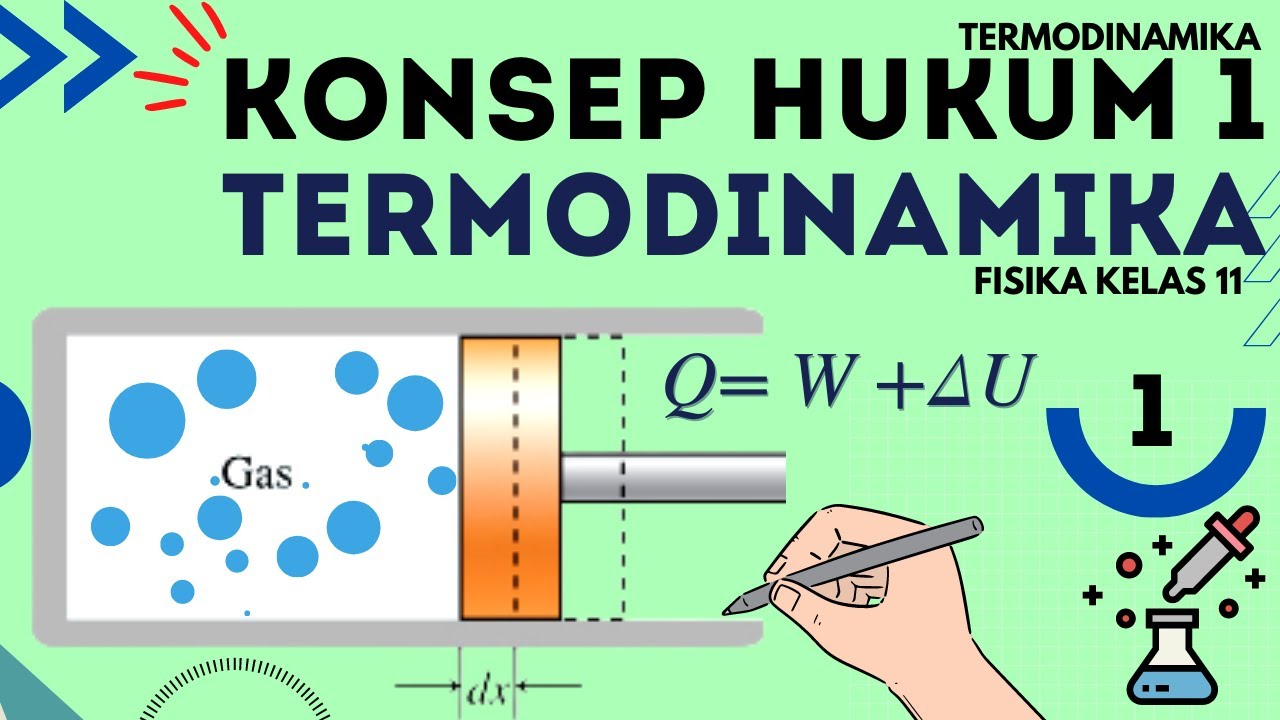
Hukum 1 Termodinamika : Termodinamika Fisika Kelas 11 - Part 1
Hukum Termodinamika, Bagian 1: Energi Dalam dan Hukum Pertama
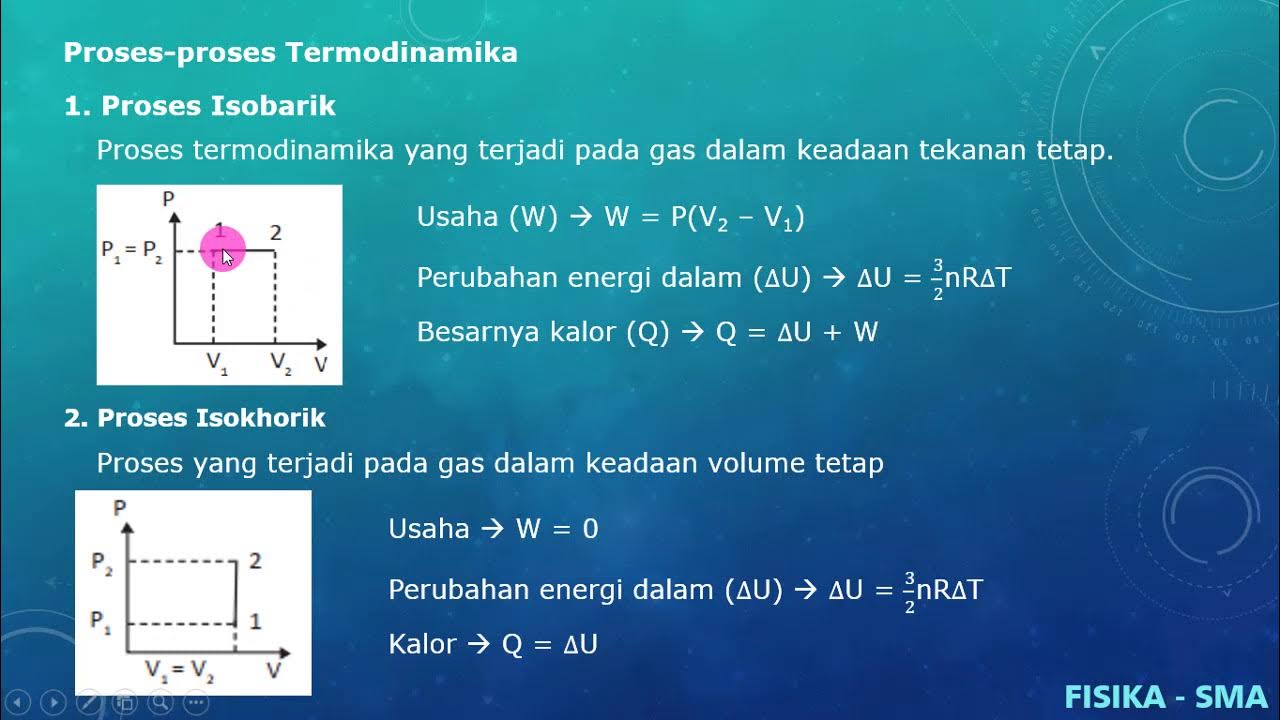
Materi Fisika Kelas 11 Termodinamika
5.0 / 5 (0 votes)

