Tkanki roślinne | Budowa i funkcje tkanek roślinnych | Botanika | Darmowe korepetycje z biologii
Summary
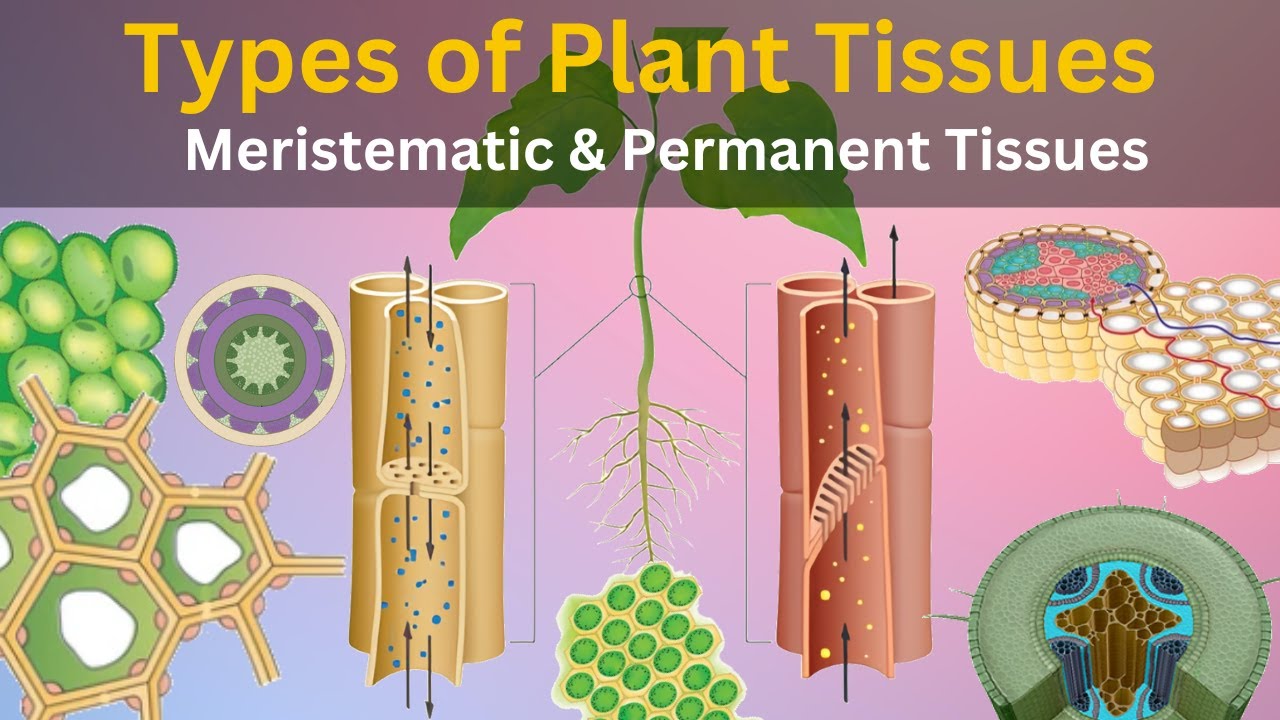
TLDRIn this engaging biology lesson, the host explores plant tissues, dividing them into meristematic (growth) and permanent (non-dividing) tissues. Meristematic tissues drive plant growth in roots, stems, and cambium, while permanent tissues include protective, conductive, ground, and strengthening tissues. Protective tissues like epidermis and cork shield plants, conductive tissues like xylem and phloem transport water and nutrients, and ground tissues such as parenchyma support photosynthesis, storage, and structure. Strengthening tissues, including collenchyma and sclerenchyma, provide rigidity. The video combines clear explanations with visual examples, making complex plant anatomy accessible and memorable for learners.
Takeaways
- 😀 Plant tissues are divided into two main groups: meristematic tissues (growth tissues) and permanent tissues (mature tissues).
- 😀 Meristematic tissues are responsible for rapid cell division and are found in three key areas: root growth zones, shoot tips, and cambium (lateral growth).
- 😀 Permanent tissues are stable and do not change into other tissue types. These include both living and dead cell types.
- 😀 Protective tissues (e.g., epidermis and cork) safeguard the plant from environmental damage, microorganisms, and water loss.
- 😀 The epidermis is made of living cells and serves as the outer layer of plants, often coated with a waxy cuticle to prevent water loss.
- 😀 Cork, a dead tissue, forms a protective layer and features special openings (lenticels) for gas exchange.
- 😀 Vascular tissues (xylem and phloem) transport water, nutrients, and photosynthetic products. Phloem (living tissue) transports nutrients, while xylem (dead tissue) transports water.
- 😀 The phloem consists of sieve tubes, which have perforated walls for nutrient transport, and companion cells that help maintain the function of sieve tubes.
- 😀 Xylem consists of vessels and tracheids, with thickened walls, used for water transport from the roots to the plant's other parts.
- 😀 Ground tissues (e.g., parenchyma, collenchyma, and sclerenchyma) fill spaces within plants and provide functions such as storage, photosynthesis, and structural support.
Q & A
What are the two main groups of plant tissues mentioned in the video?
-Plant tissues are divided into two main groups: meristematic (twórcze) tissues, which actively divide and contribute to growth, and permanent (stałe) tissues, which do not divide and have specialized functions.
Where can meristematic tissues be found in plants?
-Meristematic tissues are found in three main locations: the root apex (for root elongation), the shoot apex (for vertical growth of the plant), and the cambium (for growth in thickness).
What is the primary function of permanent plant tissues?
-Permanent tissues perform specialized functions such as protection, transport of water and nutrients, storage, photosynthesis, and structural support.
What types of cells make up protective tissues, and what is their role?
-Protective tissues include the epidermis (skórka), made of living cells, and cork (korek), made of dead cells. Their role is to protect the plant from water loss, harmful substances, and pathogens.
How do xylem and phloem differ in structure and function?
-Xylem (drewno) is made of dead cells forming vessels and tracheids that transport water from roots to other plant parts. Phloem (łyko) is made of living sieve tube cells and companion cells, transporting products of photosynthesis in various directions.
What are the main types of parenchyma tissues, and what are their functions?
-Parenchyma tissues include fundamental (filling spaces), assimilative (photosynthesis; palisade and spongy types), storage (storing starch and fats), and aerenchyma (air-filled spaces for buoyancy in aquatic plants).
What is the difference between collenchyma and sclerenchyma in plant strengthening tissues?
-Collenchyma (zwarcica) is made of living cells with unevenly thickened walls, providing flexibility and support in young plant parts. Sclerenchyma (twardzica) consists of dead cells with very thick, lignified walls, offering strong structural support and protection.
How are stomata related to the epidermis, and what is their function?
-Stomata are specialized cells in the epidermis forming pores. They allow gas exchange, including carbon dioxide uptake for photosynthesis and oxygen release, and regulate water evaporation.
Why do plant tissues have different levels of cell adhesion and wall thickness?
-Cell adhesion and wall thickness reflect tissue function: tightly packed cells with thick walls, like cork, provide protection and reduce water loss; loosely arranged cells with thin walls, like parenchyma, allow storage, photosynthesis, and gas diffusion.
What role does lignin play in sclerenchyma cells?
-Lignin is a substance that thickens and strengthens cell walls in sclerenchyma, making them very resistant to compression and damage, such as in nut shells or hard fruit parts.
How does the structure of sieve tubes facilitate their function in phloem?
-Sieve tube elements are elongated living cells aligned end to end with perforated transverse walls (sieve plates) that allow the flow of sugars and nutrients. Companion cells maintain their metabolic functions.
In what way does cambium contribute to the plant's growth?
-Cambium is a meristematic tissue that produces new xylem and phloem cells, contributing to the plant's increase in thickness (secondary growth).
Outlines

Esta sección está disponible solo para usuarios con suscripción. Por favor, mejora tu plan para acceder a esta parte.
Mejorar ahoraMindmap

Esta sección está disponible solo para usuarios con suscripción. Por favor, mejora tu plan para acceder a esta parte.
Mejorar ahoraKeywords

Esta sección está disponible solo para usuarios con suscripción. Por favor, mejora tu plan para acceder a esta parte.
Mejorar ahoraHighlights

Esta sección está disponible solo para usuarios con suscripción. Por favor, mejora tu plan para acceder a esta parte.
Mejorar ahoraTranscripts

Esta sección está disponible solo para usuarios con suscripción. Por favor, mejora tu plan para acceder a esta parte.
Mejorar ahoraVer Más Videos Relacionados

Plant Tissues

MACAM-MACAM JARINGAN PADA TUMBUHAN - JARINGAN MERISTEM DAN PERMANEN KELAS 8 SMP

Struktur dan Fungsi Jaringan Pada Tumbuhan

STRUKTUR DAN FUNGSI JARINGAN TUMBUHAN: BIOLOGI 11 SMA
Types of plant tissues, What are plant tissues and functions, What is tissues in plants

#Tissues part-1 (Animated) | Plant Tissues | CBSE CLASS 9 | biology Chapter-6 | NCERT Science
5.0 / 5 (0 votes)

