Mengungkap Kejayaan Sriwijaya: Dari Samudra Hingga Pusat Ilmu Dunia🔥❗
Summary
TLDRSriwijaya, a powerful maritime empire that thrived from the 7th century, controlled crucial trade routes and became a hub of wealth, knowledge, and culture in Southeast Asia. Strategically located between the South China Sea, the Malacca Strait, and the Indian Ocean, it monopolized global maritime trade, facilitated cultural exchanges, and became a center for Buddhist learning. However, shifts in trade routes and military invasions eventually led to its decline. Despite its fall, Sriwijaya’s legacy in maritime power, trade, and intellectual influence continues to inspire modern discussions on global connectivity and economic dominance.
Takeaways
- 😀 Sriwijaya was a powerful maritime empire that controlled key trade routes connecting China, India, and Southeast Asia.
- 😀 The kingdom thrived due to its strategic location at the crossroads of the South China Sea, the Strait of Malacca, and the Indian Ocean.
- 😀 Sriwijaya's wealth and influence were driven by maritime trade, where ships from China, India, Arabia, and Nusantara docked at its ports.
- 😀 The kingdom’s diplomatic and trade relations with China were especially strong, enhancing its image as a key player in global commerce.
- 😀 Sriwijaya also had close cultural and trade ties with India, gaining not only goods but also Hindu and Buddhist cultural influences.
- 😀 The kingdom became a hub for Buddhist learning, with scholars from across Asia visiting to study at its centers of education.
- 😀 Sriwijaya’s rulers supported religious and intellectual development, leading to advances in fields like astronomy, navigation, and linguistics.
- 😀 Its control over the Strait of Malacca made it the gatekeeper of international maritime trade, collecting taxes and regulating the flow of goods.
- 😀 The kingdom’s navy was a crucial component of its military power, securing trade routes and expanding Sriwijaya’s influence across Southeast Asia.
- 😀 Despite its strength, Sriwijaya began to decline due to shifts in global trade routes, external attacks, and internal political instability.
- 😀 Even after its fall, Sriwijaya’s legacy lives on through its influence on religion, culture, and maritime trade in Southeast Asia.
Q & A
What was the main factor behind the success of the Sriwijaya Empire?
-The Sriwijaya Empire’s success stemmed primarily from its strategic geographical location, which allowed it to control key maritime trade routes, such as the Strait of Malacca, and to dominate trade between China, India, and the rest of Southeast Asia. This control over trade routes provided economic wealth, which enabled further military and cultural advancements.
How did Sriwijaya maintain its dominance in maritime trade?
-Sriwijaya maintained its dominance by leveraging its strategic position between the South China Sea, the Malacca Strait, and the Indian Ocean. It implemented a system of port taxes (UPT), ensuring that ships passing through its waters had to stop and pay, thereby controlling trade and ensuring its wealth.
What role did Sriwijaya play in cultural and intellectual exchanges in Southeast Asia?
-Sriwijaya was a major center for Buddhist education and scholarship in Southeast Asia, attracting scholars and monks from China, India, and across Asia. It became a key location for the exchange of ideas, where teachings of Buddhism were studied and translated, contributing to the spread of Mahayana Buddhism in the region.
What evidence supports the early existence of the Sriwijaya Empire?
-The earliest evidence of the Sriwijaya Empire comes from the Kedukan Bukit inscription, dated to 682 CE. The inscription mentions an expedition led by King Dapunta Hiang, indicating that the empire was already leveraging maritime power to expand its territories.
How did Sriwijaya benefit from its position near the Musi River?
-The Musi River provided a dual advantage: it offered a sheltered harbor for ships, protecting them from the open sea, and served as a distribution route for Sumatra’s rich resources, including spices, gold, and camphor, thus facilitating both land and sea trade.
What impact did Sriwijaya’s relationship with China have on its prosperity?
-Sriwijaya’s relationship with China was crucial. The Tang and Song dynasties in China regularly received emissaries and gifts from Sriwijaya, and in return, China sent valuable goods such as silk and ceramics. This helped strengthen Sriwijaya’s economic position and also established it as a respected partner of major world powers.
How did Sriwijaya influence the development of Buddhism in Southeast Asia?
-Sriwijaya played a key role in the dissemination of Buddhism, particularly Mahayana Buddhism. Scholars and monks traveled to Sriwijaya to study, and the empire became a vital hub for the translation and spread of Buddhist texts. Its Buddhist influence extended across Southeast Asia, especially in places like Thailand and Indonesia.
What military strategies helped Sriwijaya expand and maintain its empire?
-Sriwijaya’s military strength was largely based on its formidable naval fleet, which was used to protect trade routes, combat piracy, and conquer strategic coastal territories. The kingdom also conducted naval expeditions to expand its influence, such as the conquest of important ports in the Malay Peninsula and Borneo.
What led to the decline of the Sriwijaya Empire?
-The decline of Sriwijaya was due to several factors: the changing global trade routes that bypassed the Strait of Malacca, invasions such as the Cola Kingdom’s attack in the 11th century, internal conflicts, and the rise of rival powers like the Majapahit Kingdom in Java.
What is the lasting legacy of the Sriwijaya Empire in Southeast Asia?
-Sriwijaya’s legacy is still felt in Southeast Asia, especially in the fields of maritime trade, Buddhist culture, and intellectual exchange. The remnants of its civilization, including inscriptions, statues, and temples, serve as tangible evidence of its once-great influence. Its impact on regional connectivity and its role as a cultural and scholarly center continue to inspire discussions about maritime power and knowledge.
Outlines

Esta sección está disponible solo para usuarios con suscripción. Por favor, mejora tu plan para acceder a esta parte.
Mejorar ahoraMindmap

Esta sección está disponible solo para usuarios con suscripción. Por favor, mejora tu plan para acceder a esta parte.
Mejorar ahoraKeywords

Esta sección está disponible solo para usuarios con suscripción. Por favor, mejora tu plan para acceder a esta parte.
Mejorar ahoraHighlights

Esta sección está disponible solo para usuarios con suscripción. Por favor, mejora tu plan para acceder a esta parte.
Mejorar ahoraTranscripts

Esta sección está disponible solo para usuarios con suscripción. Por favor, mejora tu plan para acceder a esta parte.
Mejorar ahoraVer Más Videos Relacionados

SEJARAH SINGKAT KERAJAAN SRIWIJAYA DAN RAJA RAJANYA

Sejarah Kerajaan Sriwijaya
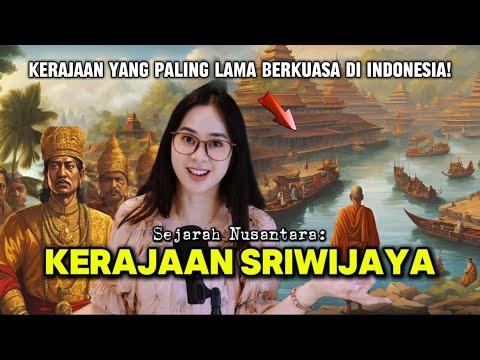
Kerajaan ini berkuasa hampir 1000 tahun di Indonesia? Sejarah Nusantara: Sriwijaya!

SEJARAH KERAJAAN SRIWIJAYA

Sejarah Kelas 10: Kerajaan Sriwijaya, Kerajaan Maritim Pertama di Indonesia

KELAS X - KERAJAAN SRIWIJAYA ( Sejarah )
5.0 / 5 (0 votes)

