Pengolahan Limbah - Definisi Limbah dan Dampaknya bagi Lingkungan
Summary
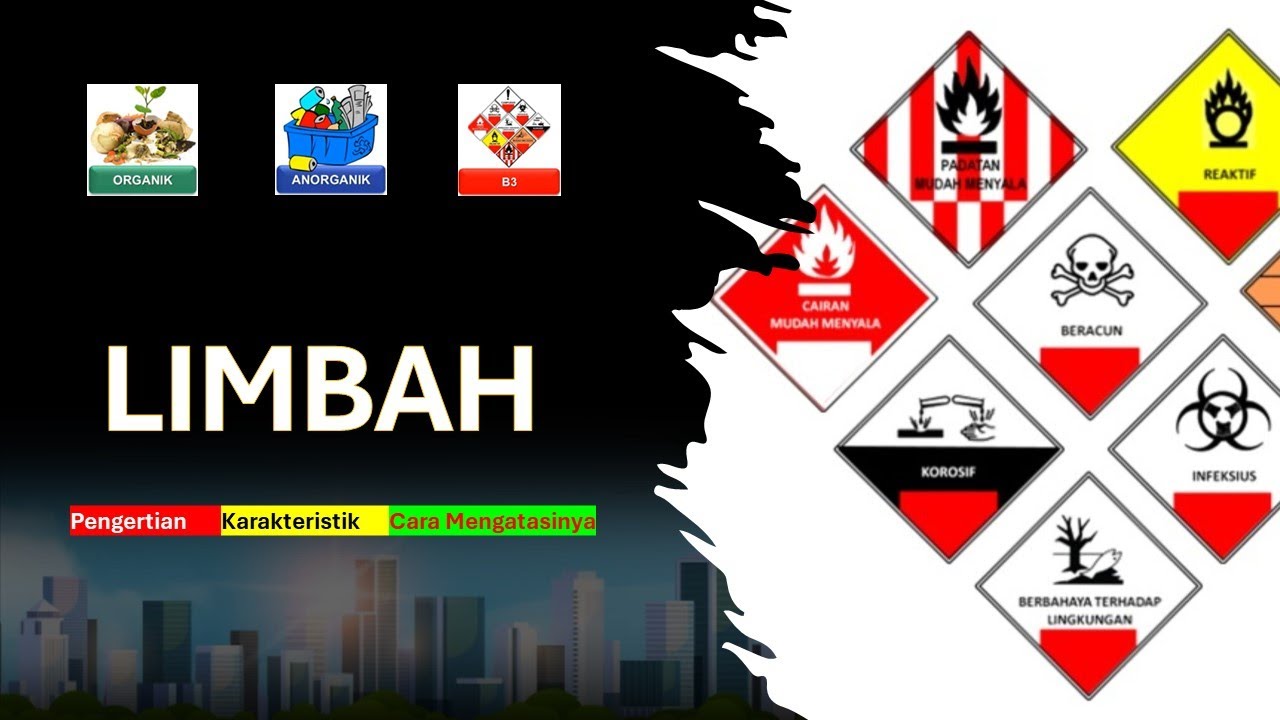
TLDRThis lecture on waste management covers the definition, sources, types, and characteristics of waste, emphasizing its environmental impacts. It explains that waste can be solid, liquid, or gas, and arises from industrial, domestic, or natural sources. Solid waste includes organic and inorganic materials like food scraps and plastics, while liquid waste consists of wastewater and industrial effluents. Gas waste includes pollutants such as carbon monoxide and sulfur oxides. The importance of understanding these different types of waste is highlighted to foster effective management practices that minimize environmental harm.
Takeaways
- 😀 Waste is defined as leftover materials from human activities that can be hazardous to the environment and health.
- 😀 Waste can come from three primary sources: industries, domestic activities, and natural events (e.g., natural disasters).
- 😀 Waste types are categorized into solid, liquid, and gas, each with distinct characteristics and environmental impacts.
- 😀 Solid waste consists of organic (e.g., food scraps) and inorganic (e.g., plastics) materials, and it is commonly referred to as 'trash.'
- 😀 Liquid waste often contains water, dissolved solids, and suspended solids, and can come from domestic, agricultural, or industrial activities.
- 😀 Gas waste includes emissions such as carbon monoxide, nitrogen oxides, and sulfur dioxide, which can contribute to air pollution.
- 😀 Organic waste can decompose naturally, while inorganic waste is non-biodegradable and poses long-term environmental challenges.
- 😀 Hazardous waste, such as toxic chemicals from industries, can be harmful to both humans and wildlife.
- 😀 The environmental impact of waste includes contamination of air, water, and soil, which can affect biodiversity and human health.
- 😀 The management of waste, including separation and proper disposal, is crucial to minimize its negative effects on the environment.
- 😀 Social, economic, and technological factors, as well as geographical location, can influence the types and characteristics of waste produced.
Q & A
What is the definition of waste according to the Ministry of Environment in 2001?
-Waste is defined as residual material from an activity or process that contains hazardous and/or toxic substances, which, due to its properties, concentration, or characteristics, can directly or indirectly pollute the environment, harm living organisms, and pose risks to human health and the survival of other living creatures.
What are the three main sources of waste?
-The three main sources of waste are industrial waste, domestic waste, and natural activities. Industrial waste comes from production processes, domestic waste is generated in residential areas, and natural activities refer to waste produced by natural disasters.
What are the three types of waste based on its physical state?
-Waste can be classified into three types based on its physical state: liquid waste (such as wastewater from households or industries), solid waste (such as food waste, plastic, and paper), and gas waste (such as emissions from industries).
What is the difference between organic and inorganic waste?
-Organic waste consists of substances containing carbon, hydrogen, nitrogen, and oxygen (CHNO), such as food scraps, paper, and wood. Inorganic waste consists of substances that do not contain these elements, such as plastics, metals, and glass.
What is the characteristic of biodegradable and non-biodegradable waste?
-Biodegradable waste is organic material that can decompose through microbial activity, such as food waste and garden waste. Non-biodegradable waste, on the other hand, cannot decompose easily, such as plastics and metals.
What are the key factors that affect the composition of solid waste?
-The key factors affecting the composition of solid waste include the source of the waste (whether industrial, domestic, or other), the system of collection and disposal used, the geographical location, the socio-economic conditions of the community, the seasons, and the level of technological advancement.
What is liquid waste and what are its characteristics?
-Liquid waste refers to wastewater or any waste that contains dissolved or suspended solids. It typically contains more than 90% water. Its characteristics can be assessed physically (e.g., color, pH, turbidity), chemically (e.g., COD, BOD), and biologically (e.g., microbial contamination).
How are liquid waste pollutants classified?
-Liquid waste pollutants are classified into three types: floating materials (such as oil and fats), suspended solids (larger particles visible to the naked eye), and dissolved impurities (which are not visible and can include various chemicals and contaminants).
What are gas pollutants, and how are they categorized?
-Gas pollutants are pollutants released into the air as gases or particles. They are categorized into primary pollutants (emitted directly from sources like vehicles or industrial processes) and secondary pollutants (formed through chemical reactions in the atmosphere, such as smog and acid rain).
What are some common sources of air pollution?
-Common sources of air pollution include transportation (vehicles), power plants that burn fossil fuels, waste incineration, forest fires, and emissions from industrial processes. These sources release harmful gases like carbon monoxide, nitrogen oxides, and sulfur oxides into the atmosphere.
Outlines

Esta sección está disponible solo para usuarios con suscripción. Por favor, mejora tu plan para acceder a esta parte.
Mejorar ahoraMindmap

Esta sección está disponible solo para usuarios con suscripción. Por favor, mejora tu plan para acceder a esta parte.
Mejorar ahoraKeywords

Esta sección está disponible solo para usuarios con suscripción. Por favor, mejora tu plan para acceder a esta parte.
Mejorar ahoraHighlights

Esta sección está disponible solo para usuarios con suscripción. Por favor, mejora tu plan para acceder a esta parte.
Mejorar ahoraTranscripts

Esta sección está disponible solo para usuarios con suscripción. Por favor, mejora tu plan para acceder a esta parte.
Mejorar ahoraVer Más Videos Relacionados



5.0 / 5 (0 votes)

