SFORZO NORMALE IN PILASTRO D'ACCIAIO (9)
Summary
TLDRThis video tutorial focuses on the analysis and calculation of a steel column under axial load. The script walks through the process of verifying the stability of a column by calculating the maximum stress, comparing it with the allowable stress of the material, and considering potential flexural instability. The importance of factors like the column's geometry, material properties (Fe 360 steel), and stress limits are emphasized. The tutorial also addresses how to handle stability issues by applying the Omega method and adjusting the design if necessary to ensure the column can safely bear the load.
Takeaways
- 😀 A steel column is subjected to normal stress (600 kN) with a specific section type (H-profile) and dimensions.
- 😀 The material used is steel of type Fe360, which has a yield strength of 160 N/mm² for profiles with thickness less than 40 mm.
- 😀 The cross-sectional area of the H-profile is 43 cm², and the thickness of the web is 7 mm.
- 😀 The maximum stress in the profile is calculated by dividing the normal force (600 kN) by the cross-sectional area (43 cm²), resulting in 139.53 N/mm².
- 😀 Since the calculated stress is less than the allowable stress (160 N/mm²), the column is verified for normal stress.
- 😀 Buckling instability is also a concern and is evaluated by checking the slenderness ratio (l₀ / a).
- 😀 The critical slenderness ratio (l₀ / a) must be less than 20 to avoid buckling instability.
- 😀 For an initial column height of 3.3 meters, the slenderness ratio is 18.85, which is below the limit of 20, so there is no buckling risk.
- 😀 When the column height is increased to 4.5 meters, the slenderness ratio exceeds 20 (25.7), indicating a potential buckling problem.
- 😀 To address buckling, the Omega method is applied, using a correction factor (Omega) based on the slenderness ratio and the radius of gyration.
- 😀 After recalculating with the Omega factor, the required cross-sectional area is determined to be 68.6 cm², and a suitable H200B profile is selected for the redesign.
Q & A
What is the main focus of the script?
-The main focus of the script is the calculation and analysis of a steel pillar subjected to normal stress. It involves verifying the pillar's stability against buckling and ensuring the chosen section meets the required strength under a given load.
What type of steel is used in this analysis?
-The steel type used in the analysis is Fe360, which has an allowable stress (σ) of 160 N/mm² for sections with a thickness less than 40 mm.
How is the maximum stress (σ) of the pillar calculated?
-The maximum stress (σ) is calculated using the formula σ = N / A, where N is the normal force (600 kN) and A is the cross-sectional area of the pillar. For this case, the calculated stress is 139.53 N/mm².
What is the significance of the value 160 N/mm²?
-The value 160 N/mm² represents the allowable stress for Fe360 steel. If the calculated stress is below this value, the pillar's design is considered safe in terms of material strength.
What does the ratio of l₀ / a represent, and how is it used in the analysis?
-The ratio of l₀ / a represents the slenderness ratio, where l₀ is the critical buckling length and a is the minimal dimension of the pillar's cross-section. It helps determine whether the pillar is prone to buckling instability. A ratio greater than 20 indicates a risk of instability.
What happens when the pillar's height increases from 3.30 m to 4.50 m?
-When the pillar's height increases to 4.50 m, the critical buckling length (l₀) increases to 3.60 m, resulting in a slenderness ratio (l₀ / a) of 25.7. This exceeds the limit of 20, indicating potential buckling instability.
How is the Omega method used in this analysis?
-The Omega method is used to calculate a correction factor for the pillar's design when instability due to buckling is suspected. It incorporates a coefficient (Omega) based on the slenderness ratio (λ), which is used to recalculate the maximum stress the pillar can safely withstand.
What is the significance of the calculated Omega value of 1.83?
-The Omega value of 1.83 is used to adjust the maximum stress in the pillar's design. It accounts for the potential instability and ensures that the pillar is adequately designed to resist buckling under the given load.
Why does the section need to be redesigned after applying the Omega method?
-The section needs to be redesigned because the calculated maximum stress, after applying the Omega method, exceeds the allowable stress for Fe360 steel (160 N/mm²). The redesign ensures that the pillar can safely handle the load without failing.
What was the chosen section after the redesign, and why was it selected?
-After the redesign, the H200B section was chosen. This section has an area of 78.1 cm², which is larger than the required area of 68.6 cm², ensuring that it can handle the applied load while maintaining stability.
Outlines

Dieser Bereich ist nur für Premium-Benutzer verfügbar. Bitte führen Sie ein Upgrade durch, um auf diesen Abschnitt zuzugreifen.
Upgrade durchführenMindmap

Dieser Bereich ist nur für Premium-Benutzer verfügbar. Bitte führen Sie ein Upgrade durch, um auf diesen Abschnitt zuzugreifen.
Upgrade durchführenKeywords

Dieser Bereich ist nur für Premium-Benutzer verfügbar. Bitte führen Sie ein Upgrade durch, um auf diesen Abschnitt zuzugreifen.
Upgrade durchführenHighlights

Dieser Bereich ist nur für Premium-Benutzer verfügbar. Bitte führen Sie ein Upgrade durch, um auf diesen Abschnitt zuzugreifen.
Upgrade durchführenTranscripts

Dieser Bereich ist nur für Premium-Benutzer verfügbar. Bitte führen Sie ein Upgrade durch, um auf diesen Abschnitt zuzugreifen.
Upgrade durchführenWeitere ähnliche Videos ansehen
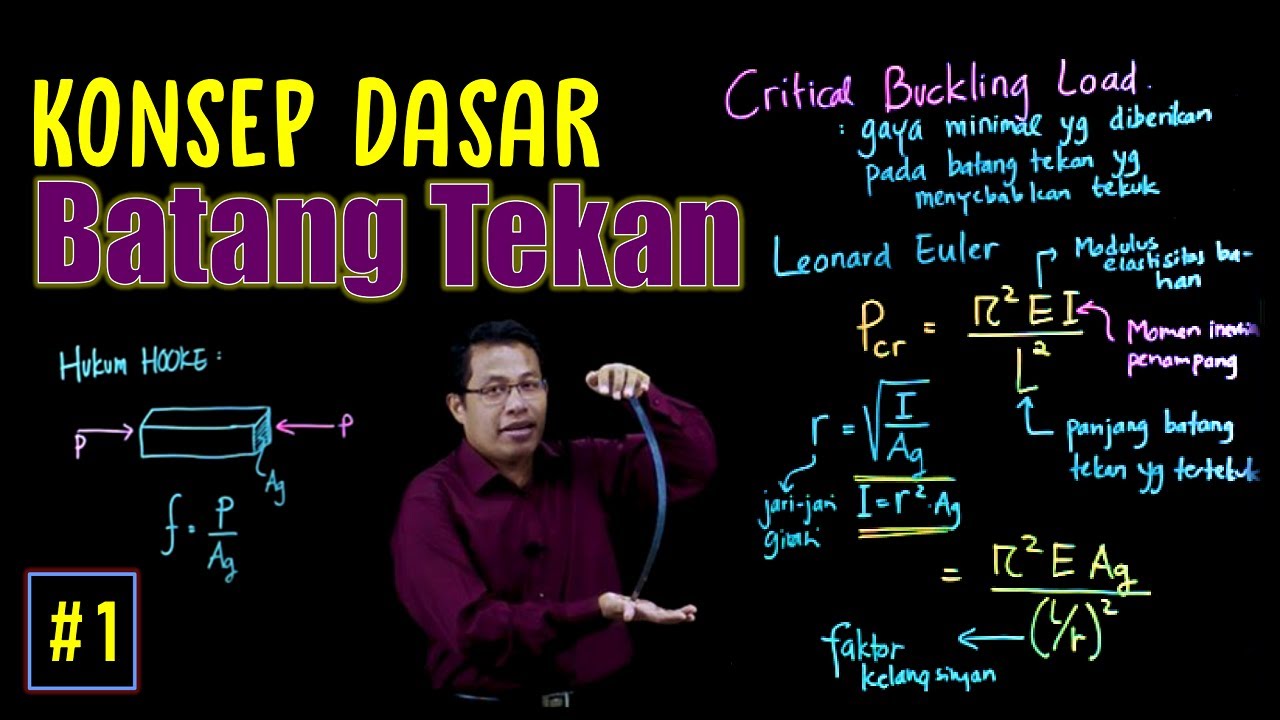
Konsep Dasar Batang Tekan & Euler Buckling Load | Struktur Baja | Lightboard

Example Timber Design Compression Member by dRBI

[Struktur Baja 2]: Perhitungan Sambungan Balok-Kolom Baja

SAP2000 : Teori Pengantar Struktur Portal & Truss 2D - Hinawan T. Santoso, ST, MT
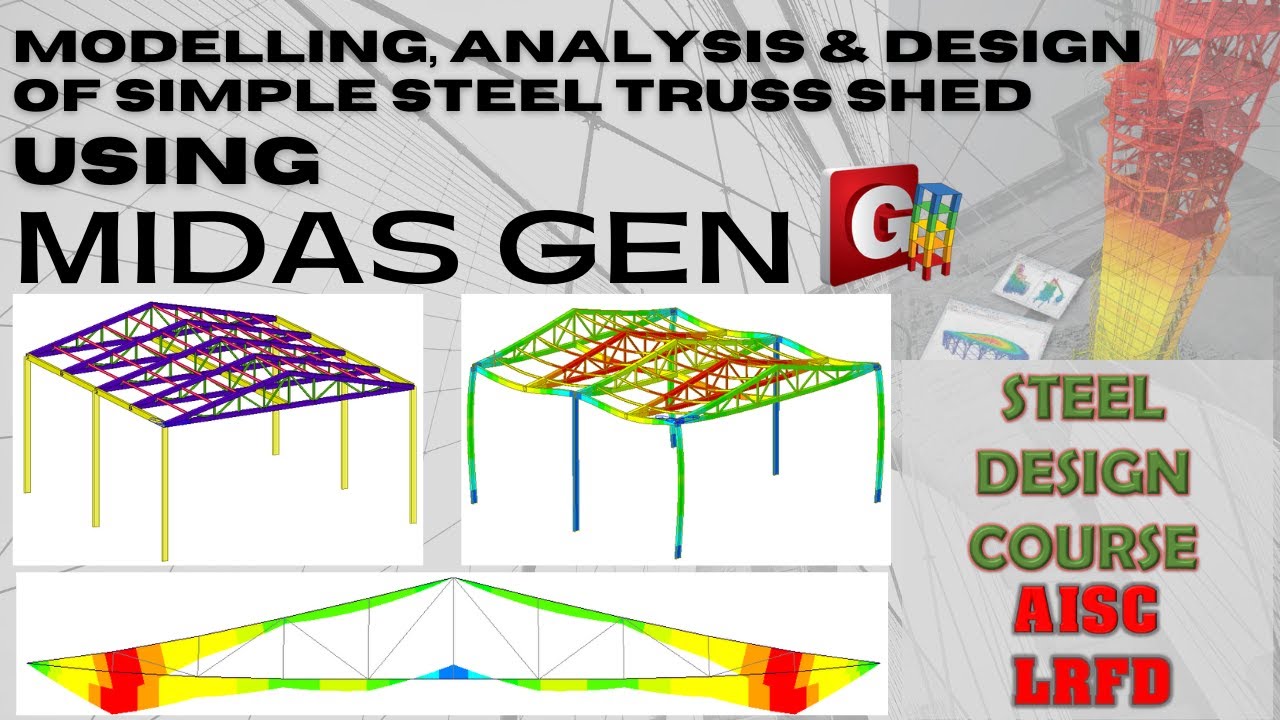
Steel Structures: Analysis/Design Course using MIDAS GEN - SIMPLE STEEL TRUSS SHED (Part 1)

Steel Column Design (EC3) Summary by dRBI
5.0 / 5 (0 votes)

