Materi Konsep Dasar Pengujian Hipotesis
Summary
TLDRThis lecture explains the fundamental concepts of hypothesis testing in statistics. It covers the importance of formulating hypotheses, understanding the difference between null and alternative hypotheses, and the types of hypotheses in research: descriptive, comparative, and associative. The speaker also discusses one-tailed vs. two-tailed tests, errors in hypothesis testing (Type I and Type II), and methods for estimating population parameters, including point and interval estimates. The session concludes with the significance of hypothesis testing in drawing accurate conclusions in research.
Takeaways
- 😀 Hypothesis testing is a statistical method used to estimate population parameters through sample data.
- 😀 The first step in hypothesis testing is identifying the research interest and defining the problem.
- 😀 The null hypothesis (H0) assumes no difference between the sample statistic and population parameter.
- 😀 The alternative hypothesis (H1) suggests that there is a difference or relationship in the data.
- 😀 Hypotheses must be clearly defined in research to guide decision-making on accepting or rejecting them.
- 😀 The process of hypothesis testing includes data collection, analysis, and interpreting results to either accept or reject the hypothesis.
- 😀 There are three main types of hypotheses: descriptive, comparative, and associative.
- 😀 Descriptive hypotheses make assumptions about a specific value of a variable, like the lifespan of a lightbulb.
- 😀 Comparative hypotheses compare values between different groups or samples, such as the lifespan of two brands of lightbulbs.
- 😀 Associative hypotheses explore relationships between variables, such as the link between leadership style and work effectiveness.
- 😀 Type I error occurs when a true null hypothesis is incorrectly rejected, while Type II error occurs when a false null hypothesis is not rejected.
- 😀 Point estimates provide a single value for a parameter but with lower confidence, whereas interval estimates offer a range with higher confidence.
Q & A
What is hypothesis testing in statistics?
-Hypothesis testing in statistics is a method used to infer or estimate a population parameter by testing a statement about that parameter. It involves determining whether a hypothesis about a population is supported by sample data.
What is the importance of formulating a hypothesis in research?
-Formulating a hypothesis is crucial because it provides a clear research direction and defines what is being tested. It impacts the design of the study and helps in interpreting results, leading to informed decision-making.
What are the two main types of hypotheses in hypothesis testing?
-The two main types of hypotheses are the null hypothesis (H0), which assumes no difference or relationship between variables, and the alternative hypothesis (H1), which suggests that there is a difference or relationship.
What is the difference between the null hypothesis (H0) and the alternative hypothesis (H1)?
-The null hypothesis (H0) suggests that there is no effect or difference, while the alternative hypothesis (H1) asserts that there is a significant effect or difference between the variables being tested.
Why is it important to understand the distinction between one-tailed and two-tailed tests?
-Understanding the distinction is important because it influences how the hypothesis is tested. In a one-tailed test, the hypothesis predicts a specific direction of the effect, while in a two-tailed test, the hypothesis does not predict the direction but only the existence of a difference.
What are the three types of hypotheses mentioned in the script?
-The three types of hypotheses mentioned are descriptive hypotheses, comparative hypotheses, and associative hypotheses. Descriptive hypotheses involve a single variable, comparative hypotheses compare two or more groups, and associative hypotheses explore relationships between variables.
What is a descriptive hypothesis, and how does it differ from a comparative hypothesis?
-A descriptive hypothesis proposes a prediction about a single variable without comparing it to others. In contrast, a comparative hypothesis compares two or more groups or conditions to determine if there is a difference between them.
What are Type 1 and Type 2 errors in hypothesis testing?
-Type 1 error occurs when the null hypothesis is incorrectly rejected, while Type 2 error occurs when the null hypothesis is incorrectly accepted. Both errors reflect incorrect decisions in hypothesis testing.
What is the difference between point estimate and interval estimate?
-A point estimate provides a single value as an estimate of a population parameter, while an interval estimate provides a range of values, giving more confidence that the true parameter lies within that range.
How do we decide whether to use a one-tailed or two-tailed test?
-The choice between a one-tailed and a two-tailed test depends on the hypothesis. If the hypothesis specifies a direction (e.g., greater than or less than), a one-tailed test is used. If the hypothesis only suggests a difference without specifying direction, a two-tailed test is chosen.
Outlines

Dieser Bereich ist nur für Premium-Benutzer verfügbar. Bitte führen Sie ein Upgrade durch, um auf diesen Abschnitt zuzugreifen.
Upgrade durchführenMindmap

Dieser Bereich ist nur für Premium-Benutzer verfügbar. Bitte führen Sie ein Upgrade durch, um auf diesen Abschnitt zuzugreifen.
Upgrade durchführenKeywords

Dieser Bereich ist nur für Premium-Benutzer verfügbar. Bitte führen Sie ein Upgrade durch, um auf diesen Abschnitt zuzugreifen.
Upgrade durchführenHighlights

Dieser Bereich ist nur für Premium-Benutzer verfügbar. Bitte führen Sie ein Upgrade durch, um auf diesen Abschnitt zuzugreifen.
Upgrade durchführenTranscripts

Dieser Bereich ist nur für Premium-Benutzer verfügbar. Bitte führen Sie ein Upgrade durch, um auf diesen Abschnitt zuzugreifen.
Upgrade durchführen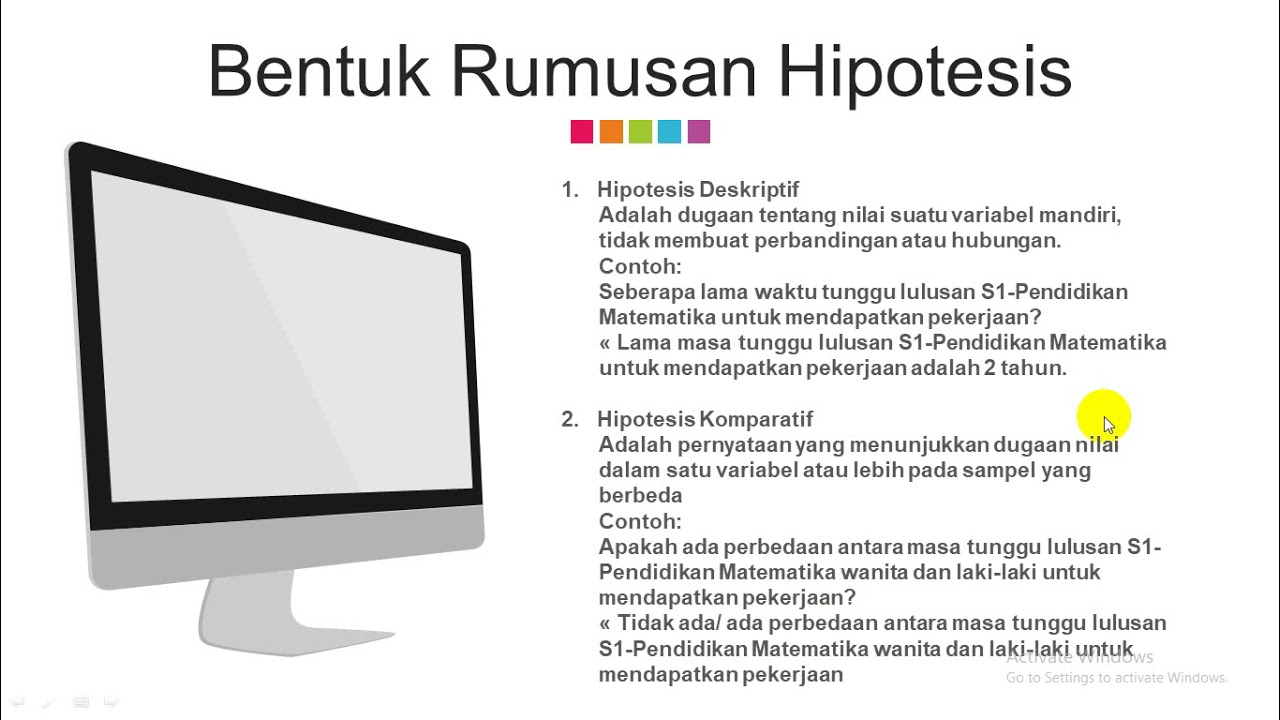




5.0 / 5 (0 votes)

