🛑CATTELL'S 16 PERSONALITY FACTORS 👉 Mental Health
Summary
TLDRPsychologist Raymond Cattell developed a groundbreaking theory on personality, proposing a taxonomy of 16 distinct traits to explain individual differences. His work, grounded in scientific methods, uses factor analysis to identify key personality dimensions such as emotional stability, dominance, and warmth. The 16PF questionnaire, based on these traits, is widely used in career counseling, business, and clinical assessments. Cattell’s approach, which blends research with practical applications, offers a comprehensive framework for understanding human behavior and guiding decisions in areas like personnel selection and therapy.
Takeaways
- 😀 Cattell's 16PF questionnaire is a widely used tool in psychology for assessing personality traits, often applied in career counseling, business, and clinical diagnosis.
- 😀 Raymond Cattell developed a taxonomy of 16 personality traits, providing a structured way to assess individual differences in personality.
- 😀 Cattell's approach to personality emphasizes that traits are not extremes but exist on a continuum, with individuals scoring higher or lower on each of the 16 factors.
- 😀 The 16PF questionnaire is used in various fields, including personnel selection, education, and therapy planning, helping to predict behavior and assess mental health.
- 😀 Cattell was inspired by scientific advancements of the early 20th century, such as electricity and cars, and aimed to apply similar scientific methods to study the human mind.
- 😀 Cattell's work in personality psychology built upon the factor analysis techniques pioneered by Charles Spearman, refining these methods to identify key personality traits.
- 😀 The trait theory of personality suggests that human personality is composed of broad traits or dispositions, and Cattell focused on identifying and organizing these traits.
- 😀 The initial trait theories, like Allport's, struggled with practicality due to an overwhelming number of traits; Cattell's method helped simplify and organize these traits into 16 key factors.
- 😀 Cattell's 16 personality factors include traits such as emotional stability, dominance, warmth, openness to change, and social boldness, among others.
- 😀 The 16PF personality test uses forced-choice questions to assess these traits, with scores falling on a continuum between high and low extremes for each factor.
Q & A
What was Raymond Cattell's major contribution to personality psychology?
-Raymond Cattell developed a taxonomy of 16 different personality traits, which he used to describe and explain individual differences in personality. His work led to the creation of the 16 Personality Factor Questionnaire (16PF), a widely used tool for personality assessment.
What is the 16 Personality Factor Questionnaire (16PF) used for?
-The 16PF is used in various fields such as career counseling, education, business, and clinical psychology. In business, it is often employed for personnel selection, particularly for choosing managers. It is also used for assessing anxiety, adjustment, and behavioral problems in clinical settings.
How did Cattell use factor analysis in his research?
-Cattell applied factor analysis, a statistical technique developed by Charles Spearman, to identify related personality traits. This allowed him to reduce a large list of traits into 16 core personality factors, making it easier to study and understand human personality.
What is the trait theory of personality?
-The trait theory of personality suggests that human personality is made up of broad traits or dispositions. These traits are relatively stable over time and help predict behavior. According to this theory, individuals vary in the degree to which they exhibit certain traits.
How did Cattell improve upon Gordon Allport's approach to personality traits?
-Gordon Allport initially identified over 4,000 words in the English language to describe personality traits. Cattell improved on this by reducing the list to 171 traits through careful analysis, eliminating redundant or uncommon terms, and ultimately using factor analysis to identify the 16 key personality factors.
What does the continuum of personality traits mean in Cattell’s theory?
-Cattell’s theory posits that personality traits exist on a continuum. This means each person has varying degrees of each trait, so they may score high on some traits and low on others. There are no absolute extremes in personality, but rather a range for each factor.
Can you give examples of the personality traits identified by Cattell?
-Examples of Cattell's 16 personality traits include: abstractedness (imaginative vs. practical), dominance (forceful vs. submissive), emotional stability (calm vs. high-strung), warmth (outgoing vs. reserved), and self-reliance (self-sufficient vs. dependent).
How is the 16PF questionnaire structured?
-The 16PF questionnaire consists of forced-choice questions where the respondent must select one of three alternatives. The responses are then analyzed to determine the individual’s position on the continuum of each of the 16 personality traits.
What are some applications of the 16PF test in professional settings?
-In professional settings, the 16PF is used for career counseling, leadership development, team-building exercises, and personnel selection. It helps employers assess potential employees' personality traits, which can influence their suitability for specific roles or work environments.
What is the validity of the 16PF questionnaire based on current research?
-Studies have supported the validity of the 16PF, particularly in areas such as career development and personality assessment. The test has been shown to provide reliable results when used for career counseling, clinical diagnosis, and other professional purposes.
Outlines

Dieser Bereich ist nur für Premium-Benutzer verfügbar. Bitte führen Sie ein Upgrade durch, um auf diesen Abschnitt zuzugreifen.
Upgrade durchführenMindmap

Dieser Bereich ist nur für Premium-Benutzer verfügbar. Bitte führen Sie ein Upgrade durch, um auf diesen Abschnitt zuzugreifen.
Upgrade durchführenKeywords

Dieser Bereich ist nur für Premium-Benutzer verfügbar. Bitte führen Sie ein Upgrade durch, um auf diesen Abschnitt zuzugreifen.
Upgrade durchführenHighlights

Dieser Bereich ist nur für Premium-Benutzer verfügbar. Bitte führen Sie ein Upgrade durch, um auf diesen Abschnitt zuzugreifen.
Upgrade durchführenTranscripts

Dieser Bereich ist nur für Premium-Benutzer verfügbar. Bitte führen Sie ein Upgrade durch, um auf diesen Abschnitt zuzugreifen.
Upgrade durchführenWeitere ähnliche Videos ansehen
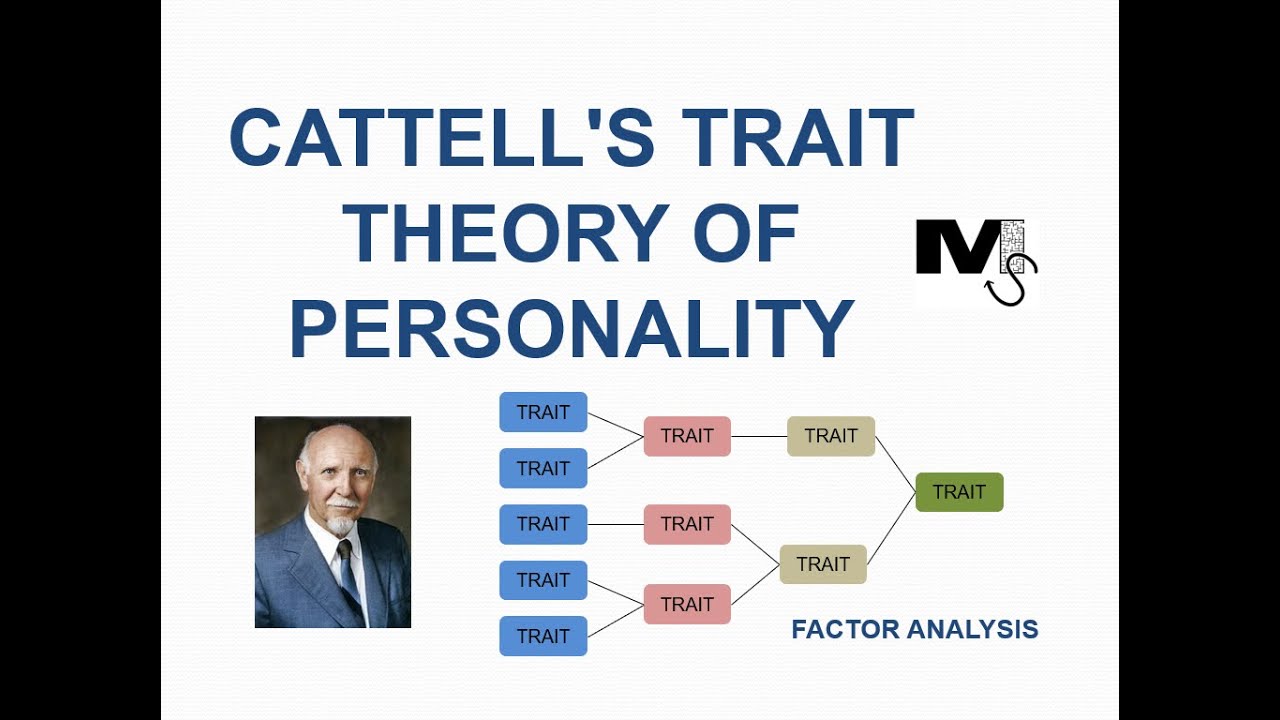
Cattell Trait Theory of Personality - Simplest Explanation Ever
Teori Kepribadian Raymond Cattell: 16 Personality Factors

TM-9 Psi Kepribadian (FKP)
Mari Mengenal Teori Psikologi Individual Gordon Allport

PSIKOLOGI KEPRIBADIAN | TEORI KONSTITUSI SHELDON | #psikologi #materi

Eysenck’s theory of the criminal - Forensic Psychology [AQA ALevel]
5.0 / 5 (0 votes)

