Ángulos entre paralelas
Summary
TLDRIn this educational video, the concept of angles formed by a transversal intersecting parallel lines is explained in depth. The presenter introduces the types of angles, such as corresponding, opposite by the vertex, alternate internal, alternate external, and adjacent angles. Emphasis is placed on understanding their properties, like equality or supplementary nature, and their respective relationships when parallel lines and a transversal are involved. The video also includes practical examples and exercises to help viewers identify and apply these angle types. The session concludes with encouragement to explore additional content for further learning.
Takeaways
- 😀 Angles between parallel lines are formed when a transversal intersects two parallel lines, creating pairs of angles.
- 😀 Parallel lines are lines that lie on the same plane and never intersect, no matter how far they are extended.
- 😀 A transversal is a line that intersects two or more lines at distinct points, and it can form various angles with those lines.
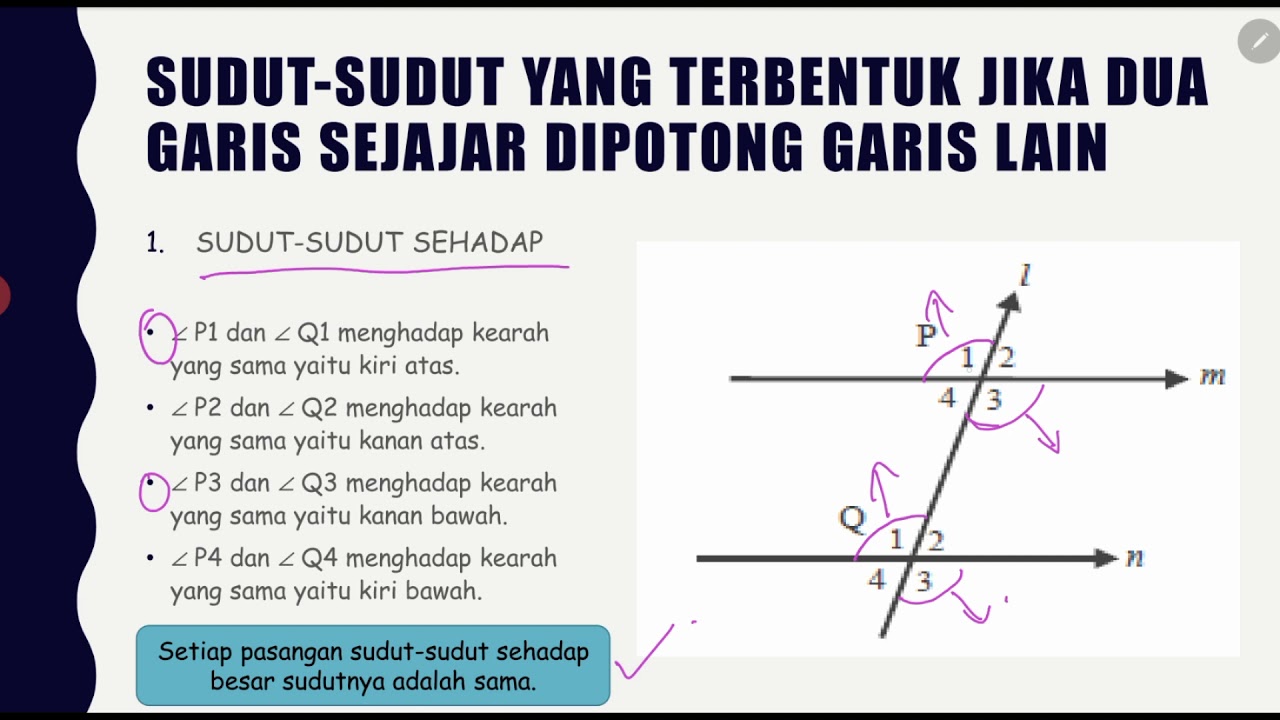
- 😀 Corresponding angles are pairs of angles in the same relative position when a transversal intersects two parallel lines. These angles are equal.
- 😀 Vertically opposite angles share a common vertex but have non-shared sides. These angles are equal to each other.
- 😀 Alternate interior angles are formed between two parallel lines and on opposite sides of a transversal. These angles are also equal.
- 😀 Alternate exterior angles are formed outside the parallel lines and on opposite sides of the transversal. They are equal.
- 😀 Consecutive interior angles (also called co-interior angles) are on the same side of the transversal and inside the parallel lines. These angles are supplementary, meaning they sum to 180°.
- 😀 Consecutive exterior angles are outside the parallel lines and on the same side of the transversal. They are also supplementary.
- 😀 Adjacent angles share a common vertex and one common side. When they are between parallel lines, they are supplementary and sum to 180°.
Q & A
What are parallel lines?
-Parallel lines are two lines in the same plane that never intersect, no matter how far they are extended in either direction.
What is a transversal line?
-A transversal line is a line that intersects two or more lines at distinct points.
What are angles between parallel lines?
-Angles between parallel lines are pairs of angles formed when a transversal intersects two parallel lines.
What are corresponding angles and how can we identify them?
-Corresponding angles are pairs of angles that occupy the same relative position at each intersection where a transversal crosses parallel lines. They are equal in measure.
What does it mean for angles to be opposite by the vertex?
-Angles opposite by the vertex share the same vertex but do not share any sides. These angles are always equal.
How are alternate interior angles defined?
-Alternate interior angles are angles that lie between the two parallel lines and on opposite sides of the transversal. They are equal in measure.
What are alternate exterior angles?
-Alternate exterior angles are angles located outside the parallel lines and on opposite sides of the transversal. These angles are also equal.
What are consecutive interior angles (also called collinear or supplementary angles)?
-Consecutive interior angles lie between the parallel lines on the same side of the transversal. They are not equal but their measures add up to 180°.
What are adjacent angles?
-Adjacent angles are angles that share a vertex and one side. If they are between parallel lines, they are supplementary and their measures sum to 180°.
How can we determine the measure of an angle if one angle is known?
-By identifying the relationship (corresponding, alternate interior, alternate exterior, opposite by vertex, consecutive interior, or adjacent), you can use the rules of equality or supplementary sums to calculate unknown angles.
Why do alternate interior and corresponding angles have the same measure?
-Because of the geometric properties of parallel lines cut by a transversal: corresponding angles share the same relative position, and alternate interior angles mirror each other across the transversal.
How are consecutive interior (collinear) angles related to supplementary angles?
-Consecutive interior angles always add up to 180° because they form a straight line along the transversal when inside the parallel lines.
Outlines

هذا القسم متوفر فقط للمشتركين. يرجى الترقية للوصول إلى هذه الميزة.
قم بالترقية الآنMindmap

هذا القسم متوفر فقط للمشتركين. يرجى الترقية للوصول إلى هذه الميزة.
قم بالترقية الآنKeywords

هذا القسم متوفر فقط للمشتركين. يرجى الترقية للوصول إلى هذه الميزة.
قم بالترقية الآنHighlights

هذا القسم متوفر فقط للمشتركين. يرجى الترقية للوصول إلى هذه الميزة.
قم بالترقية الآنTranscripts

هذا القسم متوفر فقط للمشتركين. يرجى الترقية للوصول إلى هذه الميزة.
قم بالترقية الآنتصفح المزيد من مقاطع الفيديو ذات الصلة

Sudut pada Dua Garis Sejajar Kelas 7
Kedudukan Dua Garis & Hubungan Antara Sudut dan Garis Kelas 7 SMP

ÂNGULOS CORRESPONDENTES | ÂNGULOS FORMADOS POR RETAS PARALELAS CORTADAS POR UMA TRANSVERSAL|

HUBUNGAN SUDUT-SUDUT PADA DUA GARIS SEJAJAR YANG DIPOTONG OLEH SATU GARIS
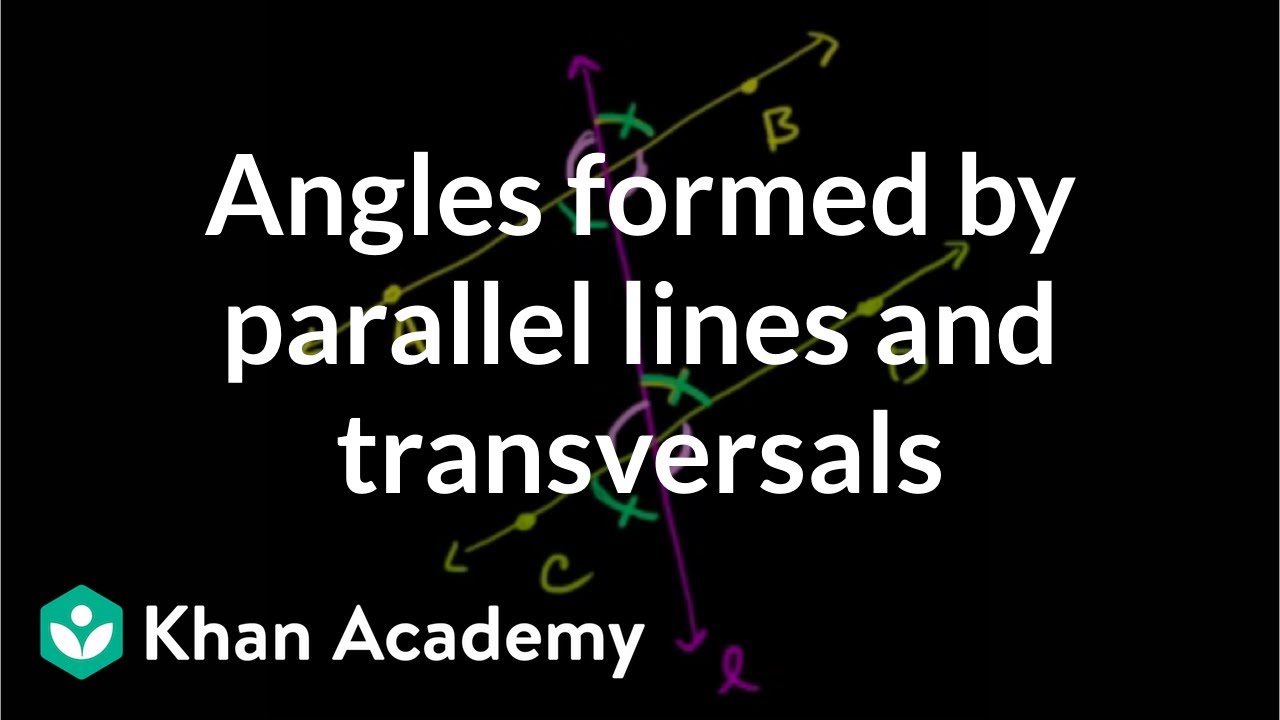
Angles formed by parallel lines and transversals | Geometry | Khan Academy
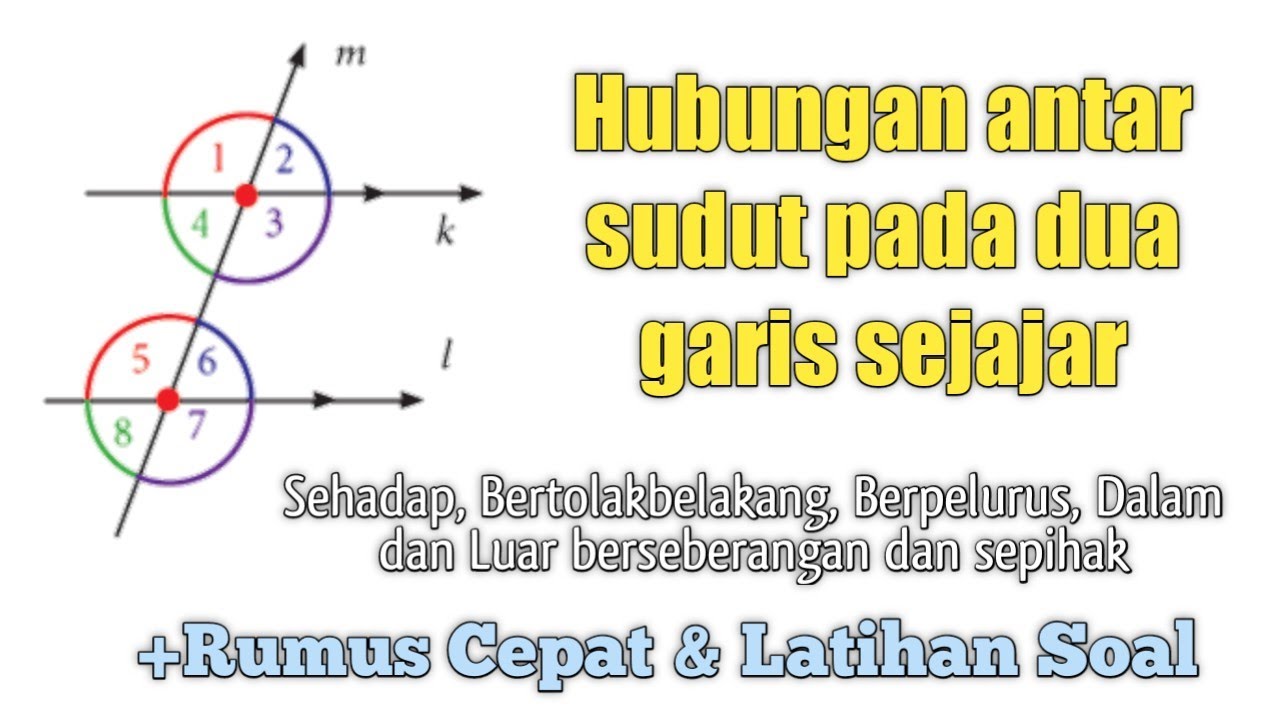
Kupas Tuntas Sudut dan Garis (Sehadap, Bertolak belakang, dalam berseberangan dll)
5.0 / 5 (0 votes)

