ESTADOS FÍSICOS DA MATÉRIA | QUER QUE DESENHE | DESCOMPLICA
Summary
TLDRIn this video, the host explains the three physical states of matter—solid, liquid, and gas—through an engaging and easy-to-understand breakdown. The video explores how the energy and particle arrangement of matter change between these states, offering clear examples. The host also introduces terms like fusion, vaporization, and condensation, as well as the concept of sublimation. Additional details are given about types of vaporization, including evaporation, boiling, and calefaction, with relatable examples. Viewers are encouraged to download a study map and engage with the content through likes, subscriptions, and comments.
Takeaways
- 😀 Matter consists of tiny particles, and its physical state depends on how far apart these particles are from each other.
- 😀 The more energy matter has, the more agitated its particles are and the further apart they become.
- 😀 In the solid state, particles are very close, with low kinetic energy and high aggregation between them.
- 😀 In the liquid state, particles are more dispersed with intermediate energy and aggregation.
- 😀 In the gaseous state, particles are completely random and separated, with high kinetic energy.
- 😀 Solid state has a fixed shape and volume, with low kinetic energy and high particle aggregation.
- 😀 Liquid state takes the shape of its container, has a fixed volume, and intermediate energy and aggregation.
- 😀 Gaseous state has a variable shape and volume, with high kinetic energy and low particle aggregation.
- 😀 The changes between physical states have specific names: fusion (solid to liquid), vaporization (liquid to gas), condensation (gas to liquid), and solidification (liquid to solid).
- 😀 Sublimation is a change from solid to gas or vice versa without passing through the liquid state.
- 😀 Vaporization can occur in three forms: evaporation (slow and at surface level), boiling (quick and at specific temperatures), and calefaction (rapid change using a hot surface).
Q & A
What are the three physical states of matter mentioned in the video?
-The three physical states of matter mentioned are solid, liquid, and gas.
How does the space between particles affect the state of matter?
-The physical state of matter depends on the distance between particles. In solids, particles are closely packed, while in liquids, they are more dispersed, and in gases, they are widely spread out.
What happens to the particles when energy is added to a substance?
-When energy is added, the particles move more energetically and spread farther apart. This increases the temperature and can cause a change in the state of matter.
What are the characteristics of matter in the solid state?
-In the solid state, matter has a fixed shape, a fixed volume, low kinetic energy, and high particle aggregation.
How does the liquid state differ from the solid and gas states?
-In the liquid state, matter takes the shape of the container but maintains a fixed volume. The particles have intermediate kinetic energy and are moderately aggregated compared to solids and gases.
What happens to matter in the gas state?
-In the gas state, the particles are spread out, moving randomly, and occupying the entire volume of the container. The energy is high, and the aggregation of particles is low.
What is the process called when a solid changes into a liquid?
-The process is called fusion or melting, where a solid changes into a liquid.
What is sublimation in relation to physical states?
-Sublimation is the direct transition of a substance from a solid state to a gas state without passing through the liquid phase.
What is the difference between evaporation, boiling, and calefaction?
-Evaporation is the slow change from liquid to gas at room temperature, mainly at the surface. Boiling is a rapid change that happens at a specific temperature for each substance. Calefaction occurs when a liquid rapidly turns into gas when it comes in contact with a very hot surface.
Can you give an example of evaporation and explain how it works?
-An example of evaporation is when a wet piece of clothing dries on a clothesline. The liquid (water) gradually changes into vapor due to the heat from the environment, leaving the cloth dry.
Outlines

هذا القسم متوفر فقط للمشتركين. يرجى الترقية للوصول إلى هذه الميزة.
قم بالترقية الآنMindmap

هذا القسم متوفر فقط للمشتركين. يرجى الترقية للوصول إلى هذه الميزة.
قم بالترقية الآنKeywords

هذا القسم متوفر فقط للمشتركين. يرجى الترقية للوصول إلى هذه الميزة.
قم بالترقية الآنHighlights

هذا القسم متوفر فقط للمشتركين. يرجى الترقية للوصول إلى هذه الميزة.
قم بالترقية الآنTranscripts

هذا القسم متوفر فقط للمشتركين. يرجى الترقية للوصول إلى هذه الميزة.
قم بالترقية الآنتصفح المزيد من مقاطع الفيديو ذات الصلة

CHANGES IN STATES OF MATTER || FREEZING, MELTING, CONDENSATION, EVAPORATION, SUBLIMATION, DEPOSITION

Zat dan Perubahannya | IPAS

Science 5 Quarter 1 Week 5 Revised K-12 - Temperature And Its Effect On The State Of Matter

3 States of Matter - Solid, Liquid, Gas
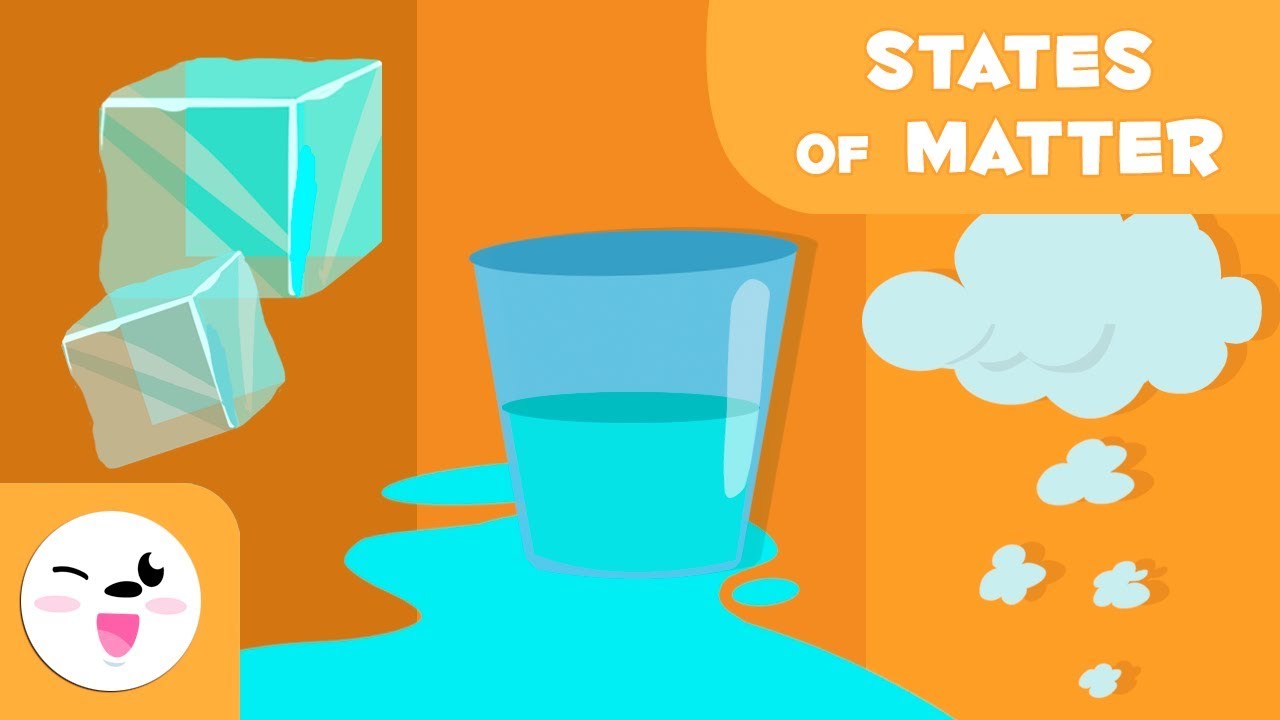
States of matter for kids - What are the states of matter? Solid, liquid and gas
Science 8 - Quarter 3 Week 3-4 | Phase Changes
5.0 / 5 (0 votes)

