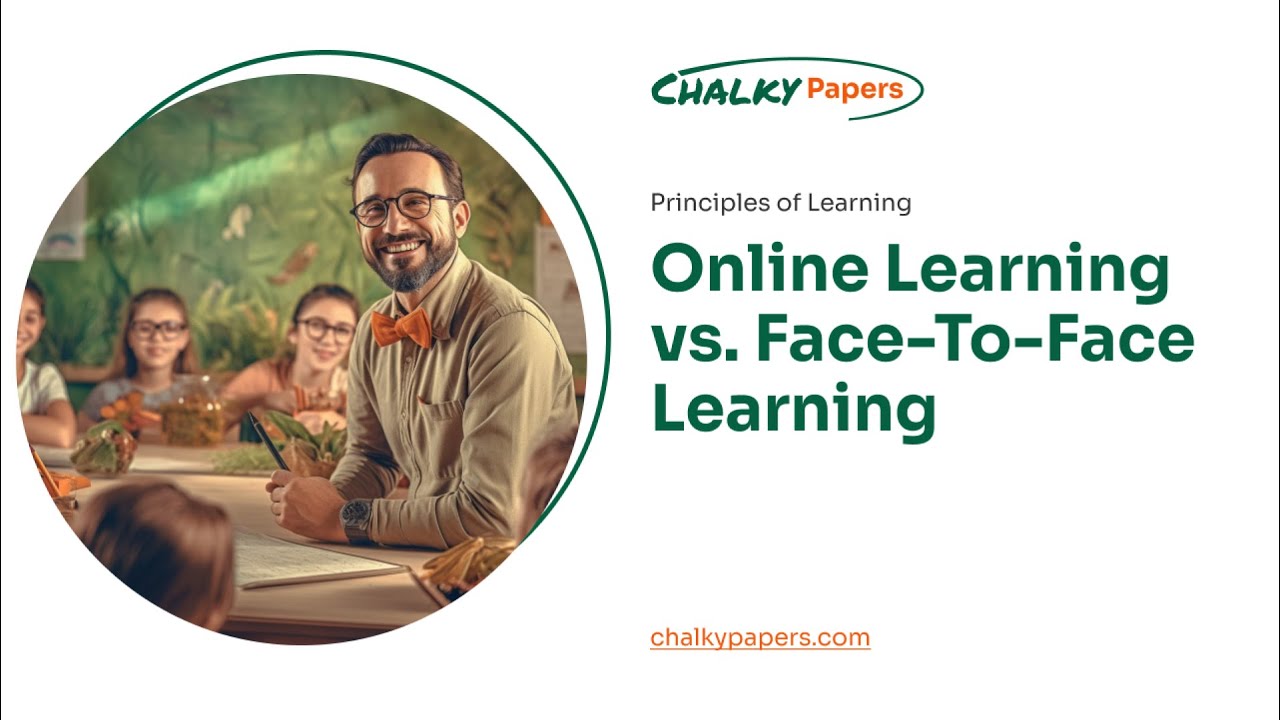
Online Learning VS Face to Face Learning
Summary
TLDRIn this presentation, Isadu Maranti explores the evolving landscape of education, comparing online learning with traditional face-to-face learning. She highlights the flexibility, cost-effectiveness, personalized pace, and global access of online learning, while also addressing its challenges like lack of motivation, limited social interaction, and technical issues. Conversely, face-to-face learning offers structured schedules, direct teacher feedback, and essential social skill development, though it is less flexible and more expensive. Ultimately, Maranti advocates for hybrid learning, combining the strengths of both approaches to create a balanced, effective, and inclusive educational experience that prepares students for success in the modern world.
Takeaways
- 💻 Online learning became popular during the COVID-19 pandemic and continues to be widely used.
- ⏰ Online learning offers flexibility, allowing students to study anytime and anywhere without commuting.
- 💸 Online learning can be more affordable, saving money on transportation, uniforms, and sometimes books.
- 📚 Personalized learning is possible online, letting students progress at their own pace and revisit materials as needed.
- 🌐 Online learning provides access to teachers and experts worldwide, offering opportunities beyond local schools.
- 😓 Online learning can lead to lack of motivation, distractions, and procrastination when studying alone.
- 👥 Social interaction is limited in online learning, which may cause feelings of loneliness and boredom.
- 🔧 Technical issues such as poor internet or device limitations create challenges and can deepen educational inequality.
- 🏫 Face-to-face learning offers structured schedules, immediate feedback, and stronger social skill development.
- 🤝 Hybrid learning combines the advantages of online and face-to-face methods, promoting flexibility, personal connection, and effective learning.
Q & A
What is the main topic of the speech?
-The main topic of the speech is the comparison between online learning and face-to-face learning, and whether a hybrid approach combining both could be the future of education.
Why did online learning become more popular?
-Online learning became more popular due to the COVID-19 pandemic, which forced schools and universities to close and students to study from home using computers, laptops, or smartphones.
What are the advantages of online learning?
-The advantages of online learning include flexibility, cost savings, personalized learning, access to global teachers and experts, and convenience for students with specific needs like part-time jobs or family responsibilities.
What are some disadvantages of online learning?
-Disadvantages of online learning include a lack of motivation and discipline, reduced social interaction, technical issues like poor internet connections, and challenges in teaching certain subjects like science labs or physical education online.
How does face-to-face learning differ from online learning?
-Face-to-face learning offers more structure, discipline, immediate feedback, and social interaction. It helps students develop better social skills, including teamwork and problem-solving, and allows for more personalized teacher-student interaction.
What are the disadvantages of face-to-face learning?
-Disadvantages of face-to-face learning include less flexibility, higher costs due to transportation and other school expenses, and the inability of teachers to give enough individual attention in large classes.
What is hybrid learning, and why is it considered the future of education?
-Hybrid learning combines the best aspects of online and face-to-face learning. It allows students to learn basic theory online and engage in group discussions, practical experiments, and personalized guidance in person. It is considered the future because it offers flexibility and structure, blending technology with human connection.
How does hybrid learning address the weaknesses of both online and face-to-face learning?
-Hybrid learning addresses the weaknesses by providing flexibility through online components while maintaining the structure and social interaction of face-to-face learning. This combination helps students manage their time effectively while still benefiting from in-person engagement with teachers and peers.
What role do students play in making online learning effective?
-Students must learn to be responsible, manage their time well, stay motivated, and actively engage with the online content. Their discipline and self-regulation are crucial for successful online learning.
What role do teachers and parents play in supporting online learning?
-Teachers and parents are responsible for guiding and supporting students, ensuring they use both online and face-to-face methods wisely. They help students stay on track, provide additional resources, and offer encouragement and motivation.
Outlines

此内容仅限付费用户访问。 请升级后访问。
立即升级Mindmap

此内容仅限付费用户访问。 请升级后访问。
立即升级Keywords

此内容仅限付费用户访问。 请升级后访问。
立即升级Highlights

此内容仅限付费用户访问。 请升级后访问。
立即升级Transcripts

此内容仅限付费用户访问。 请升级后访问。
立即升级



5.0 / 5 (0 votes)

