Akuntansi Biaya Bab 3: Analisis Perilaku Biaya
Summary
TLDRThis video lecture on cost accounting dives into the analysis of cost behavior, specifically focusing on the classification of costs as fixed, variable, and semi-variable. It explains the importance of distinguishing between these types for accurate financial analysis, including methods like the High-Low method, scattergraph, and Least Squares for separating semi-variable costs. The lecture also highlights how understanding cost structures can aid in budgeting, profit analysis, and financial forecasting. Through practical examples and detailed explanations, the video offers valuable insights into cost behavior, helping businesses optimize their financial strategies.
Takeaways
- 😀 The focus of the lesson is on cost behavior analysis, specifically classifying costs as fixed, variable, or semi-variable.
- 😀 The reference book used is 'Bee Accounting' by WBP Cover, edition 14.
- 😀 After studying this chapter, students should be able to classify expenses, calculate cost components, and understand cost behavior methods.
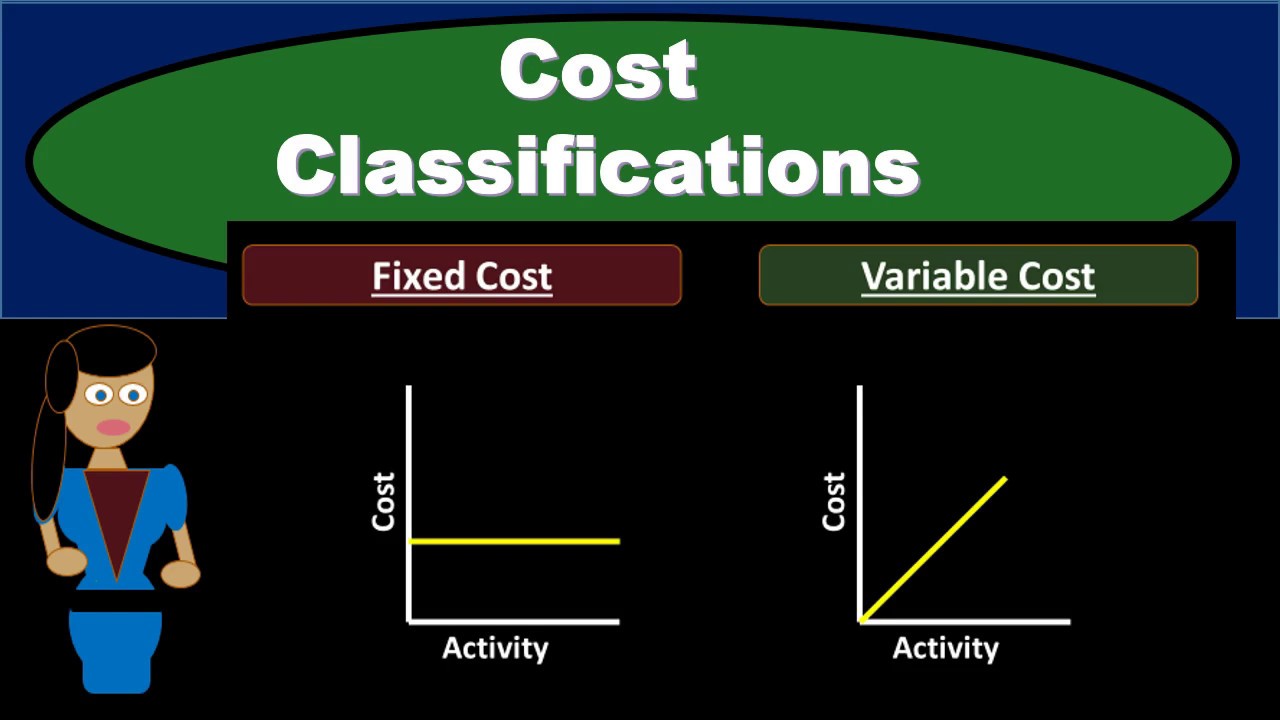
- 😀 Fixed costs do not change in total despite changes in production volume, though unit costs may vary.
- 😀 Variable costs change proportionally with the level of production or activity, following a linear graph.
- 😀 Semi-variable costs contain both fixed and variable components, with a part that stays constant and a part that varies with production.
- 😀 The purpose of separating fixed and variable costs is to conduct effective analysis, such as cost-volume-profit analysis and break-even calculations.
- 😀 Methods like the High-Low method, Scattergraph method, and Least Squares method can be used to separate semi-variable costs into fixed and variable components.
- 😀 The High-Low method identifies the highest and lowest activity levels to calculate variable cost rates, based on changes in cost and activity.
- 😀 In the Scattergraph method, data points are plotted to visually estimate the line that best represents the cost behavior, and linear regression can be applied.
- 😀 The Least Squares method involves using statistical formulas to calculate the fixed and variable costs, by determining the line of best fit through data points.
Q & A
What is the main purpose of classifying costs in cost accounting?
-Classifying costs helps identify whether an expense is a fixed cost, variable cost, or semi-variable cost. This classification allows businesses to conduct various analyses, such as break-even analysis, cost-volume-profit analysis, and profitability analysis.
What is a fixed cost and how is it represented graphically?
-A fixed cost is a cost that does not change in total regardless of the production or activity level. Graphically, it appears as a horizontal line, remaining constant across varying production volumes, though the cost per unit will decrease as production increases.
How does a variable cost behave as production increases?
-A variable cost changes in direct proportion to the volume of production. As production increases, the total variable cost increases, and vice versa. Graphically, it appears as a straight, upward-sloping line.
What is a semi-variable cost and how does it differ from fixed and variable costs?
-A semi-variable cost contains both fixed and variable components. The fixed part remains constant up to a certain level of activity, while the variable part changes with activity beyond that point. Graphically, the line starts at a fixed cost level and then slopes upwards as activity increases.
Why is it necessary to separate semi-variable costs into fixed and variable components?
-Separating semi-variable costs is important for accurate cost analysis. It allows businesses to perform detailed analyses, such as variance analysis, budgeting, and determining the true variable and fixed components for more precise decision-making.
What are some common methods to separate semi-variable costs?
-The three common methods to separate semi-variable costs are: the high-low method, the scattergraph method, and the least squares method.
How does the high-low method work in separating semi-variable costs?
-The high-low method involves identifying the highest and lowest activity levels, then calculating the difference in costs and activity levels. This provides the variable cost per unit. The fixed cost is determined by subtracting the total variable cost from the total cost at either the highest or lowest activity level.
What is the scattergraph method for separating semi-variable costs?
-The scattergraph method involves plotting the cost data on a graph with activity levels on the x-axis and costs on the y-axis. By visually fitting a line through the scattered points, businesses can approximate the variable and fixed components of the cost.
How does the least squares method work in cost analysis?
-The least squares method uses a linear regression approach to minimize the sum of squared differences between observed costs and predicted costs. It involves finding the equation of a straight line that best fits the cost data, allowing the determination of fixed and variable costs.
What is the importance of understanding the fixed and variable components of costs in business?
-Understanding the fixed and variable components of costs is crucial for making informed business decisions. It aids in cost prediction, pricing strategies, budgeting, profitability analysis, and determining the impact of changes in production volume on total costs and profitability.
Outlines

此内容仅限付费用户访问。 请升级后访问。
立即升级Mindmap

此内容仅限付费用户访问。 请升级后访问。
立即升级Keywords

此内容仅限付费用户访问。 请升级后访问。
立即升级Highlights

此内容仅限付费用户访问。 请升级后访问。
立即升级Transcripts

此内容仅限付费用户访问。 请升级后访问。
立即升级


5.0 / 5 (0 votes)

