CEnT-S New Entrance Exam for Italian Universities in 2026 | Complete Math Study Plan
Summary
TLDRThis course covers essential topics in basic mathematics, including algebra (equations and graphing), exponentials and logarithms, number theory (fractions, percentages, and ratios), geometry (shapes, area, and volume), functions (graphing and understanding various types), basic statistics (mean, median, mode, frequency distributions), and probability/combinatorics (permutations, combinations, and event probability). The course avoids advanced topics like differentiation and integration, focusing instead on foundational knowledge required for tests like the SAT. Students will also learn how to approach practical problem-solving in each area.
Takeaways
- 😀 The course covers foundational mathematics topics including algebra, exponentials, logarithms, geometry, functions, statistics, probability, and combinatorics.
- 😀 Algebra will focus on solving linear and quadratic equations, graphing, and understanding the set of solutions. Cubic equations will not be covered.
- 😀 Exponentials and logarithms will be explored by studying their properties and solving related equations and inequalities, with basic graphing of exponential and logarithmic functions.
- 😀 Basic number theory topics will include types of numbers (integers, rationals, irrationals) and quick computation methods, such as approximating expressions like 2 * √15.
- 😀 Geometry will cover fundamental shapes (triangles, squares, rectangles, circles) and key measurements like area, volume, and perimeter, with a focus on triangles and the Pythagorean theorem.
- 😀 The course will teach how to graph the equation of a circle in the coordinate plane.
- 😀 Functions will be covered in terms of their basic concepts, graphing of linear, quadratic, exponential, and logarithmic functions, and function composition (f(x + y)).
- 😀 Statistics will be focused on basic concepts such as mean, median, mode, and graph interpretation (e.g., histograms), as well as calculating averages from datasets.
- 😀 Probability will cover basic concepts like independent and dependent events, with an emphasis on understanding probability as a fraction of favorable outcomes over total outcomes.
- 😀 Combinatorics will involve permutation and combination problems, including how to distinguish between them and apply the correct formulas to solve problems.
- 😀 The course will not cover advanced topics like calculus (differentiation, integration, or limits) or advanced statistics (random variables, distributions).
Q & A
What topics will be covered in the course?
-The course will cover algebra, exponentials and logarithms, number theory, geometry, functions, statistics, and probability/combinatorics. Each of these topics will be discussed in detail with a focus on solving problems related to them.
What subtopics are included in the algebra section?
-In the algebra section, the main focus will be on equations and inequalities. Specifically, linear and quadratic equations will be covered, including graphing linear equations and parabolas. Cubic equations will not be studied, as they are considered more complex.
What is the importance of understanding triangles in geometry?
-Triangles are fundamental in geometry, as many geometric problems can be simplified by breaking down shapes into triangles. The course will focus on understanding different types of triangles, especially right triangles, and applying the Pythagorean theorem.
How will exponentials and logarithms be taught in the course?
-The course will cover the properties and rules of exponentials and logarithms. Students will learn to solve exponential and logarithmic equations and inequalities, as well as graph exponential and logarithmic functions. These topics will not be particularly challenging.
What kinds of problems will be addressed in the number theory section?
-In the number theory section, students will learn about integers, natural numbers, rational and irrational numbers. The course will focus on computations such as approximating expressions involving square roots and solving problems related to percentages and ratios.
What geometry topics will be explored in the course?
-The course will cover basic geometric shapes like triangles, squares, rectangles, and circles. Students will also study how to compute areas, volumes, and perimeters of two- and three-dimensional shapes. The equation of a circle in the coordinate plane will also be included.
What is the focus of the statistics section?
-The statistics section will cover basic concepts like interpreting graphs, calculating averages (mean, median, mode), and understanding frequency distributions. Students will also learn to work with histograms and basic probability concepts like how to compute the mean GPA of a group of students.
What is combinatorics, and how will it be covered?
-Combinatorics will be taught as part of the probability section. It covers problems related to permutations and combinations. Students will learn the difference between displacement, permutation, and combination, and how to use formulas to solve problems. Logical thinking and problem-solving skills will be emphasized.
Will there be any advanced topics like differentiation or integration in the course?
-No, the course will not cover advanced topics like differentiation or integration, as it is designed for basic level math. These concepts are typically found in more advanced courses and are not required for the entrance tests, such as the SAT.
Will the course include any probability-related topics?
-Yes, the course will cover basic probability, including understanding independent and dependent events, as well as how to compute the probability of different outcomes. The course will also touch on set theory, focusing on concepts like union and intersection.
Outlines

此内容仅限付费用户访问。 请升级后访问。
立即升级Mindmap

此内容仅限付费用户访问。 请升级后访问。
立即升级Keywords

此内容仅限付费用户访问。 请升级后访问。
立即升级Highlights

此内容仅限付费用户访问。 请升级后访问。
立即升级Transcripts

此内容仅限付费用户访问。 请升级后访问。
立即升级浏览更多相关视频
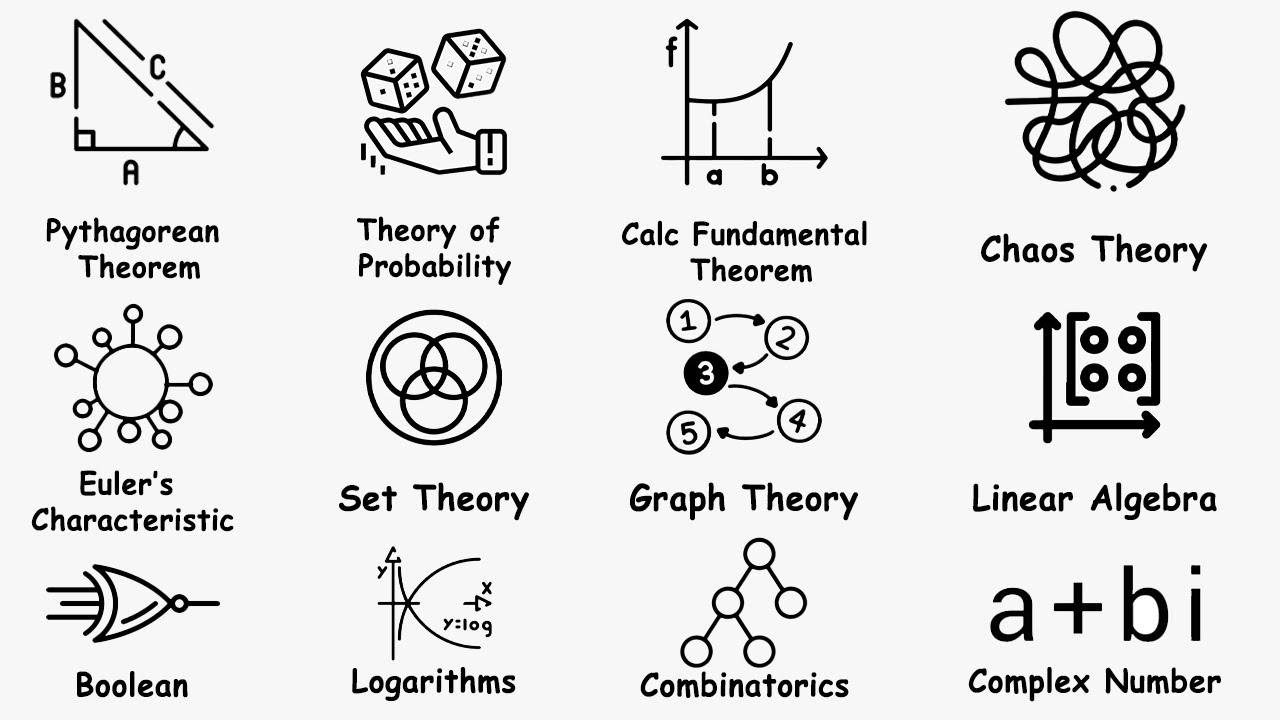
Greatest Math Theories Explained

Stats 1 Week 1-8 in One Shot For Quiz 2 |All Concepts & Formulas Revision IIT Madras BS Data Science
Plus One Maths Public Exam | 30 Mark Sure Questions | Exam Winner +1

🦿 Langkah 023: Peluang | Penalaran Matematika Alternatifa
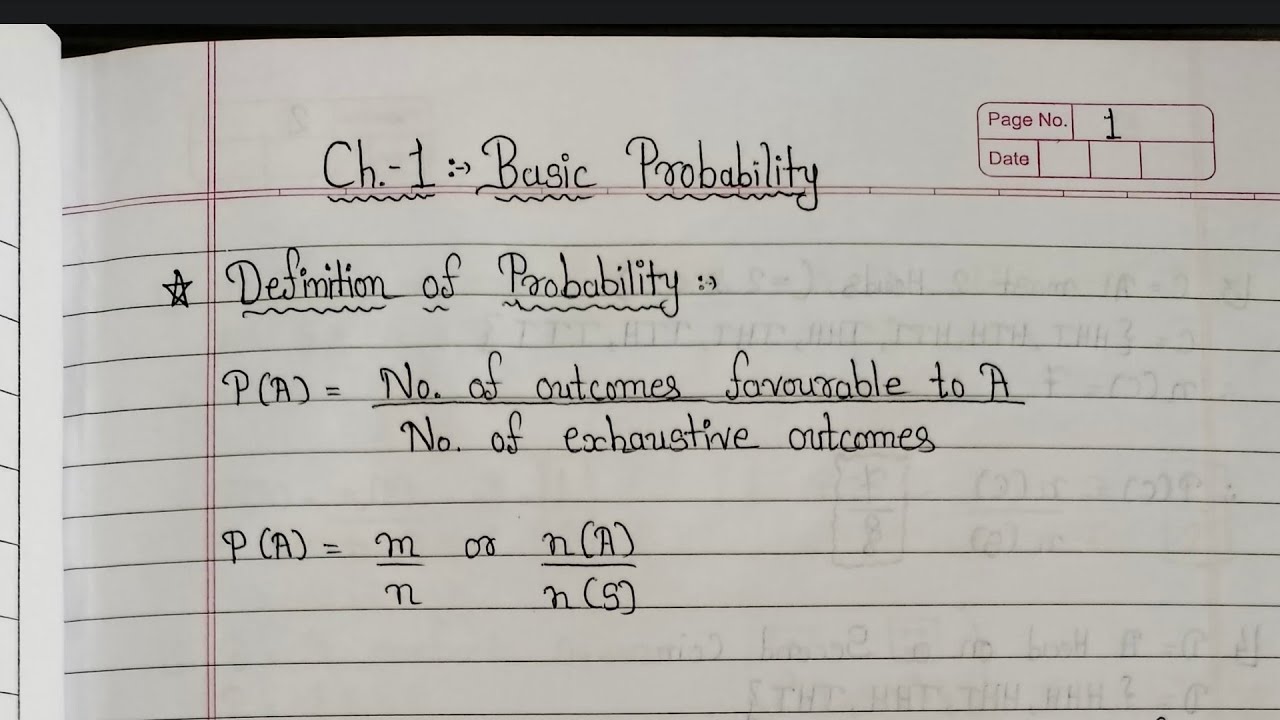
1.1 - Definition of Probability, Permutation & Combination - Probability & Statistics
PROBSTAT - Kombinatorika
5.0 / 5 (0 votes)

