Literatura medieval
Summary
TLDRThe video discusses the evolution of Christianity and its influence during the Middle Ages. Starting with Constantine's legalization of Christianity in 313, followed by Theodosius' declaration of it as Rome's official religion, the narrative covers the rise of Christian dominance and the fall of the Western Roman Empire. It explores key periods such as the High and Low Middle Ages, highlighting the socio-economic shifts, the rise of feudalism, and the influence of the Catholic Church. The video also touches on the emergence of new vernacular languages, the role of poets and troubadours, and the development of literary movements that led to the Renaissance.
Takeaways
- 😀 Constantine I legalized Christianity in 313, marking the beginning of its spread in the Roman Empire.
- 😀 Emperor Theodosius later made Christianity the official religion of Rome, leading to persecution of pagans.
- 😀 The Medieval period spanned from the fall of the Western Roman Empire in the 5th century to the fall of Constantinople in the 15th century.
- 😀 The High Middle Ages were characterized by socioeconomic decline and feudalism, with society focused on rural life.
- 😀 In the Late Middle Ages, cities and trade revived, and feudalism began to decline, leading to early signs of capitalism.
- 😀 The Catholic Church played a central role in unifying Western Europe during the Middle Ages, influencing daily life and culture.
- 😀 Latin was the dominant language of culture and scholarship throughout the Middle Ages, although vernacular languages began to emerge.
- 😀 The 12th and 13th centuries saw the rise of new literary works in vernacular languages, such as French, English, German, Italian, and Spanish.
- 😀 Medieval literature was heavily influenced by a theocentric worldview, with an emphasis on reconciling faith and reason through Scholasticism.
- 😀 Epic poetry, such as the *Chanson de Roland*, and lyrical poetry from troubadours in France, became significant genres during the period.
- 😀 Italian authors like Dante Alighieri and Francesco Petrarca were key figures at the end of the Middle Ages, laying the foundations for the Renaissance.
- 😀 The figure of the knight became iconic in medieval literature, with works like *Amadís de Gaula* embodying chivalric ideals.
- 😀 At the end of the Middle Ages, literary works like *The Divine Comedy* by Dante and *The Decameron* by Boccaccio helped usher in the Renaissance.
Q & A
What was the significance of Constantine I's decree in 313?
-Constantine I's decree in 313 granted religious freedom to Christianity, allowing it to emerge from being a clandestine religion and begin its path toward becoming the official doctrine of the Roman Empire.
How did Emperor Theodosius contribute to the spread of Christianity?
-Emperor Theodosius made Christianity the official religion of the Roman Empire and initiated persecution against those who refused to adopt it, calling them 'pagans'.
What was the time period of the Medieval West, and what marked its beginning and end?
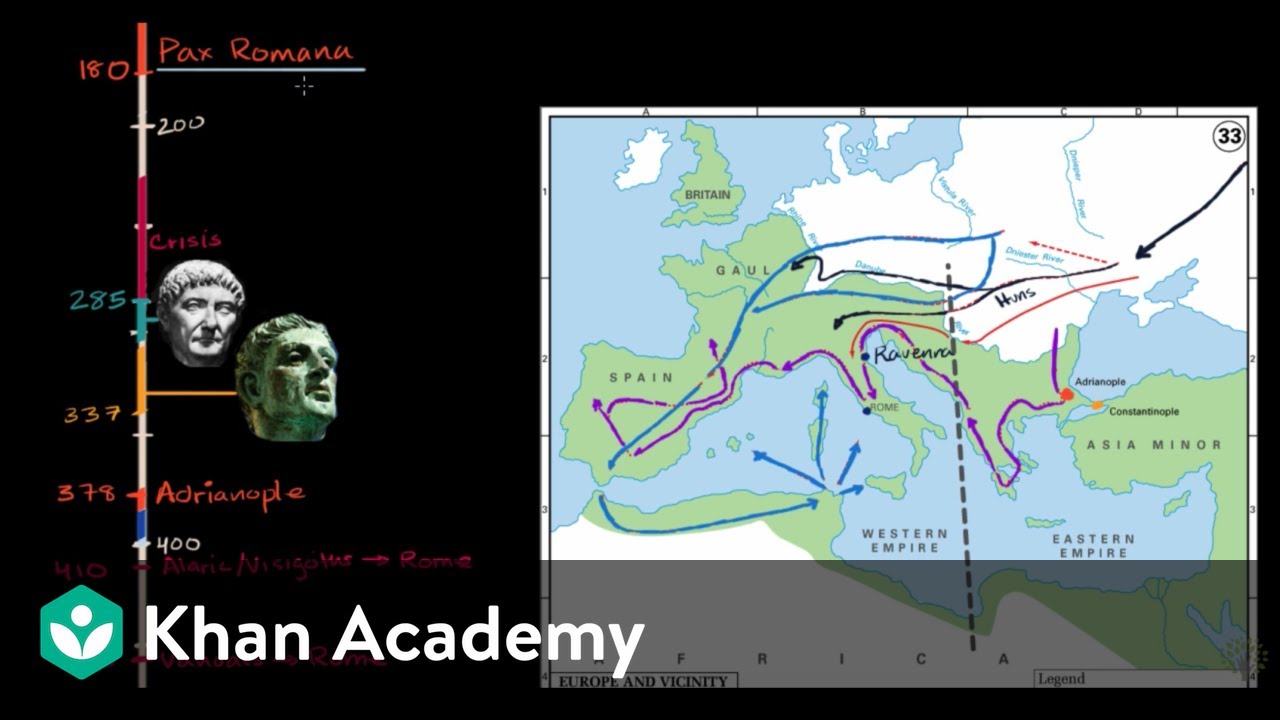
-The Medieval West, or Middle Ages, began in the 5th century with the fall of the Western Roman Empire due to barbarian invasions and ended in the 15th century with the fall of Constantinople and the discovery of America.
What defines the High Middle Ages?
-The High Middle Ages were characterized by a socio-economic and cultural regression, where society was largely agrarian and feudalism dominated, with a decline in trade and monetary economy.
What changes occurred during the Late Middle Ages?
-The Late Middle Ages saw the rise of cities, the growth of trade, the decline of feudalism, and the emergence of early forms of capitalism.
What role did the Catholic Church play in the Middle Ages?
-The Catholic Church was a central institution that unified Western society, deeply influencing daily life, culture, and education throughout the medieval period.
What was the linguistic shift in the Late Middle Ages?
-In the Late Middle Ages, new vernacular languages emerged, including French, English, German, and Italian, replacing Latin as the primary literary language in some areas.
What was the role of Latin during the medieval period?
-Latin was the dominant international and scholarly language in the Middle Ages, used for official and academic purposes, while vernacular languages began to take root in literature in the later centuries.
What is the significance of the literary genre 'canto de gesta'?
-The 'canto de gesta' was a form of epic poetry, typically performed by jugglers, which narrated the heroic deeds of warriors. It was one of the major genres in medieval literature, with 'The Song of Roland' being a famous example.
How did Dante Alighieri contribute to medieval literature?
-Dante Alighieri, through works like 'The Divine Comedy', helped establish the Italian language in literary tradition and played a key role in bridging medieval and Renaissance thought.
Outlines

此内容仅限付费用户访问。 请升级后访问。
立即升级Mindmap

此内容仅限付费用户访问。 请升级后访问。
立即升级Keywords

此内容仅限付费用户访问。 请升级后访问。
立即升级Highlights

此内容仅限付费用户访问。 请升级后访问。
立即升级Transcripts

此内容仅限付费用户访问。 请升级后访问。
立即升级



5.0 / 5 (0 votes)

