Density Functional Theory (DFT)
Summary
TLDRThis presentation by Group 5 explores Density Functional Theory (DFT), a quantum mechanical method used to study electronic structures in materials and molecules. The script explains the historical development of DFT, including the Hohenberg-Kohn theorems and the relationship between electron density and total energy. It discusses important approximations such as Local Density Approximation (LDA), Generalized Gradient Approximation (GGA), and Hybrid Density Functionals, highlighting their strengths and weaknesses. The presentation also demonstrates practical DFT calculations using HyperChem software with methane molecules. Overall, the video provides a comprehensive introduction to DFT concepts, computational methods, and their applications in modern material and molecular analysis.
Takeaways
- 😀 Density Functional Theory (DFT) is a quantum mechanical method used to calculate electronic properties of systems by focusing on electron density instead of complex wavefunctions.
- 😀 DFT was first proposed in 1964 by PH Moonbch and Wolter Count, initially as a theoretical concept without practical applications.
- 😀 The key principle of DFT is that the ground state energy of a system is a functional of its electron density, allowing simpler calculations for multi-electron systems.
- 😀 The first DFT theorem establishes a one-to-one correspondence between external potential and electron density, while the second theorem states the energy is minimized at the correct ground state density.
- 😀 Total electronic energy in DFT is divided into contributions from electron-external potential interactions, kinetic energy, Coulomb interactions, and exchange-correlation energy.
- 😀 Local Density Approximation (LDA) assumes exchange-correlation energy depends only on local electron density, while Local Spin Density (LSD) includes spin effects for improved accuracy.
- 😀 Generalized Gradient Approximation (GGA) enhances DFT by considering gradients of electron density, improving total energy and atomization energy predictions, though it struggles with van der Waals interactions.
- 😀 Hybrid Density Functionals, such as B3LYP, combine conventional DFT exchange-correlation with exact Hartree-Fock exchange, offering better accuracy for molecular systems but less success for solids.
- 😀 Practical DFT calculations involve using software like HyperChem, where molecules are built, basis sets chosen, and geometries optimized to compute energies and properties.
- 😀 DFT methods offer advantages over ab initio methods because electron density is independent of system size, but careful approximation choices are required to maintain accuracy.
- 😀 Exchange-correlation functionals in DFT, GGA, and hybrid methods can be tuned empirically to improve predictions, but all approaches have limitations depending on the system studied.
Q & A
What is Density Functional Theory (DFT)?
-Density Functional Theory (DFT) is a quantum mechanical method used to study the electronic structure of many-particle systems, especially atoms, molecules, and solids. It describes the system using electron density rather than complex many-electron wave functions.
Who first introduced the theoretical foundation of DFT?
-The theoretical foundation of DFT was introduced in 1964 by Pierre Hohenberg and Walter Kohn through the Hohenberg-Kohn theorems.
What is the main idea behind the Hohenberg-Kohn theorem?
-The Hohenberg-Kohn theorem states that the ground-state properties of a quantum system are uniquely determined by its electron density. This means the electron density contains all the necessary information about the system.
Why is DFT considered more efficient than traditional wave-function-based methods?
-DFT is more efficient because it uses electron density, which depends only on three spatial variables, instead of many-body wave functions that become increasingly complex as the number of electrons increases.
What are the main components of the DFT energy functional?
-The DFT energy functional consists of the external potential energy, kinetic energy, Coulomb interaction energy, and exchange-correlation energy.
What is the Local Density Approximation (LDA)?
-The Local Density Approximation (LDA) is a simple approximation in DFT where the exchange-correlation energy at a point depends only on the electron density at that same point.
What are the limitations of the Local Density Approximation (LDA)?
-LDA often underestimates ionization energies and overestimates binding energies. It may also produce less accurate results for systems with rapidly changing electron densities.
What improvement does the Local Spin Density Approximation (LSDA) provide over LDA?
-LSDA improves LDA by including spin dependence in the exchange-correlation functional, allowing better treatment of systems with unpaired electrons.
What is the Generalized Gradient Approximation (GGA)?
-GGA is an extension of LDA that considers not only the electron density but also the gradient or spatial variation of the density, resulting in more accurate calculations.
What are the advantages of GGA compared to LDA?
-GGA generally provides better predictions for total energies, atomization energies, energy barriers, and molecular structures than LDA.
What are the weaknesses of GGA mentioned in the presentation?
-GGA is less accurate for describing van der Waals interactions and may not always provide better results than LDA for solid-state systems.
What is a hybrid functional in DFT?
-A hybrid functional combines exact Hartree-Fock exchange with DFT exchange-correlation functionals to improve calculation accuracy.
Why is B3LYP considered a popular hybrid functional?
-B3LYP is popular because it provides reliable and accurate results for many molecular systems by combining Becke’s three-parameter exchange functional with the Lee-Yang-Parr correlation functional.
What software was used in the presentation to perform DFT calculations?
-The presentation used the HyperChem software application to perform DFT calculations and molecular modeling.
What molecule was used as an example in the DFT calculation procedure?
-Methane (CH4) was used as the example molecule in the DFT calculation demonstration.
What is the significance of electron density in DFT?
-Electron density is significant because it serves as the primary variable in DFT and determines the physical and chemical properties of the system.
What are exchange-correlation functionals in DFT?
-Exchange-correlation functionals account for the complex interactions between electrons, including exchange effects and electron correlation effects, which are not directly described by simpler energy terms.
What challenge is associated with exchange-correlation approximations in DFT?
-The main challenge is that exchange-correlation approximations are not exact, and different approximations can produce different levels of accuracy depending on the system being studied.
How does DFT help in computational chemistry and material science?
-DFT helps researchers predict molecular structures, electronic properties, reaction energies, and material behavior with relatively low computational cost compared to other quantum mechanical methods.
What was concluded about hybrid functionals for solid-state calculations?
-The presentation concluded that hybrid functionals may be less successful for solid-state systems because calculating exact exchange interactions in solids is computationally challenging.
Outlines

This section is available to paid users only. Please upgrade to access this part.
Upgrade NowMindmap

This section is available to paid users only. Please upgrade to access this part.
Upgrade NowKeywords

This section is available to paid users only. Please upgrade to access this part.
Upgrade NowHighlights

This section is available to paid users only. Please upgrade to access this part.
Upgrade NowTranscripts

This section is available to paid users only. Please upgrade to access this part.
Upgrade NowBrowse More Related Video

How to Calculate Adsorption Energy using Quantum ESPRESSO and DFT? [TUTORIAL]

Density Functional Theory, Part 2: Approximations
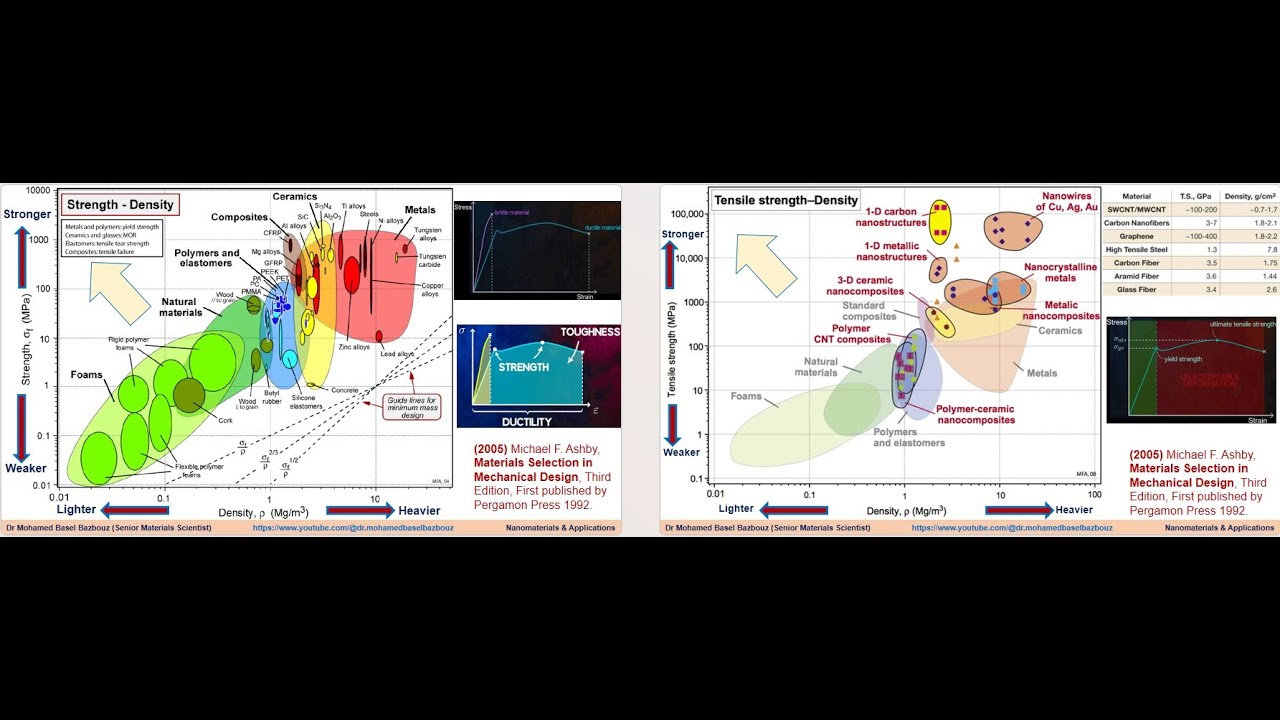
Ashby plots of Strength versus density for materials and nanomaterials المتانة والوزن النوعي

Quantum Wells Explained

Experimental Evidence No One Expected! Is Human Consciousness Quantum After All?

Superconducting Quantum Interference Device - SQUID
5.0 / 5 (0 votes)
