Kimia SMA - Kesetimbangan Kimia (7) - Faktor - Faktor yang Mempengaruhi Kesetimbangan Kimia (S)
Summary
TLDRThis video explores chemical equilibrium and the factors that influence it according to Le Chatelier's Principle. It explains how changes in concentration, pressure, and volume affect the direction of chemical reactions. Using examples like 2SO2 + O2 ⇌ 2SO3, N2 + 3H2 ⇌ 2NH3, and PCl3 + Cl2 ⇌ PCl5, the video illustrates how adding or removing reactants or products and adjusting pressure or volume shifts the equilibrium to favor reactants or products. Practical tips for maximizing product yield and easy memorization strategies for predicting equilibrium shifts are also provided, making the concepts clear and actionable for students.
Takeaways
- 😀 The video discusses chemical equilibrium, focusing on the factors that affect it, such as concentration, pressure, and volume.
- 😀 Le Chatelier's Principle is introduced, explaining that a system at equilibrium will adjust to counteract any changes made to it.
- 😀 If the concentration of a substance is increased, the equilibrium shifts toward the opposite side of the reaction to reduce that concentration.
- 😀 Conversely, if the concentration of a substance is decreased, the equilibrium will shift toward that substance to restore balance.
- 😀 The video includes a practical example with the reaction: A + B ⇌ C. Adding or removing substances shifts the equilibrium position.
- 😀 Pressure and volume are linked through the ideal gas law, where an increase in pressure leads to a decrease in volume, and vice versa.
- 😀 When pressure is increased, the equilibrium shifts toward the side with fewer gas molecules (lower coefficient).
- 😀 If volume is increased, the equilibrium shifts toward the side with more gas molecules (higher coefficient).
- 😀 The example of N₂ + 3H₂ ⇌ 2NH₃ demonstrates how changes in pressure and volume can shift the reaction toward products or reactants.
- 😀 In the case of PCl₃ + Cl₂ ⇌ PCl₅, the concentration and pressure can be manipulated to increase the yield of PCl₅ by adjusting the reaction conditions.
- 😀 The video encourages viewers to subscribe, share, and engage with the channel to continue learning about chemistry.
Q & A
What is chemical equilibrium?
-Chemical equilibrium is the state in a chemical reaction where the rates of the forward and reverse reactions are equal, resulting in no net change in the concentration of reactants and products.
What does Le Chatelier's Principle state?
-Le Chatelier's Principle states that if a system at equilibrium is disturbed by changing conditions (such as concentration, temperature, or pressure), the system will adjust itself to counteract the change and restore equilibrium.
How does changing the concentration of a substance affect chemical equilibrium?
-If the concentration of a substance is increased, the equilibrium shifts to the opposite side to consume the added substance. Conversely, if the concentration is decreased, the equilibrium shifts towards the side where the substance is being produced.
What happens when the concentration of reactant A is increased in a reaction A + B ⇌ C?
-Increasing the concentration of reactant A shifts the equilibrium to the right (towards the products), resulting in more formation of C and reducing the concentration of A.
How does pressure and volume affect chemical equilibrium?
-According to the ideal gas law, when pressure is increased, volume decreases. If the reaction involves gases, an increase in pressure shifts the equilibrium towards the side with fewer gas molecules, while a decrease in pressure shifts it towards the side with more gas molecules.
What is the effect of increasing the pressure on a system with unequal numbers of gas molecules on both sides?
-If pressure is increased in a reaction with unequal numbers of gas molecules on both sides, the equilibrium shifts towards the side with fewer gas molecules to counteract the change.
How do temperature changes affect chemical equilibrium?
-Temperature changes affect equilibrium by shifting it in the direction that absorbs or releases heat. If the reaction is exothermic (releases heat), increasing the temperature shifts the equilibrium to the left. If it is endothermic (absorbs heat), increasing temperature shifts the equilibrium to the right.
What happens to the equilibrium if a product is removed from the reaction?
-If a product is removed from the system, the equilibrium will shift towards the product side to replace the removed substance and re-establish equilibrium.
In the reaction 2 SO2 + O2 ⇌ 2 SO3, what happens if the concentration of SO2 is increased?
-Increasing the concentration of SO2 in the reaction 2 SO2 + O2 ⇌ 2 SO3 will shift the equilibrium to the right, producing more SO3 to reduce the excess SO2.
What is the role of coefficient sums in determining the effect of pressure and volume on equilibrium?
-The sum of the coefficients on each side of the reaction determines how pressure and volume affect the equilibrium. If the total number of molecules on the reactant side is greater than on the product side, increasing pressure or decreasing volume will shift the equilibrium towards the product side (fewer molecules).
Outlines

This section is available to paid users only. Please upgrade to access this part.
Upgrade NowMindmap

This section is available to paid users only. Please upgrade to access this part.
Upgrade NowKeywords

This section is available to paid users only. Please upgrade to access this part.
Upgrade NowHighlights

This section is available to paid users only. Please upgrade to access this part.
Upgrade NowTranscripts

This section is available to paid users only. Please upgrade to access this part.
Upgrade NowBrowse More Related Video

Deslocamento de Equilíbrio - Princípio de Le Chatelier

Equilibrium Quick Revision | CBSE Class 11 Chemistry | Full Chapter in 1️⃣5️⃣ Mins | Rapid Revision
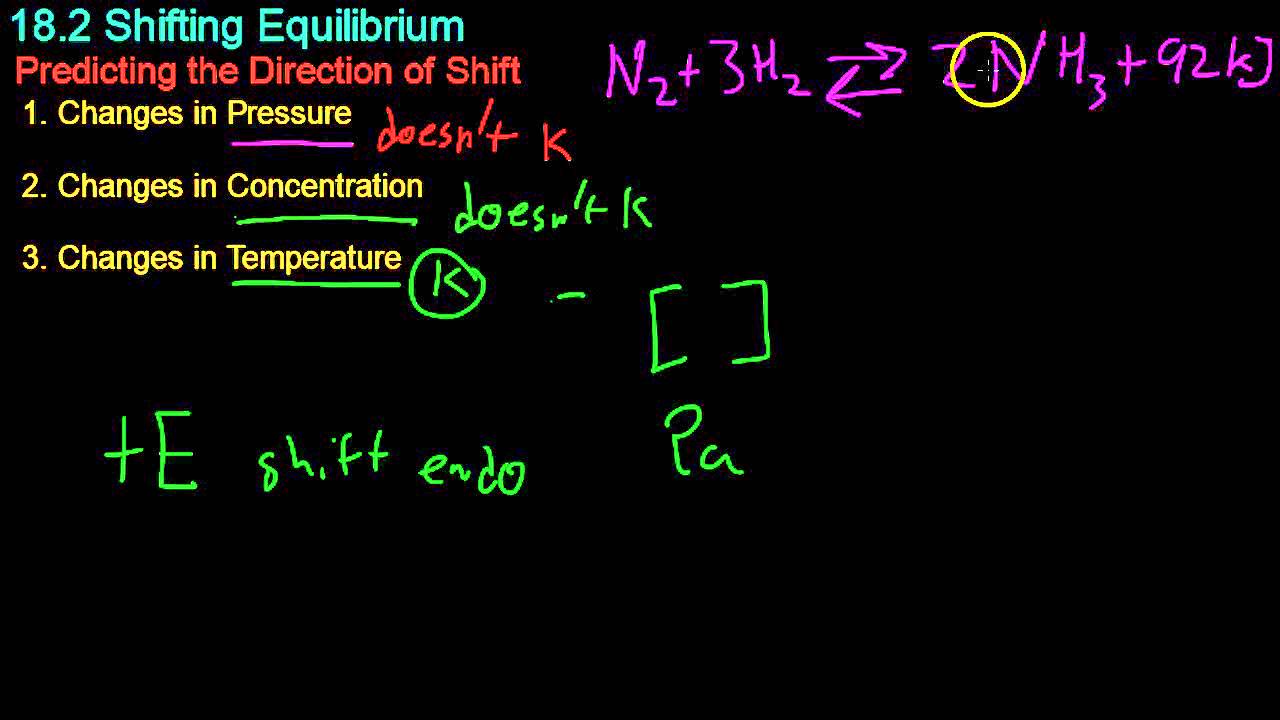
18.2 Shifting Equilibrium
Faktor-Faktor yang Mempengaruhi Pergeseran Kesetimbangan dan Penerapannya dalam Industri
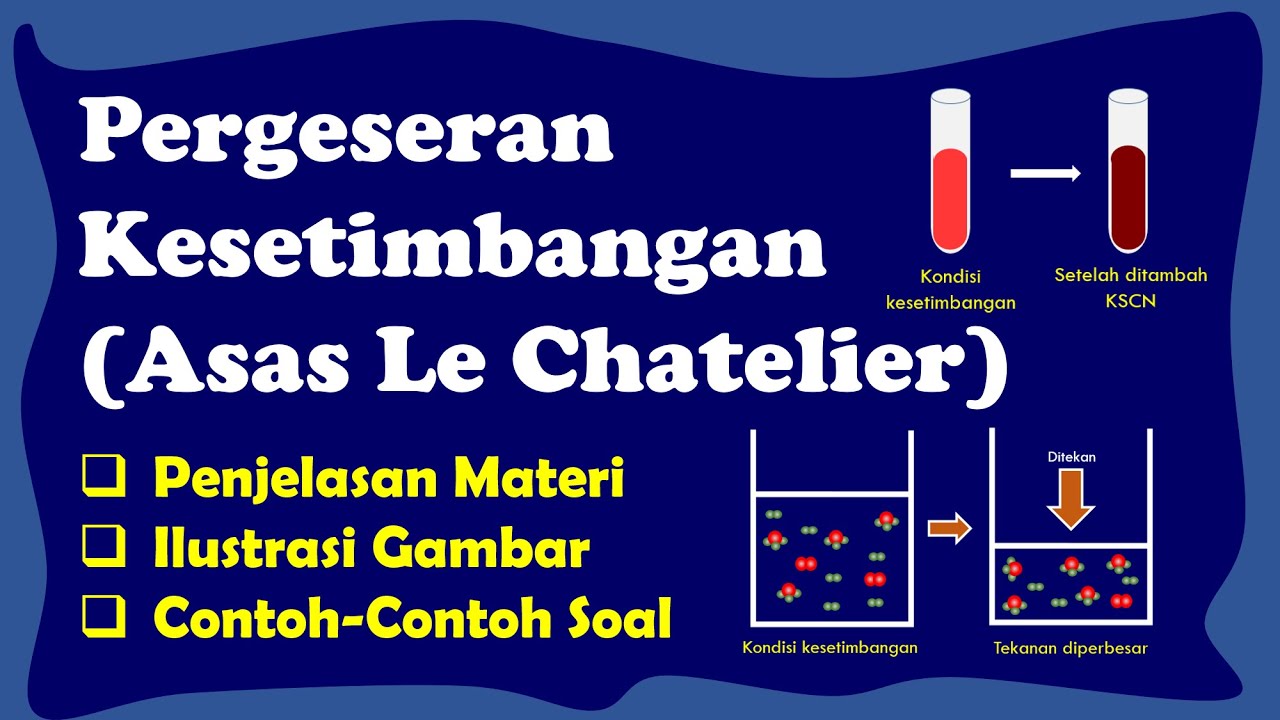
PERGESERAN KESETIMBANGAN (ASAS LE CHATELIER) : KESETIMBANGAN KIMIA KELAS 11

11 клас. Хімія. Необоротні та оборотні хімічні реакції. Хімічна рівновага. Принцип Ле Шательє
5.0 / 5 (0 votes)
