1 kesetimbangan titik
Summary
TLDRThe video explains the concept of equilibrium in particle systems, focusing on translational balance where the resultant force is zero. It demonstrates how to analyze forces acting on a particle suspended by multiple strings, breaking them down into horizontal and vertical components. Two methods are covered: the conventional method using ΣFx = 0 and ΣFy = 0, and a faster method using the sine rule for systems with three forces. Practical examples, including calculating tensions for specific angles and weights, are provided. The tutorial emphasizes clear visualization, color-coded diagrams, and strategic problem-solving, making complex equilibrium concepts more accessible and engaging.
Takeaways
- 😀 Equilibrium refers to the state where all forces acting on a particle or system result in zero net force, meaning the object remains at rest.
- 😀 In a particle system, the center of mass can be treated as a single point, which does not move when the system is in equilibrium.
- 😀 Translational equilibrium requires that the sum of forces along the x-axis and y-axis equals zero (ΣFx = 0 and ΣFy = 0).
- 😀 To solve equilibrium problems using the conventional method, break down forces into their x and y components and set up linear equations.
- 😀 Force components along axes can be calculated using trigonometric functions: Fx = F * cos(θ) and Fy = F * sin(θ).
- 😀 A faster method to solve three-force equilibrium problems is using the Law of Sines, provided there are three forces and three angles.
- 😀 In the Law of Sines method: T1/sin(opposite angle T1) = T2/sin(opposite angle T2) = W/sin(opposite angle W), which simplifies calculations.
- 😀 When using the Law of Sines, make sure the angles in the triangle formed by forces sum to 180° to correctly apply the method.
- 😀 Both conventional and Law of Sines methods yield the same results for tension forces, but the Law of Sines is more efficient for three-force scenarios.
- 😀 The use of color-coded diagrams can aid in visualizing forces and angles, enhancing comprehension of equilibrium problems.
- 😀 For systems with more than three forces, the conventional method of resolving components and using ΣFx = 0 and ΣFy = 0 is required.
Q & A
What is the basic definition of equilibrium in a particle system?
-Equilibrium occurs when a particle or system of particles remains stationary, meaning the net force acting on it is zero and it does not move in any direction or rotate.
What are the conditions for translational equilibrium in a system of particles?
-The conditions for translational equilibrium are that the sum of all forces in the x-direction is zero (ΣFx = 0) and the sum of all forces in the y-direction is zero (ΣFy = 0).
How can a particle system be modeled for analysis?
-A particle system can be modeled by considering points where forces act, such as loads or tension in strings, and treating them as single points of action for calculations.
What is the method called 'the usual method' for solving equilibrium problems?
-The usual method involves projecting all forces onto the x and y axes, setting up equations for ΣFx = 0 and ΣFy = 0, and then solving for unknown forces.
How do you project forces onto the x and y axes?
-Each force is broken into components using trigonometry: the x-component is F cos(θ) and the y-component is F sin(θ), where θ is the angle of the force with respect to the axis.
What is the 'clever method' or quick method for solving equilibrium problems?
-The clever or quick method uses the sine rule (law of sines) when exactly three forces act at a point and all three angles are known. It allows direct calculation of force magnitudes without projecting onto axes.
What is the sine rule formula used in equilibrium?
-The sine rule for forces states: T1 / sin(opposite angle of T1) = T2 / sin(opposite angle of T2) = W / sin(opposite angle of W), where T1 and T2 are unknown tensions and W is the weight.
When should the sine rule method be avoided?
-The sine rule should be avoided if there are more than three forces or the angles are not known, in which case the usual component method must be used.
In the example with W = 100 N and angles of 60°, how are T1 and T2 calculated using the usual method?
-Using the usual method: ΣFx = 0 → T2 cos60° = T1 cos60°, giving T1 = T2. Then ΣFy = 0 → T1 sin60° + T2 sin60° = 100, resulting in T1 = T2 = 100 / √3 N.
Why is it recommended to use color-coded diagrams when studying equilibrium problems?
-Color-coded diagrams help distinguish between different forces and their directions, making it easier to visualize and correctly resolve forces into components.
What is the main advantage of using the sine rule over the usual method?
-The sine rule allows quicker calculation when there are only three forces and known angles, avoiding multiple component calculations and simplifying the process.
What should students remember when applying equilibrium concepts in physics problems?
-Students should ensure they correctly identify all forces, understand the geometry of the system, choose the appropriate method (usual component method or sine rule), and check that ΣFx = 0 and ΣFy = 0 for translational equilibrium.
Outlines

This section is available to paid users only. Please upgrade to access this part.
Upgrade NowMindmap

This section is available to paid users only. Please upgrade to access this part.
Upgrade NowKeywords

This section is available to paid users only. Please upgrade to access this part.
Upgrade NowHighlights

This section is available to paid users only. Please upgrade to access this part.
Upgrade NowTranscripts

This section is available to paid users only. Please upgrade to access this part.
Upgrade NowBrowse More Related Video
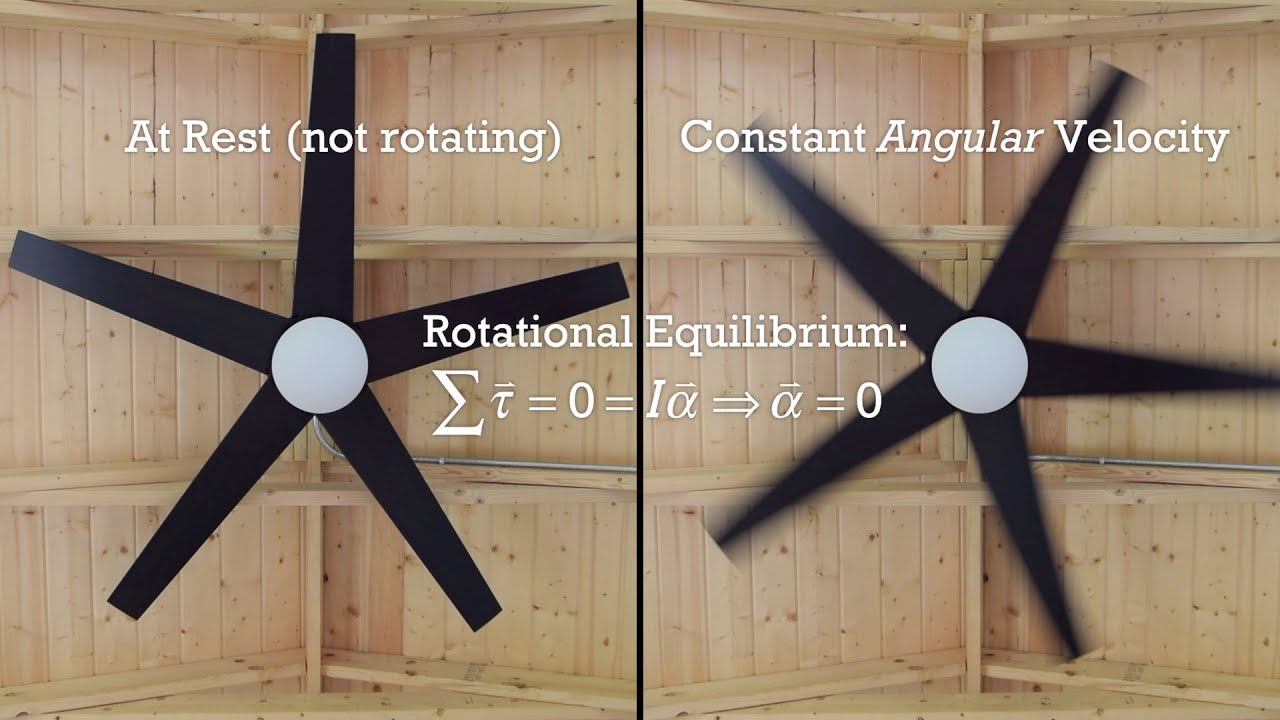
Rotational Equilibrium Introduction (and Static Equilibrium too!!)

D' Alemberts Principle | Dynamics | Engineering Mechanics

Vektor dan Kesetimbangan Gaya

Equilibrium of a particle - Triangle of forces | ExamSolutions

FISIKA KELAS XI || Kesetimbangan || DINAMIKA ROTASI & KESETIMBANGAN BENDA TEGAR
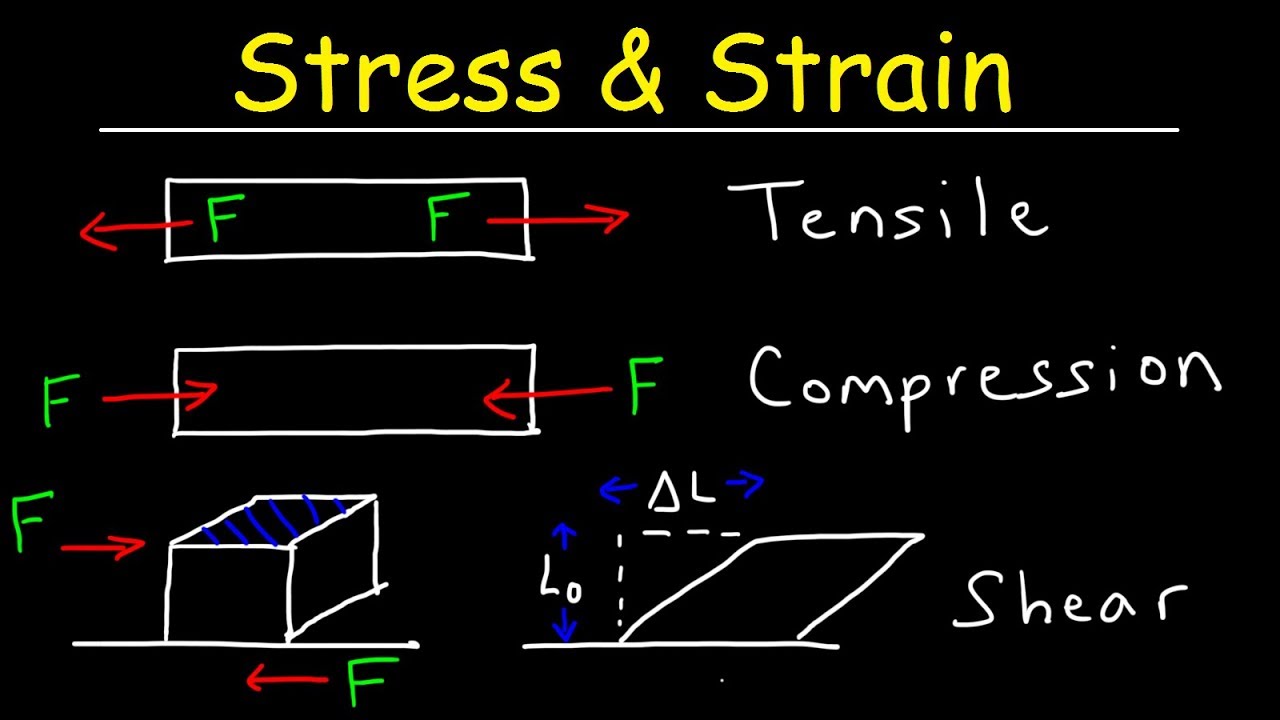
Tensile Stress & Strain, Compressive Stress & Shear Stress - Basic Introduction
5.0 / 5 (0 votes)
