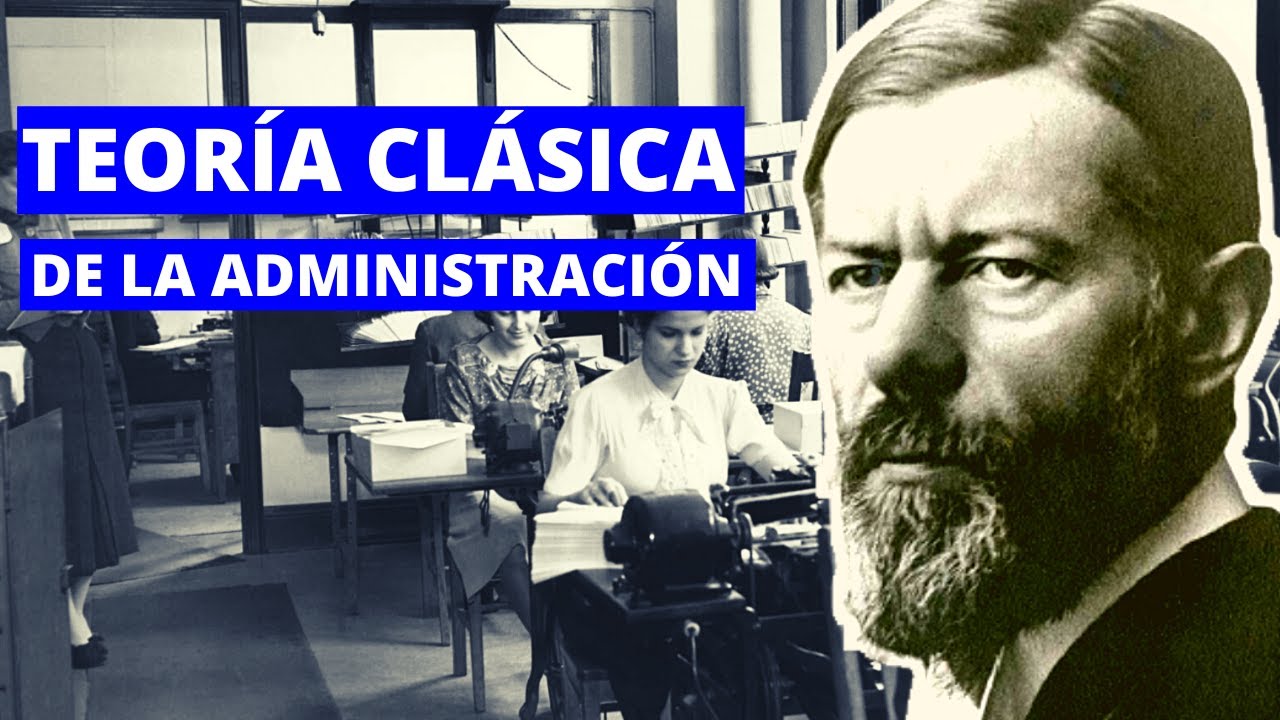
Teoria Clássica da Administração || Henry Fayol || Funções, Princípios, Criticas e muito + || Aula 6
Summary
TLDRThe video explores the Classical Theory of Administration, founded by Henri Fayol in the early 20th century. Fayol emphasized that organizational success relies more on administrative skills than technical expertise. He identified key organizational functions—technical, commercial, financial, security, accounting, and administrative—and outlined five administrative processes: planning, organizing, commanding, coordinating, and controlling. The theory also presents 14 principles of management, such as division of labor, authority, discipline, and unity of command, aimed at enhancing efficiency and harmony within organizations. While influential, the approach has been criticized for its rigid focus on formal structures and neglect of human and social factors in the workplace.
Takeaways
- 📜 The classical theory of administration emerged in 1916, shortly after the First World War, focusing on organizational structure to ensure efficiency.
- 👤 Henri Fayol, born in Constantinople and later working in France, is considered the founder of classical management theory.
- 🏭 Fayol emphasized that organizational success depends more on administrative skills of leaders than on technical expertise.
- ⚙️ He identified basic functions of a business: technical (production), commercial (buying/selling), financial (capital management), security (protection), accounting (records and controls), and administrative (integration of operations).
- 🗂 Administrative functions include planning, organizing, commanding, coordinating, and controlling to ensure effective management.
- 🔑 Fayol proposed principles of management such as division of labor, authority and responsibility, discipline, unity of command and direction, subordination of individual interests, fair remuneration, centralization, scalar chain, order, equity, stability of tenure, initiative, and esprit de corps.
- 🏛 Organization can be seen both as a formal unit (structure of work division) and as a management function within the administrative process.
- 📊 Formal organizational structures include line (pyramidal hierarchy) and staff (advisory roles without command authority).
- ⚠️ Classical theory faced criticisms for being overly simplistic, ignoring psychological and social aspects, relying on common sense rather than experiments, emphasizing extreme rationalism, and treating organizations as closed systems.
- 🎯 Overall, Fayol viewed administration as a holistic process in which coordination and harmony of all activities are essential for organizational success.
Outlines

This section is available to paid users only. Please upgrade to access this part.
Upgrade NowMindmap

This section is available to paid users only. Please upgrade to access this part.
Upgrade NowKeywords

This section is available to paid users only. Please upgrade to access this part.
Upgrade NowHighlights

This section is available to paid users only. Please upgrade to access this part.
Upgrade NowTranscripts

This section is available to paid users only. Please upgrade to access this part.
Upgrade NowBrowse More Related Video



5.0 / 5 (0 votes)
