How To Write GEOMETRY PROOFS | Segments and Angles | Geometry Online Lesson
Summary
TLDRIn this video tutorial, the focus is on how to write geometry proofs. The instructor covers three examples: a proof with line segments, supplementary angles, and the vertical angle theorem. Key steps include understanding the given statement, applying geometric definitions like congruence and supplementary angles, and using properties like the segment addition postulate and the transitive property. The video also reassures viewers that proofs, though seemingly intimidating, are manageable when broken down methodically. Stay tuned for future tutorials on proofs with triangles and parallel lines.
Takeaways
- 📘 Understanding the given statement is the first and most important step in writing a geometry proof.
- ✏️ Always organize proofs using a two-column format: one column for statements and one for reasons.
- 📐 The definition of a midpoint implies that it divides a segment into two congruent segments.
- 🔁 Congruent segments have equal lengths, allowing you to move from geometric statements to algebraic equations.
- ➕ The Segment Addition Postulate helps relate smaller segments to a larger segment.
- 🔄 Substitution is a key strategy for replacing equal quantities to simplify expressions.
- 🧮 Simplifying expressions (like combining like terms) is often the final step to reach the prove statement.
- 📏 Supplementary angles add up to 180 degrees, which is essential when working with angle proofs.
- 🔗 The Transitive Property allows you to set two expressions equal if they are both equal to the same value.
- ➖ Algebraic techniques, such as subtracting equal terms from both sides, are commonly used in geometry proofs.
- 📊 The definition of congruent angles states that angles with equal measures are congruent.
- 📌 The Vertical Angle Theorem can be proven using supplementary angles and the Linear Pair Postulate.
- 🧠 Breaking down complex theorems into smaller, familiar steps makes intimidating proofs more manageable.
Q & A
What is the first step in writing a geometry proof?
-The first step is to understand the problem and the given statement. This will guide the rest of the proof process.
Why is it important to state the given information in a geometry proof?
-Stating the given information is crucial because it provides the foundation for the rest of the proof. Everything in the proof will be based on this information.
What does it mean if two segments are congruent in geometry?
-If two segments are congruent, it means that they have the same length. This concept is key when solving problems involving line segments.
What is the segment addition postulate?
-The segment addition postulate states that if you have two adjacent line segments, the total length of the entire segment is the sum of the lengths of the two parts.
How can substitution help in a geometry proof?
-Substitution allows you to replace one expression with an equivalent expression. In the context of geometry proofs, it helps you make connections between different parts of the problem.
What is the definition of supplementary angles?
-Supplementary angles are two angles that add up to 180 degrees. This property is important when proving relationships between angles.
What is the transitive property in geometry?
-The transitive property states that if two things are each equal to a third thing, then they are equal to each other. In geometry, this is often used to connect multiple equations or relationships.
What is the definition of congruent angles?
-Congruent angles are angles that have the same measure. This is a key concept when proving relationships between different angles in geometry.
What is the Vertical Angle Theorem?
-The Vertical Angle Theorem states that when two lines intersect, the angles opposite each other (vertical angles) are congruent.
How can you prove that two angles are congruent using the Vertical Angle Theorem?
-To prove that two angles are congruent using the Vertical Angle Theorem, you can show that the angles are vertical angles (opposite each other) and apply the theorem, which states they must be congruent.
Outlines

This section is available to paid users only. Please upgrade to access this part.
Upgrade NowMindmap

This section is available to paid users only. Please upgrade to access this part.
Upgrade NowKeywords

This section is available to paid users only. Please upgrade to access this part.
Upgrade NowHighlights

This section is available to paid users only. Please upgrade to access this part.
Upgrade NowTranscripts

This section is available to paid users only. Please upgrade to access this part.
Upgrade NowBrowse More Related Video

Postulates and Paragraph Proof
Triangle Congruence Proofs Explained SSS, SAS, ASA, AAS, HL
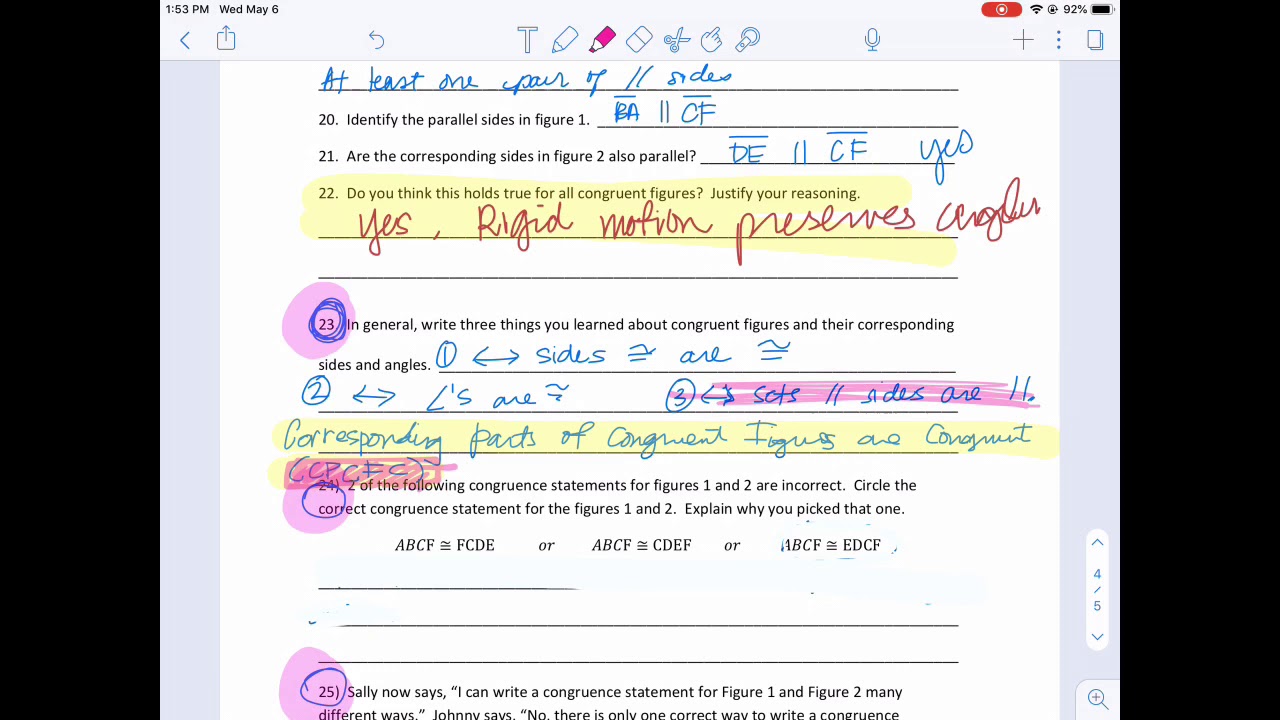
Congruent Figures part 2
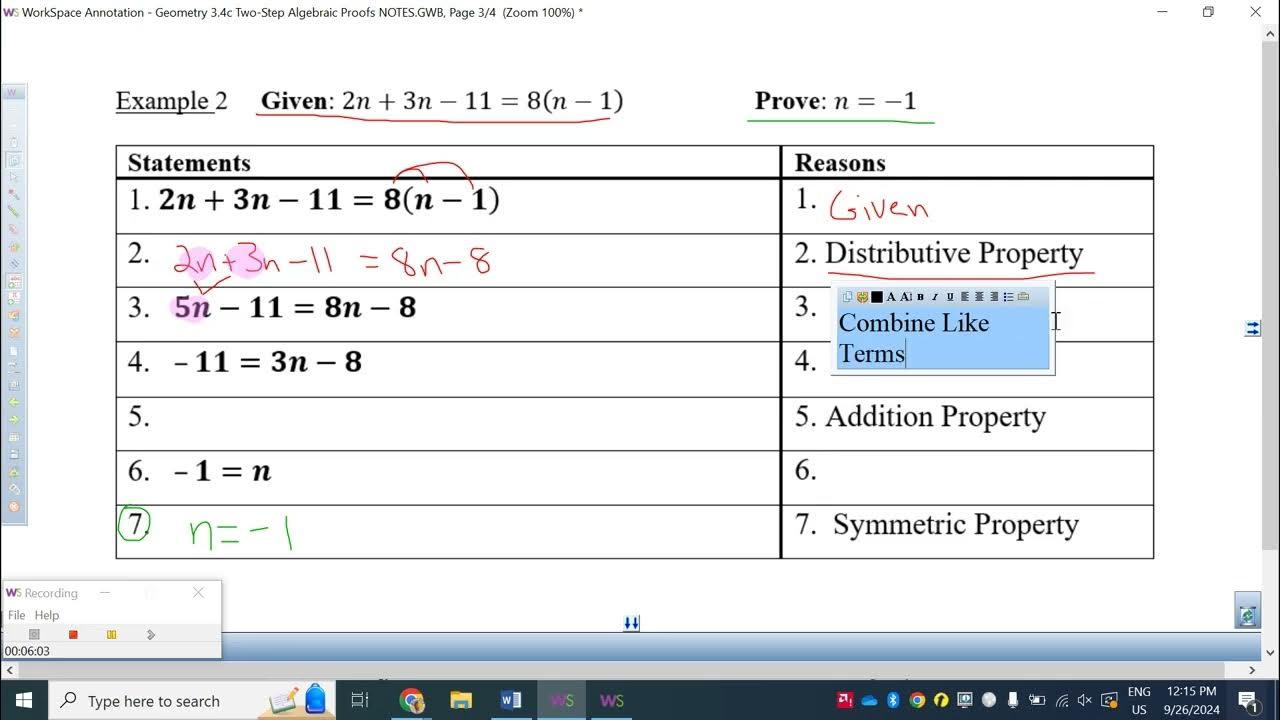
Geo 3 4c Two Column Algebraic Proofs VIDEO
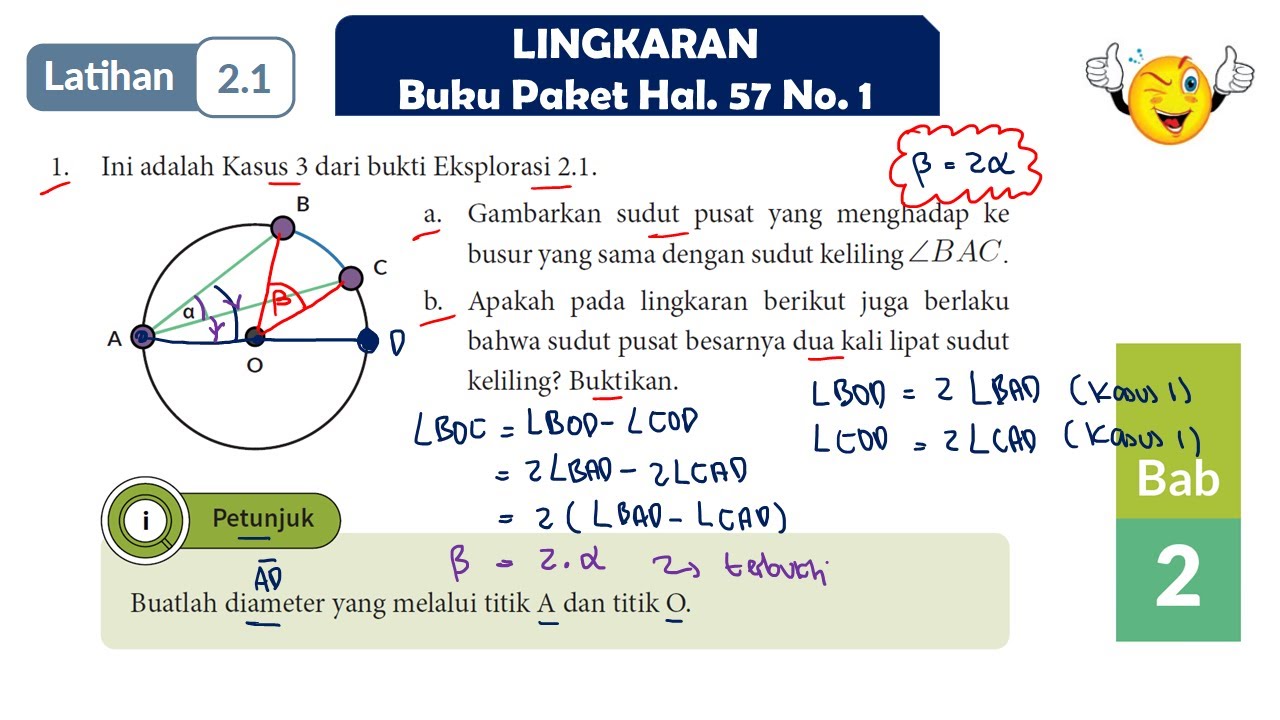
LATIHAN 2.1 NO 1 SUDUT PUSAT SUDUT KELILING MATEMATIKA SMA KELAS 11 #kurikulummerdeka #matematikasma

Properties - Roblox Beginners Scripting Tutorial #5 (2025)
5.0 / 5 (0 votes)
