Economist explains what happens after AI takes all jobs
Summary
TLDRThis transcript delves into the rapidly advancing world of AI and automation, exploring how these technologies may replace human jobs, particularly in white-collar sectors. The discussion focuses on the economic consequences of mass unemployment, wage pressures, and the need for solutions like Universal Basic Income (UBI). It also touches on the dangers of power concentration in AI development and the possibility of a technological utopia or dystopia. The future of work, societal values, and the ethical considerations of AI's dominance are examined, highlighting both the potential for abundance and the risks of increased inequality.
Takeaways
- 😀 AI and automation could rapidly replace both white-collar and manual jobs, creating a large class of unemployed workers.
- 😀 The economic challenge of widespread job displacement: If automation progresses too quickly, unemployment could rise dramatically, and wages could fall.
- 😀 There is a fundamental question about how society will adapt to a future where machines can perform most tasks better than humans.
- 😀 Economists have long argued that automation benefits society by increasing efficiency, but for displaced workers, it often leads to job loss and wage reduction.
- 😀 There is a historical pattern where automation leads to more complex, higher-paying jobs, but AI may disrupt this trend, particularly for cognitive tasks.
- 😀 The risk of monopolistic control in the AI industry is growing, with a few companies potentially controlling vast power, leading to anti-competitive practices.
- 😀 As AI surpasses human cognitive capabilities, the power held by AI-driven companies could surpass that of human-led organizations, raising serious concerns about governance and control.
- 😀 The future could either lead to widespread economic prosperity through shared AI benefits or to dystopian inequality if AI’s benefits are not equitably distributed.
- 😀 Universal basic income (UBI) is one proposed solution to mitigate the impact of mass automation, but political and logistical challenges make it difficult to implement.
- 😀 If AI becomes significantly more capable, it could lead to a shift in the labor market, where humans no longer need to perform many tasks, challenging the existing economic structure.
- 😀 The concept of vertical integration in AI and tech markets could reduce competition and increase the market power of dominant players, limiting innovation and raising prices.
- 😀 The future of AI alignment and governance is critical to ensuring that AI technologies work for the collective good, avoiding dystopian outcomes and fostering a fair, abundant future.
Q & A
What role do the wealthiest people play in the technological revolution discussed in the transcript?
-The wealthiest people, like Elon Musk, are driving the technological revolution. They are leading the push for automation and AI, which they believe will replace many human jobs, particularly in industries like manufacturing and even white-collar jobs.
What are the potential consequences of automation for workers in the coming years?
-As AI and automation technologies advance, many workers, including white-collar professionals, could find their jobs obsolete. This could lead to mass unemployment, with a significant portion of the population potentially losing their income and livelihood.
How does the script explain the relationship between automation and wages?
-The script outlines a hump-shaped relationship between automation and wages. Initially, automation increases productivity, benefiting workers with higher wages. However, as automation takes over more tasks, human labor becomes less valuable, and wages may decline, especially when only a few tasks remain for humans.
Why do economists argue that automation is ultimately good for society, despite its negative impacts on individual workers?
-Economists argue that automation leads to greater economic efficiency, which increases wealth for society as a whole. While it can be painful for individual workers whose jobs are automated, it drives overall economic growth by allowing the economy to produce more with less.
What is the ‘lump of labor fallacy,’ and why is it mentioned in the script?
-The lump of labor fallacy is the idea that there is a fixed amount of work in the economy, and if automation replaces some jobs, it reduces the total number of jobs available. The script refutes this fallacy, explaining that economies are adaptable, and workers can transition into new roles as technology evolves.
What is the potential impact of AI on specialized professions like doctors and surgeons?
-AI has the potential to surpass humans in specialized fields such as medicine. Machines could perform tasks like diagnosing diseases and performing surgeries more efficiently and cost-effectively than humans, potentially rendering human doctors and surgeons unnecessary in certain contexts.
What is the concept of Universal Basic Income (UBI), and how is it proposed to address job displacement caused by automation?
-Universal Basic Income (UBI) is a policy proposal where every individual receives a fixed income from the government, regardless of their employment status. The script suggests that UBI could help support workers displaced by automation, ensuring they can meet basic needs while the economy adapts to technological advancements.
What is the idea of a ‘seed UBI’ and how does it differ from full UBI implementation?
-A ‘seed UBI’ is a small, initial payment to test the concept of Universal Basic Income, such as $10 per month. It is proposed as a first step to gradually introduce UBI while the infrastructure is being developed, with the possibility of scaling up payments if economic disruptions occur due to automation.
What are the concerns related to monopolies in the AI industry, and why is vertical integration a risk?
-Monopolies in the AI industry are a concern because they can lead to power concentration, reduce competition, and drive up prices. Vertical integration, where one company controls multiple stages of AI production, could exacerbate these risks by making it harder for consumers to switch providers and reducing overall innovation in the market.
How does the script suggest that AI could lead to greater abundance, and what does this future look like?
-The script suggests that if the benefits of AI and automation are shared equitably, it could lead to a future of abundance where work is optional, and everyone has access to the products and services they need. This would lead to an increase in human consumption and a significant growth in global GDP.
Outlines

This section is available to paid users only. Please upgrade to access this part.
Upgrade NowMindmap

This section is available to paid users only. Please upgrade to access this part.
Upgrade NowKeywords

This section is available to paid users only. Please upgrade to access this part.
Upgrade NowHighlights

This section is available to paid users only. Please upgrade to access this part.
Upgrade NowTranscripts

This section is available to paid users only. Please upgrade to access this part.
Upgrade NowBrowse More Related Video

AI Will Replace White Collar Jobs in 12 Months? The Truth No One Explains

AI Expert on Who Will Lose Jobs to AI First | MOONSHOTS
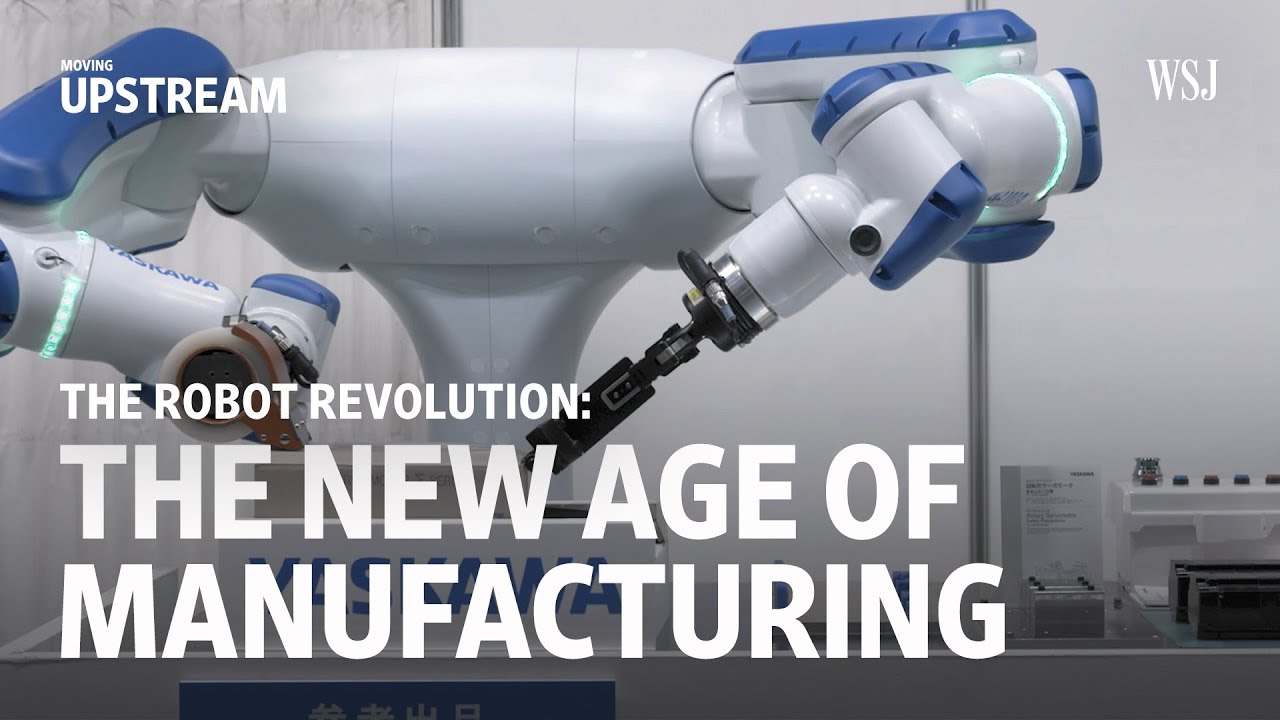
The Robot Revolution: The New Age of Manufacturing | Moving Upstream

Indústria 4.0 traz novas mudanças para o mercado de trabalho

Os 10 trabalhos com maior potencial de crescimento, segundo o Fórum Econômico Mundial

The Last 7 Years of Human Work - Understanding the AUTOMATION CLIFF!
5.0 / 5 (0 votes)
