Entrepreneurial Marketing Showdown: Amazon vs Walmart in the Age of A.I.
Summary
TLDRThis lecture introduces entrepreneurial marketing management by comparing the strategies of Amazon and Walmart. It highlights how Amazon revolutionized e-commerce with customer-centric technology, infinite shelf space, fast delivery, and trust-building, while Walmart optimized logistics to offer everyday low prices. The focus is on the distinct business models, core strategies, and how AI is shaping the future of retail. The lecture emphasizes that in today's competitive landscape, understanding customer data, leveraging AI, and choosing the right platform, rather than just price or size, will determine success in the next decade.
Takeaways
- 😀 Amazon revolutionized e-commerce by focusing on convenience, trust-building, and fast home delivery, solving the problem of limited access and geographic constraints.
- 😀 Walmart, on the other hand, solved the problem of price inequality in rural areas by offering bulk buying, operational efficiency, and everyday low prices (EDLP).
- 😀 Amazon's core strategy revolves around technology and customer obsession, emphasizing long-term reinvestment, platform dominance, and data-driven personalization.
- 😀 Walmart's core strategy is centered around cost leadership, supply chain efficiency, scale advantages, and physical proximity to customers.
- 😀 The rivalry between Amazon and Walmart is an example of entrepreneurial evolution (Amazon) versus corporate dominance (Walmart).
- 😀 Amazon's business model is digital, with a focus on technology, while Walmart’s model is asset-heavy, focusing on physical retail and logistics.
- 😀 In the modern digital world, Amazon’s model is more scalable globally, especially through the growth of e-commerce and cloud computing (AWS).
- 😀 AI is a critical component in both companies' strategies, helping to optimize logistics, predict consumer demand, and personalize marketing efforts.
- 😀 The omnichannel approach (buy online, pick up in-store) is becoming crucial in retail, with Walmart leading in this space by integrating e-commerce with physical stores.
- 😀 The future of entrepreneurial marketing is not about being the cheapest or the biggest, but about being the most intelligent—leveraging data, AI, and consumer insights to drive growth.
Q & A
What is the main focus of the lecture in the provided script?
-The lecture focuses on comparing the business models and strategies of Amazon and Walmart in the context of entrepreneurial marketing management. It highlights how both companies have addressed different market problems and utilized technology, particularly AI, to evolve in the retail industry.
How did Amazon address the problem of convenience and access in the 1990s?
-Amazon addressed the problem of convenience and access by offering online shopping, eliminating geographic limitations, providing infinite shelf space, and ensuring fast home delivery. It also introduced customer trust through payment-first models, where customers paid before receiving products, which was revolutionary at the time.
What problem did Walmart solve in the 1960s, and how did they do it?
-Walmart solved the problem of price inequality, particularly in rural America, where people paid higher prices than those in cities. They achieved this by using bulk buying, operational efficiency, and a strategy of Everyday Low Prices (EDLP) to make products more affordable for rural consumers.
What is the core strategy of Amazon, and how does it differ from Walmart’s?
-Amazon's core strategy is to be a technology company that sells retail. It focuses on customer obsession, long-term reinvestment, platform dominance, and data-driven personalization. In contrast, Walmart is a retail company that optimizes logistics, focusing on cost leadership, supply chain efficiency, and physical stores to dominate the retail market.
How does Amazon use AI to improve its business model?
-Amazon uses AI for personalized marketing, predictive demand forecasting, dynamic pricing, and logistical optimization. AI helps Amazon anticipate customer needs, reduce inventory costs, and optimize the delivery process, making the entire business more efficient and customer-centric.
What is the difference between Amazon and Walmart's approach to logistics?
-Amazon focuses on digital logistics and a tech-driven e-commerce platform with no physical stores. It uses advanced technology for fast home delivery and optimized supply chains. Walmart, on the other hand, combines both physical stores and e-commerce, offering omnichannel options like 'buy online, pick up in store,' and has a heavy focus on physical proximity to customers.
What is the concept of 'AI as the new oil' in entrepreneurial marketing?
-The phrase 'AI as the new oil' refers to the idea that data and AI are becoming the most valuable resources for businesses. Companies that can harness AI and predictive analytics to understand customer behavior and optimize operations will have a significant competitive advantage.
How does Walmart utilize AI in its operations compared to Amazon?
-Walmart has started to integrate AI into its operations, primarily for e-commerce and logistical optimization. While Amazon has a head start, using AI for personalized marketing and dynamic pricing, Walmart is leveraging AI for inventory management, supply chain efficiency, and omnichannel integration (buy online, pick up in store).
What is the 'omnichannel' strategy, and how does it benefit customers?
-The omnichannel strategy allows customers to shop across both digital and physical platforms. Walmart, for example, offers 'buy online, pick up in store,' where customers can purchase products online and pick them up at any nearby Walmart store. This strategy provides greater convenience, accessibility, and flexibility to customers.
What is the key takeaway regarding the future of entrepreneurial marketing according to the lecture?
-The key takeaway is that the future of entrepreneurial marketing is not about who offers the cheapest price or the largest store but about who understands their customers better using data and AI. Future entrepreneurs must focus on building data systems, integrating AI from the start, and thinking about platforms rather than just products to scale and succeed in the market.
Outlines

This section is available to paid users only. Please upgrade to access this part.
Upgrade NowMindmap

This section is available to paid users only. Please upgrade to access this part.
Upgrade NowKeywords

This section is available to paid users only. Please upgrade to access this part.
Upgrade NowHighlights

This section is available to paid users only. Please upgrade to access this part.
Upgrade NowTranscripts

This section is available to paid users only. Please upgrade to access this part.
Upgrade NowBrowse More Related Video

Lec 51-AI and Marketing Channel Management

Video Pertemuan 1.PENDAHULUAN
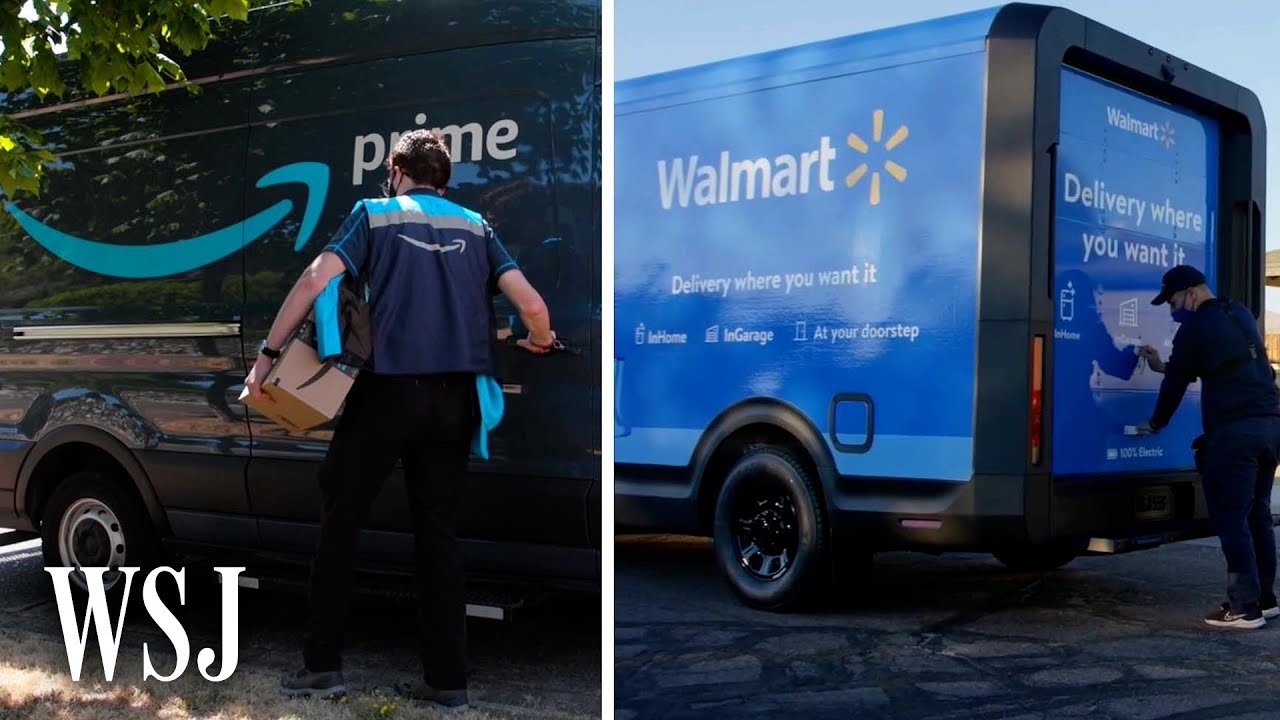
Amazon vs. Walmart: How the Giants Look to Each Other to Best Each Other | WSJ

STRATEGI PEMASARAN BERBASIS TEKNOLOGI INFORMASI / DIGITAL MARKETING

What is Corrupt? | Zephyr Teachout | TEDxBinghamtonUniversity

PERTEMUAN KE 1 MATA KULIAH PEMASARAN INTERNASIONAL (RUANG LINGKUP PEMASARAN INTERNASIONAL)
5.0 / 5 (0 votes)
