TUGAS SEJARAH WAWANCARA MASA REFORMASI SBY - JOKOWI KELAS 12.10 KELOMPOK 3
Summary
TLDRThis interview focuses on the impacts of the reform era under Presidents Susilo Bambang Yudhoyono (SBY) and Joko Widodo (Jokowi) in Jampang Kulon. The interviewee reflects on key changes in politics, economy, education, and social life, contrasting the reform period with the past. Topics discussed include political freedoms, economic recovery, educational advancements, and the development of local infrastructure. The interview also highlights personal experiences during the reform period, including challenges, freedoms gained, and hopes for the future of the region.
Takeaways
- 😀 The interview focuses on the reform periods under Presidents Susilo Bambang Yudhoyono (SBY) and Joko Widodo (Jokowi) in Indonesia, specifically in Jampang Kulon.
- 😀 The interview participants introduce themselves, outlining their roles in the interview, including positions such as secretary, photographer, videographer, and interviewer.
- 😀 The interviewee, Ridwan, recalls being 16 years old when SBY became president and highlights his memories of the reform era.
- 😀 Ridwan mentions that during the SBY and Jokowi administrations, there was an increase in freedom, particularly freedom of speech and political expression, though it was still constrained by the constitution.
- 😀 Key changes in Jampang Kulon during the reform period included greater autonomy in local governance, such as the ability to propose the division of regions (pemekaran).
- 😀 Ridwan discusses how Indonesia’s economy, particularly during the era of President BJ Habibie, experienced a severe crisis, but recovery occurred with the administration of SBY.
- 😀 Ridwan acknowledges the positive impact of government programs, particularly in stabilizing the rupiah and reducing inflation.
- 😀 The introduction of BPJS (Health Insurance) and the 20% allocation of the education budget were significant advancements in Jampang Kulon, improving access to healthcare and education.
- 😀 Social and cultural expressions flourished during the reform period, with local cultural values being more prominently expressed and celebrated.
- 😀 The political system evolved during the reform era with the introduction of direct presidential elections, a major shift from the previous system of indirect election through the parliament.
- 😀 The public was granted more freedom to express opinions without the fear of political intimidation or criminalization, particularly during SBY's presidency.
- 😀 A notable political event during SBY's term was the controversial hike in fuel prices, which sparked political tension and protests.
- 😀 While the interviewee notes a lack of significant social conflicts during the SBY era, he mentions that current times have seen a noticeable rise in political corruption and other challenges.
- 😀 Ridwan expresses gratitude for the reforms under both SBY and Jokowi, particularly in terms of the freedoms granted to citizens, as well as the improvements in infrastructure under Jokowi.
- 😀 The interview concludes with Ridwan urging the younger generation to take advantage of the educational opportunities provided during the reform period, stressing the importance of utilizing accessible education for future success.
Q & A
What led to the awareness of the reform era for the interviewee?
-The interviewee became aware of the reform era when President Susilo Bambang Yudhoyono (SBY) was elected. He was 16 years old and in the first year of high school at the time.
How did the political landscape change during the reform era under SBY and Joko Widodo?
-The political landscape saw a shift with the introduction of direct presidential elections, which started with SBY, making him the first president elected directly by the people. This change marked a significant shift from the previous system where the president was chosen by the parliament.
What were some notable positive changes in Jampang Kulon during the reform era?
-During the reform era, there was increased freedom for local communities, including the ability to propose regional expansion, which wasn't possible before. The local area also saw improvements in infrastructure and economic stability due to national reforms.
How did the economy change during the reform era, particularly under President BJ Habibie and SBY?
-Under BJ Habibie, the country faced an economic crisis with a plunging rupiah and soaring dollar rates. However, by the time SBY took office, the economy stabilized, inflation was controlled, and the currency began to recover.
What were the impacts of the education and healthcare reforms during the reform era?
-Education reforms, such as the allocation of 20% of the national budget to education, made schooling from primary to secondary levels free for students. Healthcare was also improved with the introduction of the BPJS Kesehatan program, which provided accessible healthcare services.
What significant cultural and social changes occurred during the reform era?
-There was an increased freedom to express local cultural values and traditions, with a greater emphasis on local wisdom and community-based initiatives. This also contributed to a more inclusive and open social environment.
Can you describe the political climate during President SBY's administration regarding issues like fuel price hikes?
-One of the most memorable political events during SBY's presidency was the hike in fuel prices, which led to political unrest and debates in the parliament. This issue intensified the political climate, causing the fuel price debate to shift from an economic issue to a political one.
What was the state of political freedom during the reform era under SBY and Joko Widodo?
-There was a significant increase in political freedom during the reform era, with citizens granted the liberty to express opinions and criticize the government without the fear of being intimidated or criminalized. This level of freedom was much higher compared to previous regimes.
What are the differences between the reform era and the current situation, according to the interviewee?
-The interviewee noted that political money or 'political cash' became more visible during the reform era, especially around election times. There was also a greater sense of freedom to criticize the government, a stark contrast to the current situation with stricter laws regarding criticism of the government, such as the new Criminal Code.
What is the interviewee's perspective on corruption in Indonesia during the reform era and today?
-The interviewee observed that while corruption was still an issue during the reform era, cases such as the Hambalang project, which implicated high-ranking officials close to SBY, highlighted the scale of corruption during that time. Today, corruption still persists, albeit with different dynamics.
What are the interviewee's hopes for the future of Jampang Kulon?
-The interviewee hopes for continued progress in Jampang Kulon, especially in the areas of education, technology, and economic growth. He envisions a more advanced community with better opportunities for development.
What message does the interviewee have for the younger generation regarding the reform era?
-The interviewee encourages the younger generation to take full advantage of the accessible and even free education opportunities provided during the reform era. He urges them to learn as much as possible to contribute to the nation's progress.
Outlines

This section is available to paid users only. Please upgrade to access this part.
Upgrade NowMindmap

This section is available to paid users only. Please upgrade to access this part.
Upgrade NowKeywords

This section is available to paid users only. Please upgrade to access this part.
Upgrade NowHighlights

This section is available to paid users only. Please upgrade to access this part.
Upgrade NowTranscripts

This section is available to paid users only. Please upgrade to access this part.
Upgrade NowBrowse More Related Video
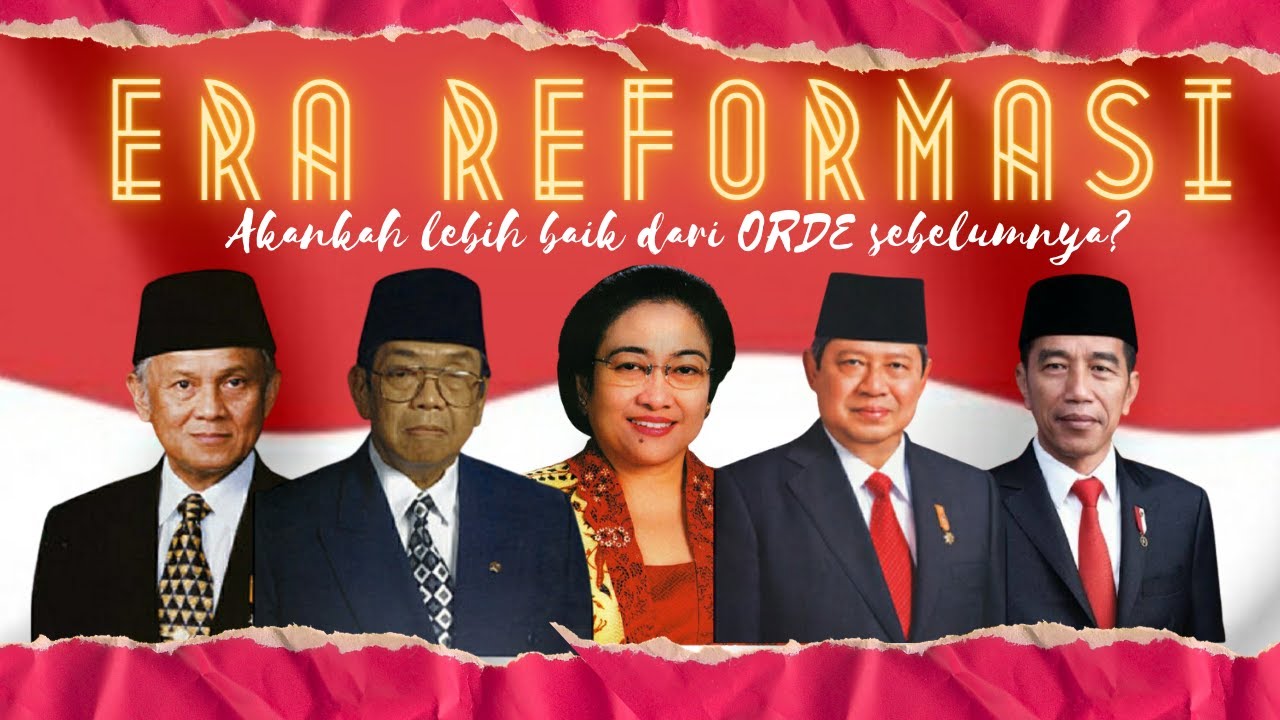
REFORMASI 1998 HINGGA KINI

Perkembangan Politik dan Ekonomi Masa Reformasi

Gebrak Podium! Pidato Pertama Presiden Prabowo, Singgung Megawati Hingga Jokowi
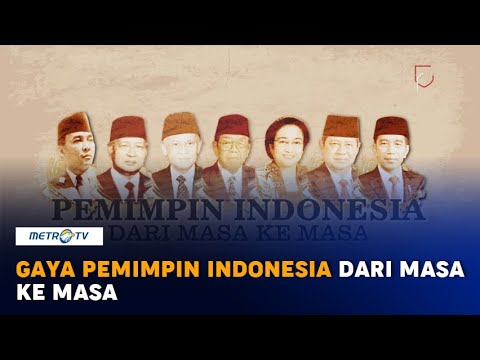
Pemimpin Indonesia dari Masa ke Masa

SBY Sampaikan Pidato Perpisahan di Istana Negara
IPS kelas 9 BAB 3 tantangan pembangunan Indonesia masa Orde Baru dan Reformasi kurmer rangkuman sem2
5.0 / 5 (0 votes)
