Praktikum Geologi Struktur 2024 - Modul 1. Pendahuluan Modul Geologi Struktur - 3. Analogi Lapisan
Summary
TLDRIn this video, the instructor delves into structural geology, focusing on geological maps, the concept of dip and strike, and how layers of rocks are arranged and deformed over time. The video explains the significance of analyzing geological features, including the relationship between mountains, valleys, and rock layers. Using examples, the instructor demonstrates how to calculate dip and understand the elevation changes. Students are encouraged to practice calculating dip and direction in upcoming sessions. The session concludes with a promise to explore more in future meetings, helping students grasp the complexities of structural geology.
Takeaways
- 😀 Introduction to geology structure practicum video, focusing on geological mapping, structural lines, and analogies of layers.
- 😀 The importance of understanding geological layers and how they relate to elevation changes, such as valleys and mountains.
- 😀 The concept of stratigraphy: the youngest rock is at the top, and the oldest is at the bottom in a flat layer structure.
- 😀 Deformation of horizontal layers leads to tilting, which is studied in secondary geological structures.
- 😀 Dip and strike are key elements in determining the angle and direction of geological layers and their deformational characteristics.
- 😀 Geological layers can have varying dip angles, from nearly horizontal to steep, as illustrated by different geological cross-sections.
- 😀 Explanation of geological maps showing different colored rock layers, their boundaries, and the relationship with elevation.
- 😀 Practical steps for measuring the dip angle: using vertical lines and elevation differences to calculate tilt direction.
- 😀 Example: using the geological map to trace the contact points between different rock layers and determining the dip direction based on elevation drop.
- 😀 The dip angle can be calculated using elevation differences, and the dip direction is toward the east in this specific example.
- 😀 The upcoming module will include practice problems for calculating dip angles and directions to further reinforce the concepts.
Q & A
What is the main objective of this geological structure practical module?
-The main objective is to help students understand geological maps, structural lines, and the concept of geological layers and their deformations, including applying the principles of stratigraphy and dip in geological interpretation.
What is meant by 'analogous layers' in the context of this geological practical?
-Analogous layers refer to the comparison of geological layers to natural formations like valleys and mountains. The principle helps visualize how these layers interact in topography, with higher layers resembling peaks and lower ones resembling valleys.
What does the principle of stratigraphy tell us about rock layers?
-The principle of stratigraphy states that rock layers are typically deposited horizontally, with the youngest layers on top and the oldest layers at the bottom. This helps to establish a chronological order of geological formations.
How does the concept of dip affect geological structures?
-Dip refers to the angle of inclination of geological layers from the horizontal. When layers are tilted, their dip angles can vary, often influenced by tectonic forces, and this is key in interpreting the geological structure and the direction of deformation.
How do geological maps represent the layers of rock?
-Geological maps use different colors and symbols to represent various rock layers. They include contours and boundaries that depict changes in elevation and the distribution of rock types across the landscape.
What happens when a rock layer experiences deformation?
-When a rock layer experiences deformation, its original horizontal orientation changes. This results in tilted layers, which can vary in steepness depending on the intensity of the deforming forces.
What is the significance of strike and dip in structural geology?
-Strike refers to the direction of the line formed by the intersection of a horizontal plane and an inclined geological surface. Dip refers to the angle at which the layer is inclined from the horizontal. These two elements are essential for understanding the orientation and movement of geological layers.
How is the dip direction determined from geological maps?
-The dip direction is determined by identifying the orientation of a layer and tracing its inclination from a specific contact point. It can be measured using tools like a protractor or compass, and it reveals the direction the layer slopes towards.
What does a vertical dip of 90 degrees imply about a rock layer?
-A vertical dip of 90 degrees means that the rock layer is perfectly upright, forming a vertical wall. This is a rare occurrence, often associated with significant tectonic forces or fault zones.
What role does the 'contact' between different rock layers play in geological analysis?
-The 'contact' refers to the boundary between different rock layers, and understanding its location and orientation helps determine the relative ages of the layers and the direction of any geological deformations or faulting.
Outlines

This section is available to paid users only. Please upgrade to access this part.
Upgrade NowMindmap

This section is available to paid users only. Please upgrade to access this part.
Upgrade NowKeywords

This section is available to paid users only. Please upgrade to access this part.
Upgrade NowHighlights

This section is available to paid users only. Please upgrade to access this part.
Upgrade NowTranscripts

This section is available to paid users only. Please upgrade to access this part.
Upgrade NowBrowse More Related Video

Praktikum Geologi Struktur 2024 - Modul 2. Proyeksi dalam Struktur Geologi - 2. Metode Tiga Titik

Physical Geology: Structure, strike and dip

Praktikum Geologi Struktur 2024 - Modul 3. Proyeksi Stereografi - 2. Polar Net dan Rose Diagram

Trend and Plunge : Gores Garis Pada Sesar
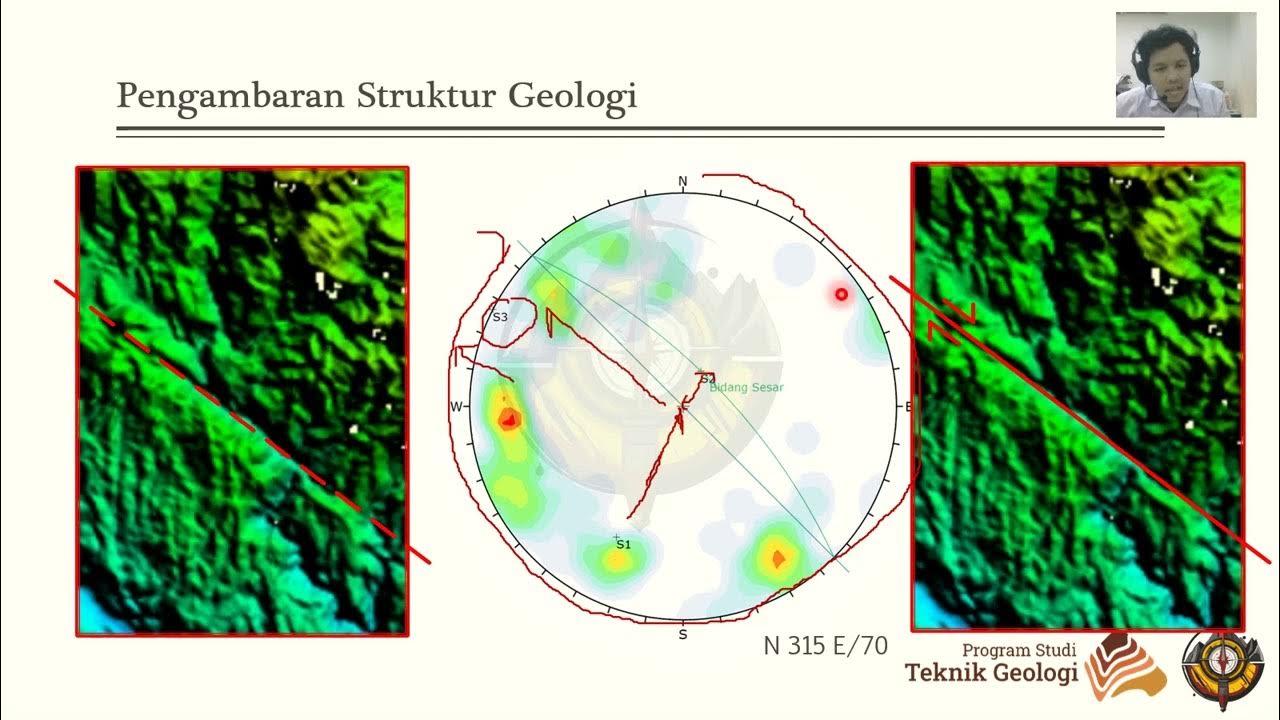
Praktikum Geologi Struktur 2024 - Modul 10. Prediksi Singkapan - 2. Penggambaran Struktur Geologi

Praktikum Geologi Struktur 2024 - Modul 1. Pendahuluan Modul Geologi Struktur - 2. Pengukuran Data
5.0 / 5 (0 votes)
