Il microscopio Parte 1
Summary
TLDRThis video lesson provides an in-depth exploration of microscopes, focusing on both optical and electron microscopes. The script explains the importance of magnification and resolution, how the human eye’s limitations are overcome with microscopes, and the differences between optical and electron microscopes. It also delves into the technical components of these instruments, such as light sources, lenses, and electron beams. The lesson highlights how electron microscopes offer superior resolution and magnification, allowing for the observation of extremely small objects, such as viruses and biomolecules, that optical microscopes cannot detect.
Takeaways
- 😀 Microscopes are essential tools for studying biology, with two primary types: optical microscopes and electron microscopes.
- 😀 An optical microscope uses light to magnify objects and allows us to observe details invisible to the naked eye, with magnification and resolution being crucial factors.
- 😀 Magnification refers to the ability to enlarge objects, while resolution refers to the ability to distinguish two closely spaced points as separate.
- 😀 The resolution of the human eye is limited to 0.2 mm (200 microns), which is why microscopes allow us to observe smaller details that the eye can't detect.
- 😀 The optical microscope's resolution is limited to 200 nanometers (0.2 microns), which is a thousand times greater than human eye resolution.
- 😀 To observe even smaller objects, such as viruses or biomolecules, we need electron microscopes that use electron beams instead of light, offering much higher magnification and resolution.
- 😀 Electron microscopes require a vacuum environment because electrons are easily scattered in the air and cannot pass through glass lenses.
- 😀 Unlike optical microscopes, which use glass lenses, electron microscopes use electromagnetic lenses to focus electron beams.
- 😀 The image produced by an electron microscope is not visible to the naked eye. Instead, it isMicroscope Key Takeaways captured on a photographic plate and processed by computers to generate an image for observation.
- 😀 Preparing samples for electron microscopy involves creating ultra-thin slices of the object to allow electrons to pass through, using specialized equipment like ultramicrotomes.
- 😀 A scanning electron microscope (SEM) works by directing electron beams onto the object, causing electrons to bounce back and be detected to create an image.
- 😀 Electron microscopes are larger, more expensive, and more complex than optical microscopes, but their high resolution allows us to observe much finer details of cells and subcellular structures.
Q & A
What are the two main types of microscopes discussed in the script?
-The two main types of microscopes discussed are the optical microscope and the electron microscope.
What is the purpose of an optical microscope?
-An optical microscope is used to magnify objects using light, allowing us to observe details that are invisible to the naked eye.
How does magnification relate to the resolution of a microscope?
-Magnification refers to the ability to enlarge an object, while resolution refers to the ability to distinguish two points that are close together. A microscope must have both good magnification and high resolution to produce clear images.
What is the resolution limit of the optical microscope?
-The resolution limit of an optical microscope is 200 nanometers (0.2 microns), which is a thousand times better than the human eye.
Why can't optical microscopes observe objects smaller than 0.2 microns?
-Optical microscopes rely on light, which has a limited resolution of 0.2 microns. Objects smaller thanMicroscope Q&A JSON Output this cannot be distinguished clearly because the light cannot resolve them.
What does an electron microscope use instead of light?
-An electron microscope uses a beam of electrons instead of light, allowing it to achieve much higher resolution.
Why do electron microscopes require electromagnetic lenses instead of glass lenses?
-Electron microscopes require electromagnetic lenses because glass lenses are transparent to light but not to electrons. Electromagnetic lenses use magnets to focus and direct the electron beam.
How does the electron microscope create an image if the human eye cannot see electrons?
-The image from an electron microscope is captured on a photographic plate or by a detector, which then transmits the data to a computer to create a visible image on a screen.
Why do objects need to be thin for electron microscopy?
-Objects need to be thin for electron microscopy because electrons cannot penetrate thick samples. The sample must be thin enough to allow the electrons to pass through.
What is the role of the ultra-microtome in electron microscopy?
-The ultra-microtome is used to slice objects into extremely thin sections, which are necessary for electron microscopy since electrons can only pass through very thin samples.
What is the key difference between a transmission electron microscope (TEM) and a scanning electron microscope (SEM)?
-A transmission electron microscope (TEM) passes electrons through the sample to create an image, while a scanning electron microscope (SEM) uses electrons that bounce off the sample to generate a different kind of image.
Outlines

This section is available to paid users only. Please upgrade to access this part.
Upgrade NowMindmap

This section is available to paid users only. Please upgrade to access this part.
Upgrade NowKeywords

This section is available to paid users only. Please upgrade to access this part.
Upgrade NowHighlights

This section is available to paid users only. Please upgrade to access this part.
Upgrade NowTranscripts

This section is available to paid users only. Please upgrade to access this part.
Upgrade NowBrowse More Related Video

Estudo das Células 01 - Métodos de Estudo
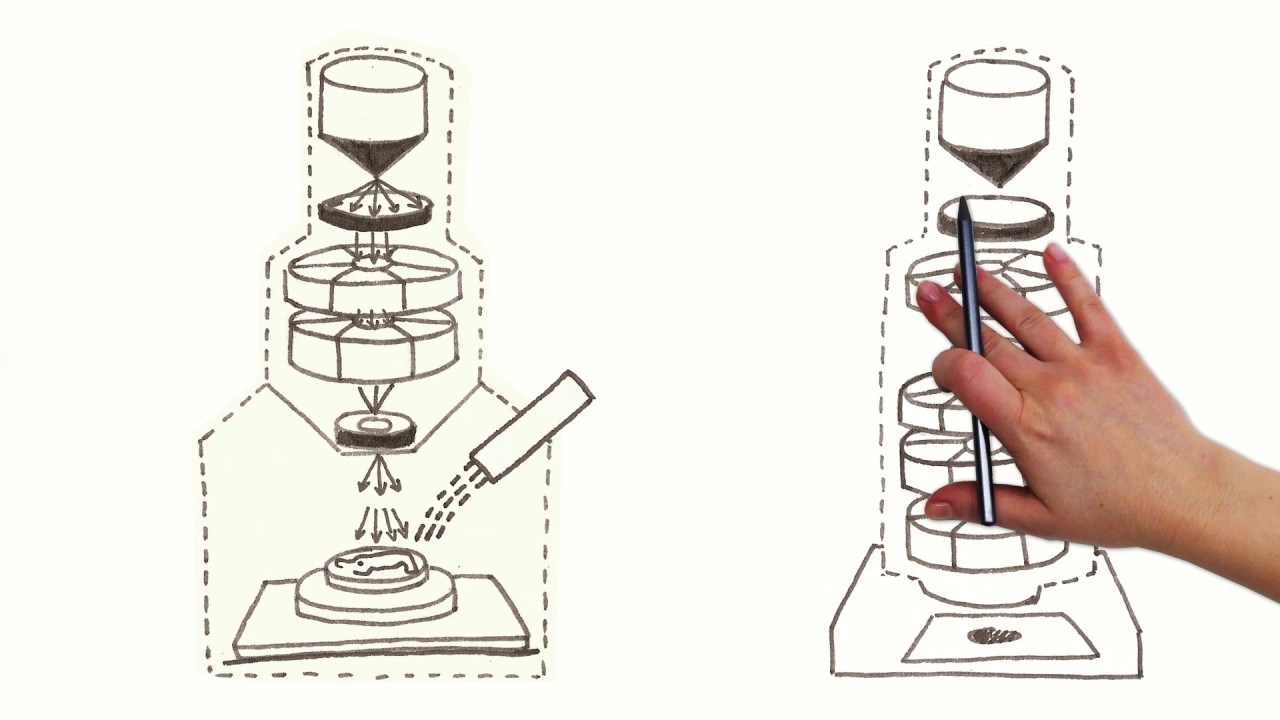
2 The Principle of the Electron Microscope

How to study cells - Microscopes, magnification and calibrating the eyepiece graticule

Temp1 Cap1 Epi3 Microscopía Electrónica
CAHAYA DAN ALAT OPTIK (PART V): KAMERA, LUP, DAN MIKROSKOP. IPA KELAS 8 SMP
Introdução à MICROBIOLOGIA | Videoaula | Flavonoide #1
5.0 / 5 (0 votes)
