Lesson 1: Introduction to Philippine Popular Culture
Summary
TLDRThis online class introduces students to the concept of Philippine popular culture, defining key terms like culture, popular culture, and high culture. It explores the relationship between media and popular culture, distinguishing between folk, high, and popular culture. The lesson examines how popular culture has evolved, its influence through media and digital platforms, and its categorization into high, middle, and low levels. Additionally, it delves into various forms of print, radio, music, cinema, television, and online culture, emphasizing the role of media in shaping and sustaining trends.
Takeaways
- 😀 The lesson introduces Philippine popular culture and sets clear learning objectives: defining culture, popular culture, and identifying its categories.
- 😀 Culture is explained as a system of symbols, beliefs, practices, and expressions that help a group create meaning, solidarity, and shared identity.
- 😀 Folk culture is described as traditional, regional, and rooted in the everyday life, customs, and relationship with nature of specific communities.
- 😀 High culture refers to cultural products and practices considered valuable and significant by institutions, such as fine arts, classical music, literature, and architecture.
- 😀 Popular culture is distinct from folk and high culture because it is dynamic, trend-driven, and not tied to a single tradition or aesthetic.
- 😀 Popular culture evolves constantly in response to public tastes, opinions, and social trends, and anyone can participate in creating it.
- 😀 In the Philippine context, popular culture has historical roots in Spanish colonial strategies using plays and literature to influence Filipinos.
- 😀 Media, entertainment, celebrities, lifestyle trends, social media platforms, and digital content are major components of modern popular culture.
- 😀 Popular culture can be categorized into high, middle, and low levels, each represented by different media forms, products, and audiences.
- 😀 Examples of popular culture forms include print culture, radio, pop music, cinema and video, television, advertising, pop language, and online culture.
- 😀 Mass media plays a crucial role in shaping and spreading popular culture by acting as a taste-maker that influences public preferences.
- 😀 Television, radio, and the internet are the most influential media channels driving the growth and survival of popular culture in the Philippines.
Q & A
What is the main focus of today's lesson?
-The main focus of today's lesson is an introduction to Philippine popular culture, including defining key concepts such as culture, popular culture, and understanding its categories and the relationship between media and popular culture.
How does folk culture differ from high culture and popular culture?
-Folk culture is a way of life specific to a place and time, reflecting the customs of a particular people and their relationship with nature. High culture refers to works and cultural practices seen as having the greatest value and significance, such as fine arts, music, and literature. Popular culture, on the other hand, is a dynamic culture that evolves in response to trends and public opinion, often separate from folk or aesthetic traditions.
What is the definition of culture according to the transcript?
-Culture is defined as a system of symbolic and expressive structures developed and utilized by a group of people to enhance solidarity, understanding, and the transmission of knowledge. It includes beliefs, rituals, symbols, language, and other expressive forms of human activity.
What is the Filipino concept of bayaniihan mentioned in the lesson?
-Bayaniihan refers to the Filipino tradition of helping one another without expecting anything in return, exemplifying community spirit and collective effort to accomplish tasks.
How is popular culture defined in the transcript?
-Popular culture is defined as the set of habits, beliefs, and objects that express a social system's most commonly held meanings. It encompasses media items, amusement, leisure, fashion, trends, and linguistic conventions. It is also referred to as mass culture.
How did the Spaniards influence Philippine popular culture?
-The Spaniards used popular culture as a tool to win the hearts of local Filipinos through plays and literature, influencing the development of Philippine popular culture during the colonial period.
What are the three levels of popular culture identified in the lesson?
-The three levels of popular culture are high, middle, and low. High-level pop culture includes prestigious media like Time magazine, middle-level includes bestselling novels and YouTube videos, and low-level includes tabloids and reality TV shows.
What are some examples of print culture mentioned in the lesson?
-Examples of print culture include books, journals, newspapers, Greek paintings, theater programs, official circulars, calendars, diaries, ads, and movie posters.
What role does media play in popular culture?
-Media plays a crucial role in introducing, supporting, and shaping the adoption of particular trends. It acts as a 'taste maker,' influencing how people think, eat, dress, and behave. Mass media outlets like television, radio, and the internet are key methods for proliferating popular culture.
What are the different types of online pop culture mentioned?
-The online pop culture includes technology, mashup culture, meme culture, and social media platforms like Facebook, Twitter, YouTube, and Instagram, which contribute to virality and the spread of trends.
Outlines

This section is available to paid users only. Please upgrade to access this part.
Upgrade NowMindmap

This section is available to paid users only. Please upgrade to access this part.
Upgrade NowKeywords

This section is available to paid users only. Please upgrade to access this part.
Upgrade NowHighlights

This section is available to paid users only. Please upgrade to access this part.
Upgrade NowTranscripts

This section is available to paid users only. Please upgrade to access this part.
Upgrade NowBrowse More Related Video

Introduction to Cultural Theory and Popular Culture - Notes on Deconstructing 'the Popular'
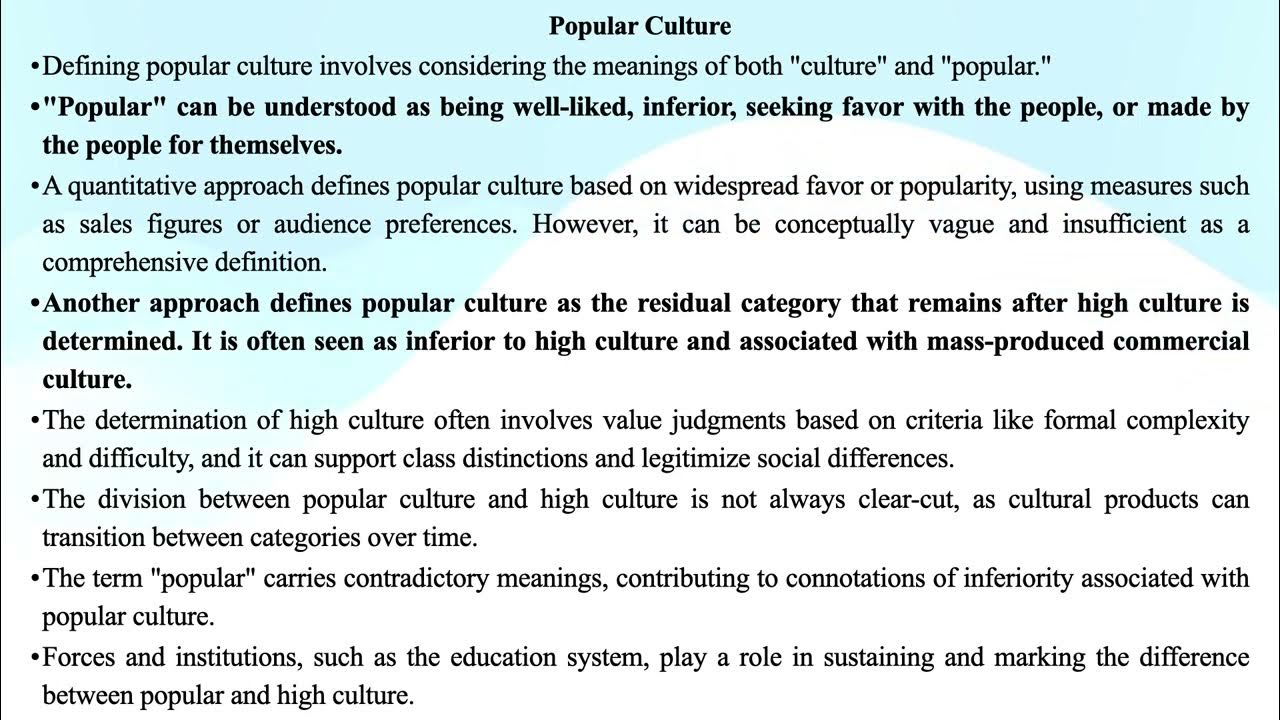
John Storey's "What is Popular Culture?" (Summary/Notes)

Module 6 Popular Culture in the Philippine

CULTURA E SOCIEDADE

HUM080 Module 1 - Lesson 1 Introduction to Popular Culture

Arte - Estudos culturais: Cultura (A0710)
5.0 / 5 (0 votes)
