Dualisme Gelombang Partikel • Part 2: Contoh Soal Radiasi Benda Hitam, Pergeseran Wien, Teori Planck
Summary
TLDRThis video from the Science Window channel continues the discussion on quantum physics, focusing on wave–particle dualism through detailed example problems. It explains how to determine peak wavelength, frequency, and photon energy using Wien’s displacement law, Planck’s theory, and related formulas. The instructor works through calculations involving blackbody radiation, photon counts from a space heater, and comparisons of radiated energy at different temperatures. The lesson emphasizes clear step-by-step problem-solving, helping students understand how temperature, wavelength, frequency, and energy are mathematically connected in quantum and thermal physics.
Takeaways
- 📘 The video continues a lesson on quantum physics, specifically wave–particle dualism, focusing on example problems involving blackbody radiation, Wien’s displacement law, and Planck’s theory.
- 🌡️ A star with a surface temperature of 5523°C is converted to Kelvin by adding 273, giving 5796 K before applying Wien’s law.
- 📏 Wien’s displacement law (λ_max * T = constant) is applied to find the wavelength of maximum intensity, resulting in λ_max = 5 × 10⁻⁷ m.
- 📡 Using the relationship c = λf, the frequency corresponding to the maximum intensity is calculated to be 6 × 10¹⁴ Hz.
- 🔋 Planck’s equation (E = hf) is then used to compute photon energy at that wavelength, yielding approximately 3.978 × 10⁻¹⁹ joules.
- 🔥 A second problem analyzes radiation from a space heater with known emissivity, intensity, and wavelength to determine the number of photons striking a wall area over one minute.
- ⚡ By relating intensity to power and power to energy (Q = P × t), the script converts radiation intensity into total emitted energy reaching the surface.
- 🔢 The number of photons is found using N = E_total / (hf), resulting in about 2.4 × 10²² photons hitting the wall per minute.
- 🌈 Another example compares wavelengths of maximum intensity at two temperatures (600 nm and 200 nm) to derive the temperature ratio using Wien’s law.
- 🔥 Using the Stefan–Boltzmann law (E ∝ T⁴), the radiation-energy ratio between temperatures T₁ and T₂ is found, resulting in Q₁ : Q₂ = 1 : 81.
- 🎓 The script emphasizes understanding core physics relationships: Wien’s law, Planck’s theory, frequency–wavelength relations, and blackbody radiation scaling (T⁴ dependence).
Q & A
What is the concept of wave-particle dualism discussed in the video?
-Wave-particle dualism is a fundamental concept in quantum physics, suggesting that light and other forms of electromagnetic radiation can exhibit both wave-like and particle-like properties. In the video, this concept is discussed in relation to black body radiation, Wien's displacement law, and Planck's theory.
How is the wavelength with the highest intensity of light from the star determined?
-To find the wavelength of light with the highest intensity emitted by a star, Wien's displacement law is used. The formula λ_max = (Wien's constant) / T is applied, where λ_max is the wavelength with the highest intensity, and T is the surface temperature of the star in Kelvin.
What is Wien's displacement law and how is it applied?
-Wien's displacement law states that the wavelength of the light emitted by a black body with the highest intensity is inversely proportional to its temperature. In the video, the law is used to find the wavelength of the highest intensity light emitted by a star by substituting the star's temperature into the formula.
How is the frequency of the highest intensity light calculated from the wavelength?
-The frequency of light with the highest intensity is calculated using the formula c = λ * f, where c is the speed of light, λ is the wavelength, and f is the frequency. By rearranging the equation to solve for f, we can calculate the frequency of the light emitted by the star.
How is the energy of the photon emitted at the highest intensity calculated?
-The energy of a photon is calculated using Planck's equation, E = h * f, where h is Planck's constant and f is the frequency of the light. In the video, the frequency is obtained from the previous calculation, and the energy of the photon is determined using this formula.
What is Planck's constant and why is it important in quantum physics?
-Planck's constant (h = 6.626 x 10^-34 J·s) is a fundamental constant in quantum mechanics that relates the energy of a photon to its frequency. It plays a crucial role in determining the energy levels of quantum systems, as shown in the video when calculating photon energy.
How is the number of photons hitting a wall determined in the example of the space heater furnace?
-To determine the number of photons hitting the wall, we need to first calculate the total energy emitted by the furnace using its intensity, emissivity, and wavelength. The energy per photon is calculated using the Planck-Einstein relation, and the number of photons is found by dividing the total energy by the energy per photon.
What is the significance of emissivity in radiation problems like the one with the space heater furnace?
-Emissivity is a measure of how efficiently an object emits radiation compared to a perfect black body. In the space heater example, the furnace has an emissivity of 0.5, meaning it emits half the radiation intensity of a perfect black body at the same temperature.
What is the Stefan-Boltzmann law and how is it applied in this context?
-The Stefan-Boltzmann law relates the total energy radiated by a black body to its temperature, stating that the power radiated is proportional to the fourth power of the temperature (P = σ * A * T^4). In the video, this law is used to understand the relationship between temperature and radiation energy in the context of different temperature scenarios.
How does Wien's law help us compare radiation energy at different temperatures?
-Wien's displacement law helps us understand how the peak wavelength of radiation shifts with temperature. By comparing the temperatures of two objects and using Wien's law, we can predict how the radiation energy emitted at different temperatures will change. The ratio of energy emissions between two objects is related to the ratio of their temperatures raised to the fourth power, as shown in the video.
Outlines

This section is available to paid users only. Please upgrade to access this part.
Upgrade NowMindmap

This section is available to paid users only. Please upgrade to access this part.
Upgrade NowKeywords

This section is available to paid users only. Please upgrade to access this part.
Upgrade NowHighlights

This section is available to paid users only. Please upgrade to access this part.
Upgrade NowTranscripts

This section is available to paid users only. Please upgrade to access this part.
Upgrade NowBrowse More Related Video

Gelombang Berjalan • Part 4: Soal Persamaan Umum Simpangan Gelombang Berjalan (2)
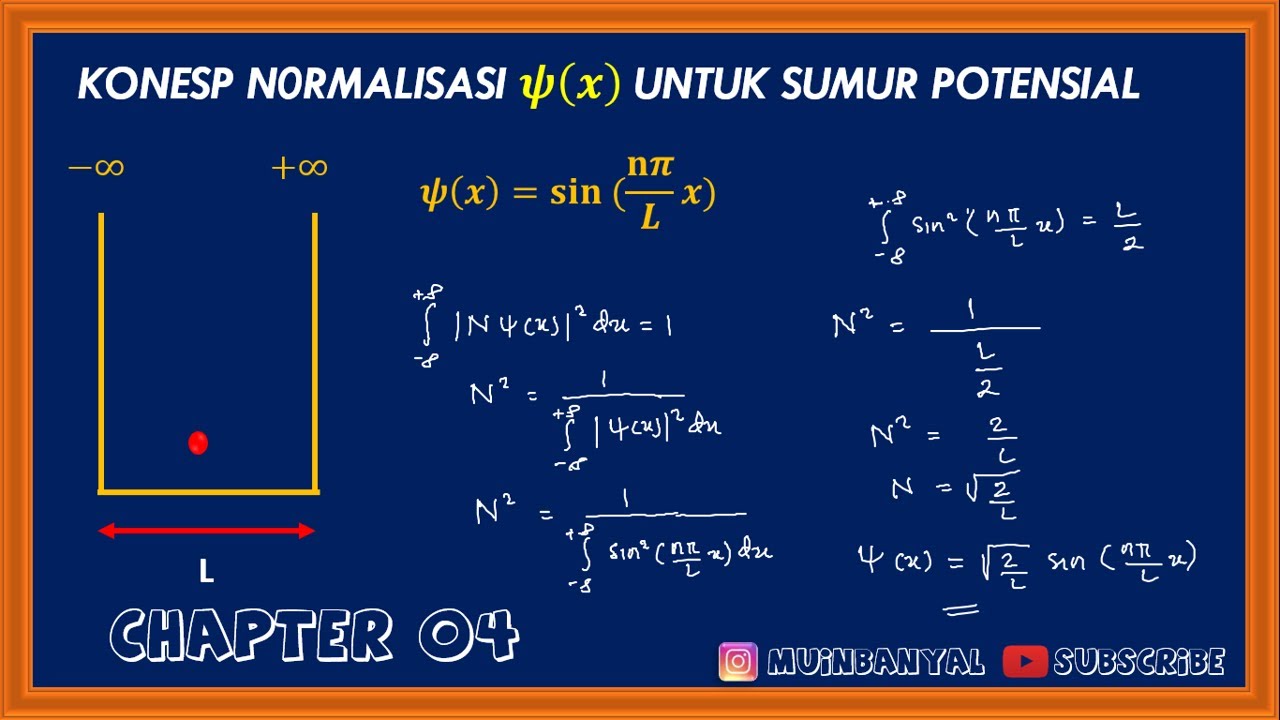
FISIKA KUANTUM : KONSEP NORMALISASI UNTUK SUMUR POTENSIAL
AKTU - QUANTUM MECHANICS for Engineering Physics
QUANTUM PHYSICS | S-2 | ENGINEERING PHYSICS | FIRST YEAR ENGINEERING | SAURABH DAHIVADKAR
Dualisme Gelombang Partikel • Part 1: Radiasi Benda Hitam, Pergeseran Wien, dan Teori Kuantum Planck
Física quântica - Efeito fotoelétrico Parte 1 de 2
5.0 / 5 (0 votes)
