Brace Yourself for the AI Bubble
Summary
TLDRThe video script explores the growing concerns about the AI industry being in an economic bubble. It compares AI’s rapid growth and inflated market valuations to previous financial bubbles like the housing and dotcom crashes. The script highlights the risks of AI’s impact on the economy, including job losses, rising costs for consumers, and environmental strain. Despite AI’s transformative potential, the fear is that the bubble could burst, leading to economic instability, job losses, and the need for taxpayer-funded bailouts, benefiting only the ultra-wealthy while leaving working families behind.
Takeaways
- 😀 The AI industry is currently in a bubble, similar to previous economic bubbles like the housing crisis and dotcom crash.
- 😀 Many financial analysts predict the AI bubble will eventually burst, leading to significant economic consequences.
- 😀 AI's rapid growth is driven by hype and speculative investments rather than actual profitability for most companies.
- 😀 While AI has transformative potential, its actual financial returns for companies adopting AI tools are minimal, with 95% of businesses seeing no returns.
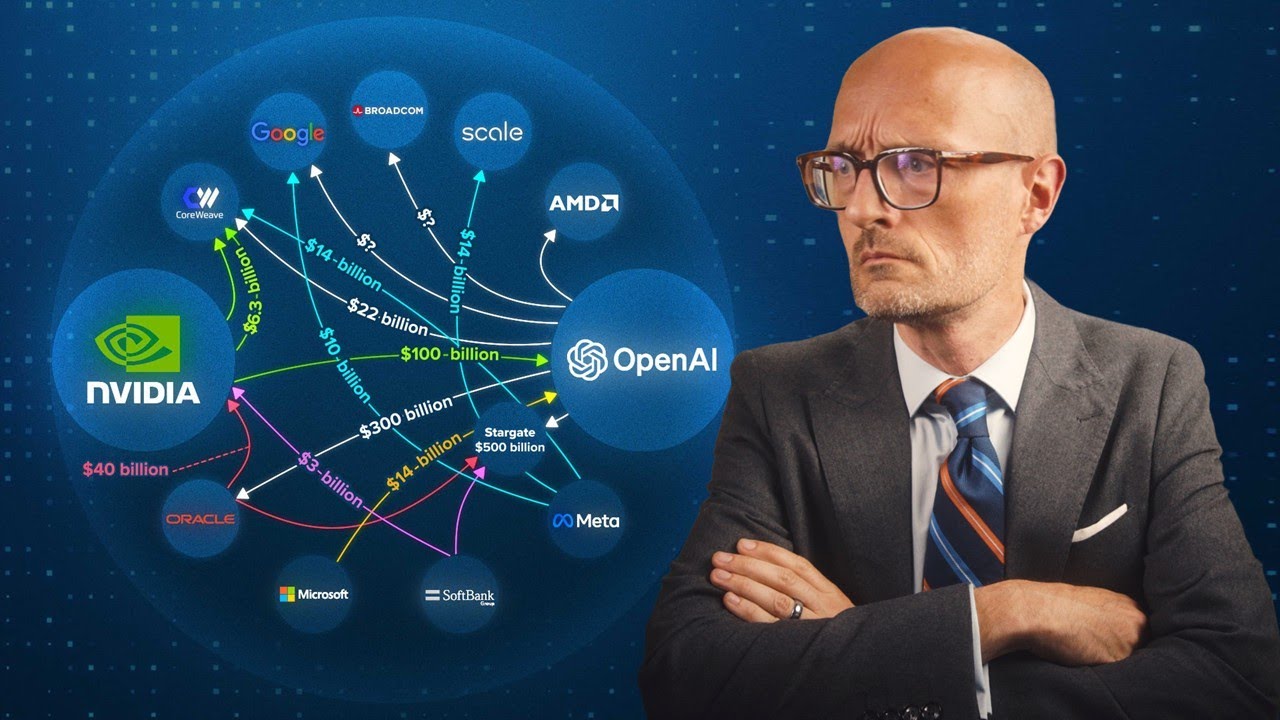
- 😀 Major AI companies, such as OpenAI, are losing billions annually, and others like Oracle are taking on significant debt to fund their AI development.
- 😀 The current surge in AI investments has been largely responsible for the growth in the US stock market, propping up the economy.
- 😀 As AI becomes a major player in the economy, the seven biggest AI-related tech companies are disproportionately influencing the entire US stock market.
- 😀 AI infrastructure investments, such as data centers, have contributed to 92% of the US GDP growth in 2025, creating new billionaires but little benefit for the average person.
- 😀 The development of AI is not without consequences, with rising electricity costs, water depletion in communities, and temporary jobs being created in AI data centers.
- 😀 The AI bubble could lead to widespread economic instability, with working-class families suffering the most as the super-rich continue to benefit.
- 😀 If the AI bubble bursts, there is a real danger of another recession, with taxpayers footing the bill for another government bailout to rescue big tech companies.
Q & A
What is the central concern discussed in the transcript?
-The central concern is the potential bursting of the AI bubble, which could lead to a major economic downturn, similar to past bubbles like the housing or dotcom bubble.
What are some of the major risks associated with the AI industry as mentioned in the script?
-The risks include AI's immense energy and water consumption, its capacity to replace jobs, and the potential long-term environmental impact. The script also highlights the risks of a speculative financial bubble inflating the economy.
How does the AI bubble resemble previous economic bubbles like the housing and dotcom bubbles?
-The AI bubble follows a similar pattern: overvaluation driven by hype and speculation, with investors pouring money in based on rising values rather than the actual profitability or sustainability of AI companies. This leads to an eventual collapse when the bubble bursts.
What evidence is presented to suggest that the AI industry may be overvalued?
-The script points out that many AI companies, like OpenAI, are losing billions of dollars annually, and reports indicate that 95% of companies using AI tools aren't yet seeing financial returns. Furthermore, major companies are accumulating debt to fund AI development.
Why are major tech companies and investors excited about AI, according to the transcript?
-AI is seen as a transformative technology with the potential to revolutionize industries and improve efficiency. The excitement is fueled by the hype surrounding its capabilities, which drives investments and valuations. However, the excitement has led to overfunding, as investors struggle to differentiate between good and bad ideas.
What are the economic consequences of the AI bubble, particularly for working families?
-The transcript emphasizes that while AI growth has created new billionaires and benefited large tech companies, the broader economy is suffering. Rising electricity costs, water depletion, and temporary job creation around AI data centers are some of the consequences, while sectors like housing and healthcare remain out of reach for many working families.
How has the AI industry contributed to the U.S. GDP growth in 2025?
-Investments in AI data centers and related infrastructure have accounted for 92% of U.S. GDP growth in 2025, illustrating the outsized role that AI is playing in the economy. However, this growth is concentrated in a few tech giants, not benefiting the majority of the population.
What role do government policies play in the expansion of AI, according to the transcript?
-The transcript highlights that 37 states have passed legislation granting tax exemptions for AI data center construction, which subsidizes the growth of the industry. However, these policies may disproportionately benefit large corporations while adding costs to taxpayers.
What is the concern about AI’s potential to cause another economic crisis?
-If the AI bubble bursts, the collapse could lead to widespread financial losses and potentially another recession. The fear is that taxpayers may be forced to bail out big tech companies, as happened with previous economic crises, further deepening economic inequality.
What is the suggested way to address the AI bubble and its consequences?
-The transcript suggests that while AI can continue to be developed and innovated, it should not be allowed to dictate the future of the economy. A balance needs to be struck to prevent another economic disaster and ensure that the benefits of AI are more widely distributed.
Outlines

This section is available to paid users only. Please upgrade to access this part.
Upgrade NowMindmap

This section is available to paid users only. Please upgrade to access this part.
Upgrade NowKeywords

This section is available to paid users only. Please upgrade to access this part.
Upgrade NowHighlights

This section is available to paid users only. Please upgrade to access this part.
Upgrade NowTranscripts

This section is available to paid users only. Please upgrade to access this part.
Upgrade Now


5.0 / 5 (0 votes)
