Calculus (Version #2) - 1.1 Limits Graphically
Summary
TLDRIn this introductory calculus lesson, Mr. Bean covers the fundamentals of limits, focusing on graphical understanding. He explains the concept of limits, both from the left and right sides, and how to approach them through various examples. The lesson highlights when a limit does not exist, due to conditions such as differing left and right-side limits or unbounded behavior. Students are also introduced to one-sided limits, oscillating behavior, and unbounded behavior. The session includes interactive elements like graphing and visualizing the concepts for better comprehension, all while preparing students for AP Calculus AB material.
Takeaways
- 😀 The course focuses on AP Calculus AB material, not BC, and will prepare students for a successful year in calculus.
- 😀 Calculators are generally not allowed for most practice problems, but there will be specific lessons where a calculator is necessary.
- 😀 The first topic covered is limits, graphically, focusing on understanding how a graph approaches a y-value from both the left and right side of a given x-value.
- 😀 A limit refers to the y-value that a graph is approaching as x approaches a certain value, even if there's no actual point there (like in the case of holes or discontinuities).
- 😀 The difference between a limit and a function value is highlighted, particularly when a function is undefined at a specific point but has a limit approaching a certain value.
- 😀 One-sided limits are explored, where the limit is approached from either the left or right side of a point.
- 😀 When the left and right limits at a point are not equal, the limit does not exist.
- 😀 Unbounded behavior and infinity are introduced, noting that a limit approaching infinity technically does not exist because infinity is not a number.
- 😀 Oscillating behavior is explained as an unusual case where the function keeps bouncing back and forth without settling at a specific value near the limit point.
- 😀 The importance of vertical line tests for ensuring the function is a valid graph is emphasized, preventing mistakes in drawing functions that would fail the test.
- 😀 Students are encouraged to review all problems and verify their solutions using both graphical and numerical methods, ensuring a deeper understanding of the concepts.
Q & A
What is the main focus of this calculus course?
-The course is focused on AP Calculus AB material, not AP Calculus BC. It covers content to help students succeed in the AB Calculus exam.
What is the significance of the asterisk next to 'AP'?
-The asterisk clarifies that the term 'AP' is a trademark of the College Board, and the course is not officially affiliated with the College Board. It is used here only to indicate the level of material being taught.
What is the role of calculators in this course?
-Students are not allowed to use calculators for most lessons and practice problems. However, calculators will be used in certain lessons and are allowed for a portion of the AP exam.
What does the term 'limit' refer to in calculus?
-A limit is the y-value that a graph approaches as the x-value nears a specific point from both the left and right sides.
How is the 'limit' different from the actual value of a function at a given point?
-The limit refers to where the graph is heading, not necessarily the value at that exact point. Even if a point is undefined or there is a hole in the graph, the limit may still exist.
What does it mean when a limit does not exist?
-A limit does not exist when the left and right side limits approach different values, or when the graph exhibits unbounded or oscillating behavior.
What is the difference between a one-sided limit and a two-sided limit?
-A one-sided limit considers the behavior of the graph approaching a point from either the left or the right side only, while a two-sided limit considers both directions.
What is unbounded behavior in calculus?
-Unbounded behavior occurs when a function approaches infinity (or negative infinity) as x approaches a certain value. It indicates that the graph is moving toward infinitely large or small values.
What is oscillating behavior in a graph?
-Oscillating behavior happens when the graph bounces back and forth as it approaches a particular x-value, never settling on a specific y-value. This behavior is often seen in trigonometric functions like sine and cosine.
What is the vertical line test and why is it important?
-The vertical line test is used to determine if a graph represents a function. If a vertical line intersects the graph at more than one point, the graph does not represent a function.
Outlines

This section is available to paid users only. Please upgrade to access this part.
Upgrade NowMindmap

This section is available to paid users only. Please upgrade to access this part.
Upgrade NowKeywords

This section is available to paid users only. Please upgrade to access this part.
Upgrade NowHighlights

This section is available to paid users only. Please upgrade to access this part.
Upgrade NowTranscripts

This section is available to paid users only. Please upgrade to access this part.
Upgrade NowBrowse More Related Video
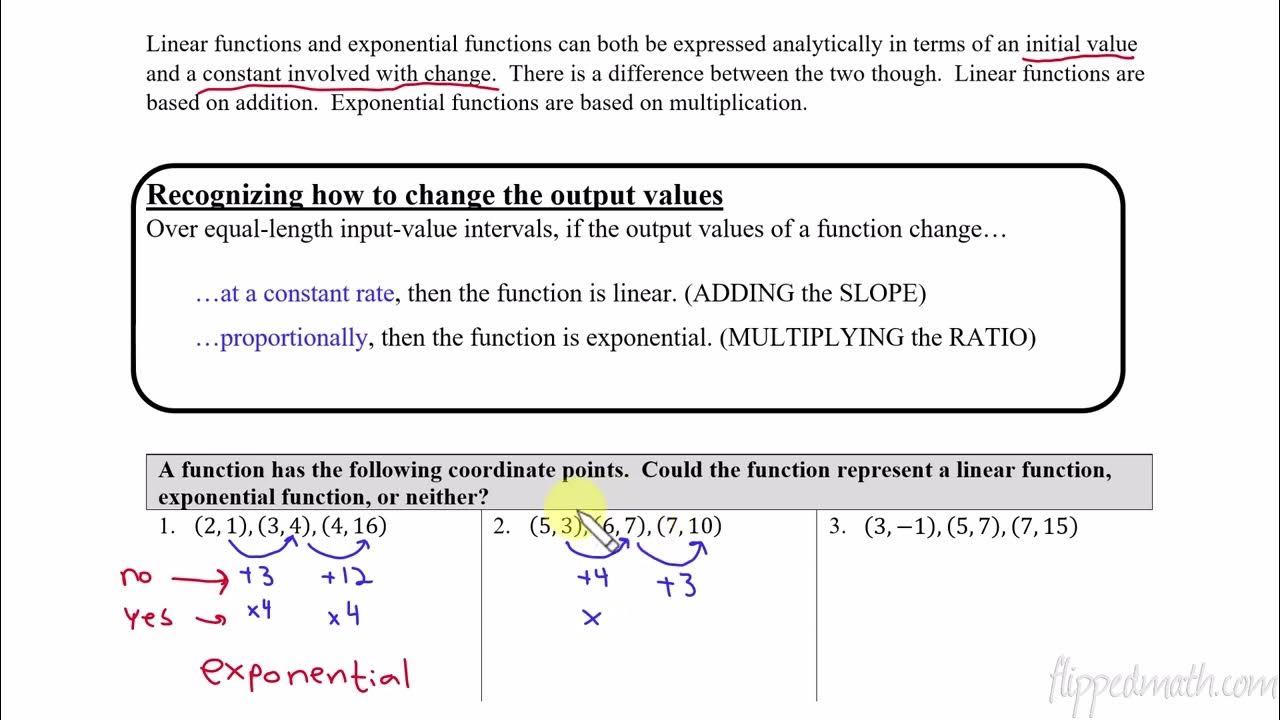
AP Precalculus – 2.2 Change in Linear and Exponential Functions
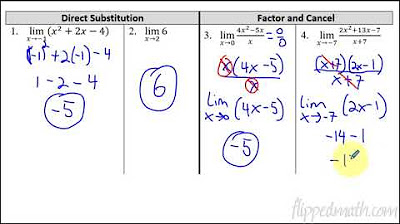
Calculus AB/BC – 1.6 Determining Limits Using Algebraic Manipulation
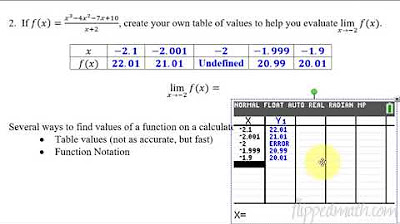
Calculus AB/BC – 1.4 Estimating Limit Values from Tables
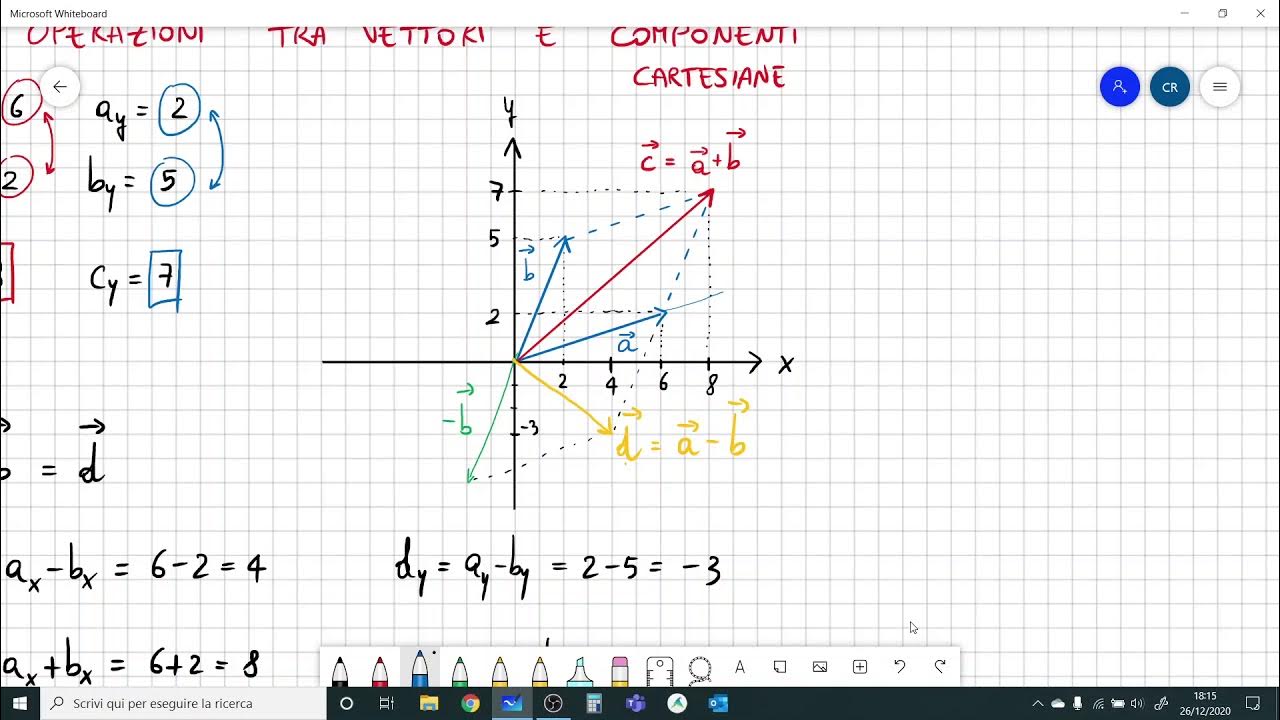
Operazioni tra vettori in componenti cartesiane

Calculus AB/BC – 1.10 Exploring Types of Discontinuities

Calculus AB/BC – 2.1 Defining Average and Instantaneous Rate of Change at a Point
5.0 / 5 (0 votes)
