Discussion
Summary
TLDRThis video discusses the 'Moves of Discussion' in research papers, focusing on a model proposed by Swales in 2004. The model divides the discussion into two main moves: highlighting overall results and their significance, and explaining specific research outcomes. The first move covers stating the main results and their importance. The second move includes five steps: stating specific outcomes, interpreting results, highlighting significance, contrasting with previous research, and acknowledging limitations. The video illustrates these moves with examples, helping researchers effectively structure their discussion section.
Takeaways
- 😀 The discussion section in a research paper delves into the meaning, importance, and relevance of the research findings.
- 😀 The discussion often integrates both findings and discussion into a single part, but sometimes they are presented separately.
- 😀 The purpose of the discussion is to explain, evaluate, and relate the research findings to existing literature, and make an argument supporting the conclusion.
- 😀 A widely used model of the moves of discussion in research papers was proposed by Swales in 2004, consisting of two main moves.
- 😀 Move 1 involves highlighting overall results and their significance, with the first step focusing on stating the main results and their significance.
- 😀 Move 2 involves explaining specific research outcomes and consists of five steps to provide deeper insights into the findings.
- 😀 The first step of Move 2 is stating the specific outcomes of the research, detailing the findings presented in the study.
- 😀 The second step of Move 2 is interpreting the outcomes, providing further explanation of the research findings.
- 😀 The third step of Move 2 highlights the significance of the research outcomes and their importance in the broader context.
- 😀 The fourth step of Move 2 contrasts present research findings with previous outcomes, comparing current research to past studies.
- 😀 The fifth step of Move 2 addresses the limitations of the research outcomes, acknowledging potential weaknesses or constraints.
Q & A
What is the primary focus of the discussion section in a research paper?
-The primary focus of the discussion section in a research paper is to explain and evaluate the results of the research. It aims to provide the meaning, significance, and relevance of the findings, relate them to existing literature, and support the overall conclusion.
How are the discussion and findings typically organized in a research paper?
-In research papers, the discussion and findings sections can either be integrated into one combined part or presented separately. The discussion delves deeper into the meaning and implications of the findings.
Who proposed the model of 'moves of discussion' that is commonly used in research papers?
-The model of 'moves of discussion' is often used by researchers and was proposed by Swales in 2004.
What are the two main moves in Swales' model of moves of discussion?
-Swales' model consists of two main moves: the first move is highlighting overall results and their significance, and the second move is explaining specific research outcomes.
What is included in the first move of the discussion according to Swales' model?
-The first move involves highlighting the overall results and their significance. The key step is stating the main results and their significance, providing an overview of the discussion and the meaning of the findings.
How many steps are included in the second move of Swales' model, and what are they?
-The second move contains five steps: 1) Stating specific outcomes, 2) Interpreting the outcomes, 3) Indicating the significance of the outcomes, 4) Contrasting present and previous outcomes, and 5) Indicating limitations of the outcomes.
What does the second step in the second move focus on?
-The second step in the second move focuses on interpreting the outcomes. It involves the researcher providing more meaning to the findings.
What does the fourth step of the second move emphasize?
-The fourth step in the second move emphasizes contrasting present outcomes with previous research or studies. This allows the researcher to compare their findings with earlier work in the field.
What is the importance of indicating the limitations of the outcomes in the discussion?
-Indicating the limitations of the outcomes is crucial as it helps to acknowledge the constraints of the research, ensuring transparency and providing context for the findings. This step also highlights areas where further research might be needed.
How are the two moves visually represented in the example provided in the transcript?
-In the example, the first move (highlighting overall results and their significance) is represented in green, while the second move (explaining specific research outcomes) is represented in blue. The sentences in blue indicate the steps in the second move, with step four contrasting present and previous outcomes highlighted.
Outlines

This section is available to paid users only. Please upgrade to access this part.
Upgrade NowMindmap

This section is available to paid users only. Please upgrade to access this part.
Upgrade NowKeywords

This section is available to paid users only. Please upgrade to access this part.
Upgrade NowHighlights

This section is available to paid users only. Please upgrade to access this part.
Upgrade NowTranscripts

This section is available to paid users only. Please upgrade to access this part.
Upgrade Now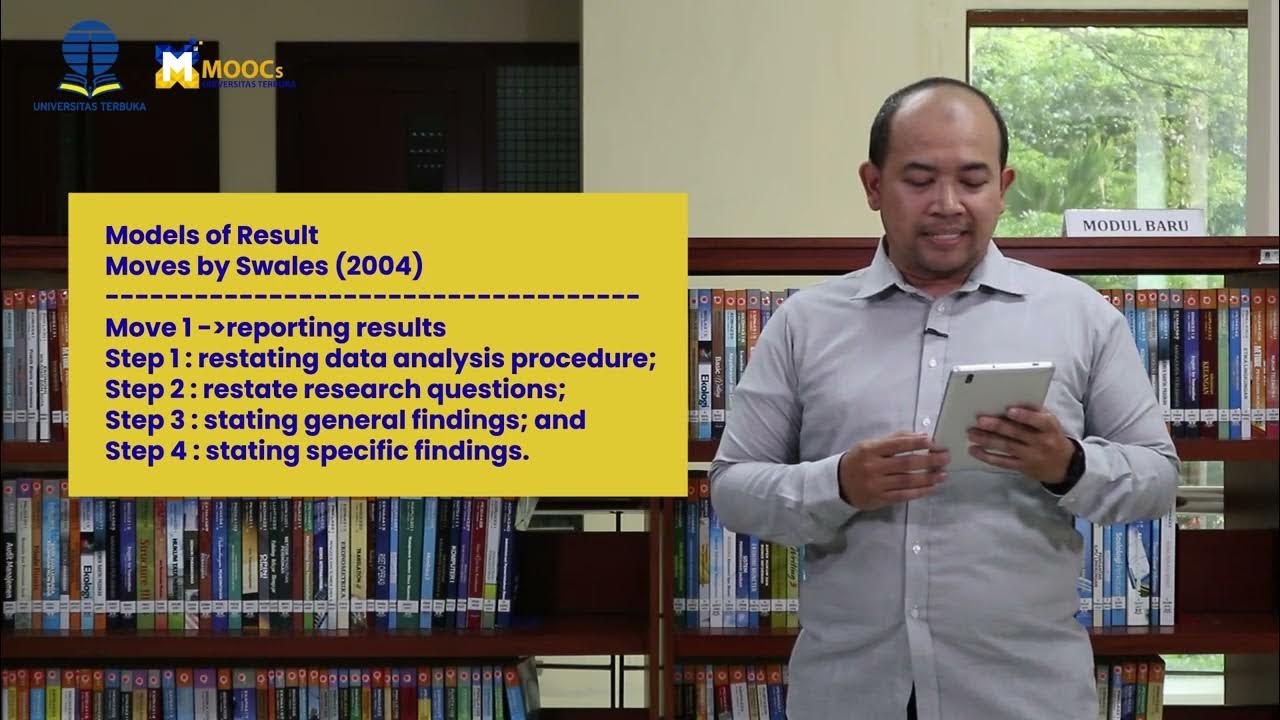




5.0 / 5 (0 votes)
