Winding Numbers and Meromorphic Functions Explained! | Complex Variables
Summary
TLDRThis video lesson covers complex variables, focusing on the concepts of winding number, meromorphic functions, and argument. The instructor explains how a complex number can be represented in polar coordinates and introduces the idea of the argument as the angle of a complex number. The lesson moves on to meromorphic functions, which are complex functions with a finite number of poles, and explains the idea of winding numbers—how many times a curve encircles a point. Through examples, the video clarifies the calculation of winding numbers and how they relate to complex functions, offering a comprehensive understanding of these key topics in complex analysis.
Takeaways
- 😀 The argument of a complex number Z is the angle θ that it makes with the positive real axis in the complex plane.
- 😀 A complex number Z can be expressed in polar coordinates as Z = R * e^(iθ), where R is the modulus and θ is the argument.
- 😀 The argument of a complex number Z can be calculated using Euler's formula and is denoted as arg(Z).
- 😀 A meromorphic function is holomorphic except at a finite number of poles, and it is not discontinuous over an entire region.
- 😀 Meromorphic functions are situated between analytic functions (which are continuous and differentiable everywhere) and discontinuous functions (which have infinite discontinuities).
- 😀 The winding number of a curve around a point is the number of times the curve encircles that point, calculated based on the change in the argument of points on the curve.
- 😀 A curve in the complex plane may have a winding number of 0 if it does not encircle a specific point (e.g., the origin).
- 😀 The winding number is an integer, and it represents how many times a closed contour goes around a specific point in the complex plane.
- 😀 For a meromorphic function, the winding number of a contour C around a point is computed by tracking the change in the argument as you traverse the contour once.
- 😀 The winding number for a function W = f(Z) around the origin is determined by the change in the argument of the corresponding curve in the W-plane as the contour is traversed.
Q & A
What is the significance of the argument of a complex number?
-The argument of a complex number represents the angle it makes with the positive real axis in the complex plane. It gives a way to describe the direction of the complex number relative to the origin, and is crucial in polar representation and Euler’s formula.
How is the argument of a complex number calculated?
-The argument of a complex number Z, written as arg(Z), is the angle θ in the polar representation where Z = R * e^(iθ). It can be calculated as the inverse tangent of the ratio of the imaginary part to the real part of the complex number.
What does Euler's formula represent in the context of complex numbers?
-Euler's formula, e^(iθ) = cos(θ) + i*sin(θ), represents the relationship between the exponential form and the trigonometric form of complex numbers. It connects polar and rectangular coordinates and helps in simplifying operations on complex numbers.
What is the definition of a meromorphic function?
-A meromorphic function is a complex function that is holomorphic (complex differentiable) everywhere in its domain, except at a finite number of isolated points, called poles, where the function may have discontinuities. These poles are the only points where the function may fail to be differentiable.
How does a meromorphic function differ from an analytic function?
-While an analytic function is continuous and differentiable everywhere in its domain, a meromorphic function is allowed to have isolated discontinuities in the form of poles. These poles are the only points where the function behaves non-analytically.
What is a winding number in the context of complex functions?
-A winding number refers to how many times a closed curve C winds around a point in the complex plane, such as the origin. It is calculated by measuring the total change in the argument of a complex number as you traverse the curve and dividing it by 2π.
How is the winding number of a curve around a point determined?
-The winding number is determined by measuring the change in the argument of the curve as you traverse it once, then dividing the total change in argument by 2π. This gives the number of times the curve winds around the point.
What happens to the winding number when the origin is inside the curve?
-If the origin is inside the closed curve, the winding number is positive and typically equal to 1, indicating that the curve circles around the origin once in a counterclockwise direction.
What if the origin is outside the curve? What is the winding number?
-If the origin is outside the curve, the winding number is zero because the curve does not encircle the origin at all, regardless of how many times it winds around other points.
What is the winding number in the context of a function's image under a curve?
-When a function f(Z) maps a closed contour C to a new contour gamma in the W plane, the winding number of gamma with respect to the origin is determined by the change in the argument of the image points under f(Z) as the contour C is traversed. This value indicates how many times the image curve gamma circles the origin in the W plane.
Outlines

This section is available to paid users only. Please upgrade to access this part.
Upgrade NowMindmap

This section is available to paid users only. Please upgrade to access this part.
Upgrade NowKeywords

This section is available to paid users only. Please upgrade to access this part.
Upgrade NowHighlights

This section is available to paid users only. Please upgrade to access this part.
Upgrade NowTranscripts

This section is available to paid users only. Please upgrade to access this part.
Upgrade NowBrowse More Related Video

MATERI UTBK SNBT MATEMATIKA SAINTEK PERTIDAKSAMAAN KUADRAT

BILANGAN KOMPLEKS PART 1: DEFINISI, BENTUK UMUM (KARTESIUS, POLAR, EKSPONEN) MODULUS, ARGUMEN

#2 Berpikir Komputasional Kelas 8 - Himpunan dan Sistem Bilangan (Biner, Oktal, Desimal) - Kumer
رياضيات 3 - ثالث ثانوي - درس : تحليل التمثيلات البيانية للدوال والعلاقات
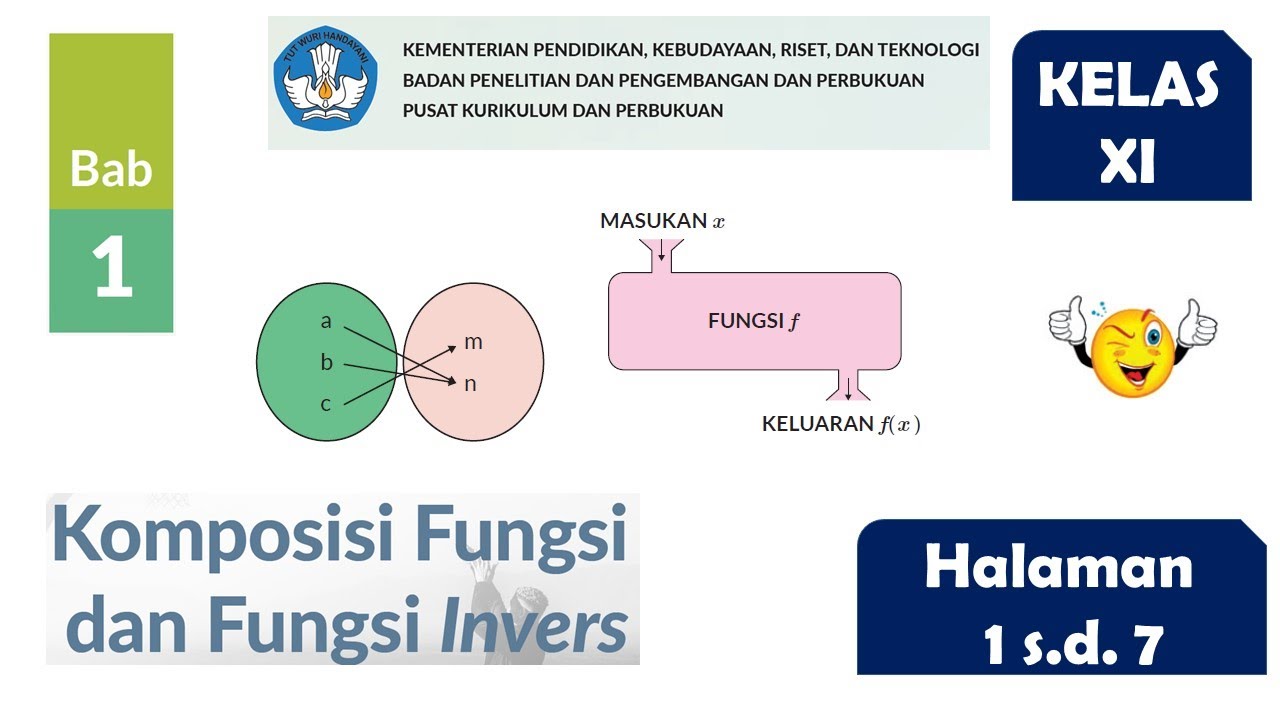
(Part 1) FUNGSI KOMPOSISI DAN FUNGSI INVERS MATEMATIKA SMA KELAS 11 #kurikulummerdeka #matematikasma
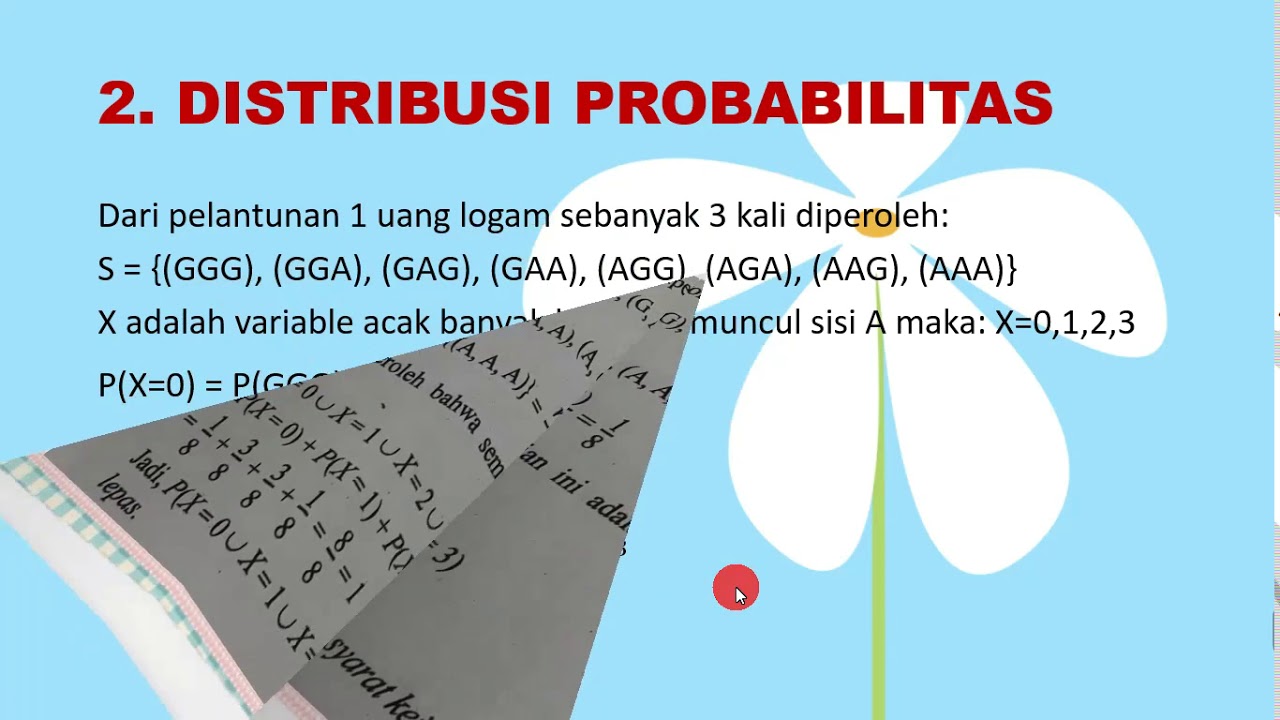
Variabel Acak dan Fungsi Probabilitas
5.0 / 5 (0 votes)
