Chemistry - Grade 9 - The periodic table - Dobereiner's law of Triads and Newland's law of octave
Summary
TLDRThe video delves into the periodic classification of elements, starting with an introduction to the 118 known elements, 92 of which are naturally occurring. It discusses early classification systems, including Antoine Lavoisier’s distinction between metals and non-metals, and explores the work of early scientists like Johann Döbereiner, who first observed periodic trends, and John Newlands, who proposed the Octave Law. Despite their insights, both Döbereiner’s Triad Law and Newlands’ Octave Law were dismissed due to inconsistencies. The video highlights the evolution of element classification as a vital step in understanding chemistry.
Takeaways
- 😀 The world has a total of 118 known elements, 92 of which occur naturally, and the remaining are synthetically produced.
- 😀 Classifying elements is essential to understand their properties, behavior, and chemistry.
- 😀 Classification helps organize elements systematically, which aids in research and comparison.
- 😀 The primary reason for classifying elements is to study their properties and predict unknown characteristics.
- 😀 Antoine Lavoisier's first classification divided elements into metals and non-metals.
- 😀 Johann Wolfgang Döbereiner observed periodic trends among elements and proposed grouping them into triads based on similarities in properties.
- 😀 Döbereiner's Triads showed that the atomic weight of the middle element is nearly equal to the average of the first and third elements in a group.
- 😀 Examples of Döbereiner's Triads include lithium, sodium, and potassium, and calcium, strontium, and barium.
- 😀 Döbereiner's Triad law was dismissed because not all elements followed the same periodic trend.
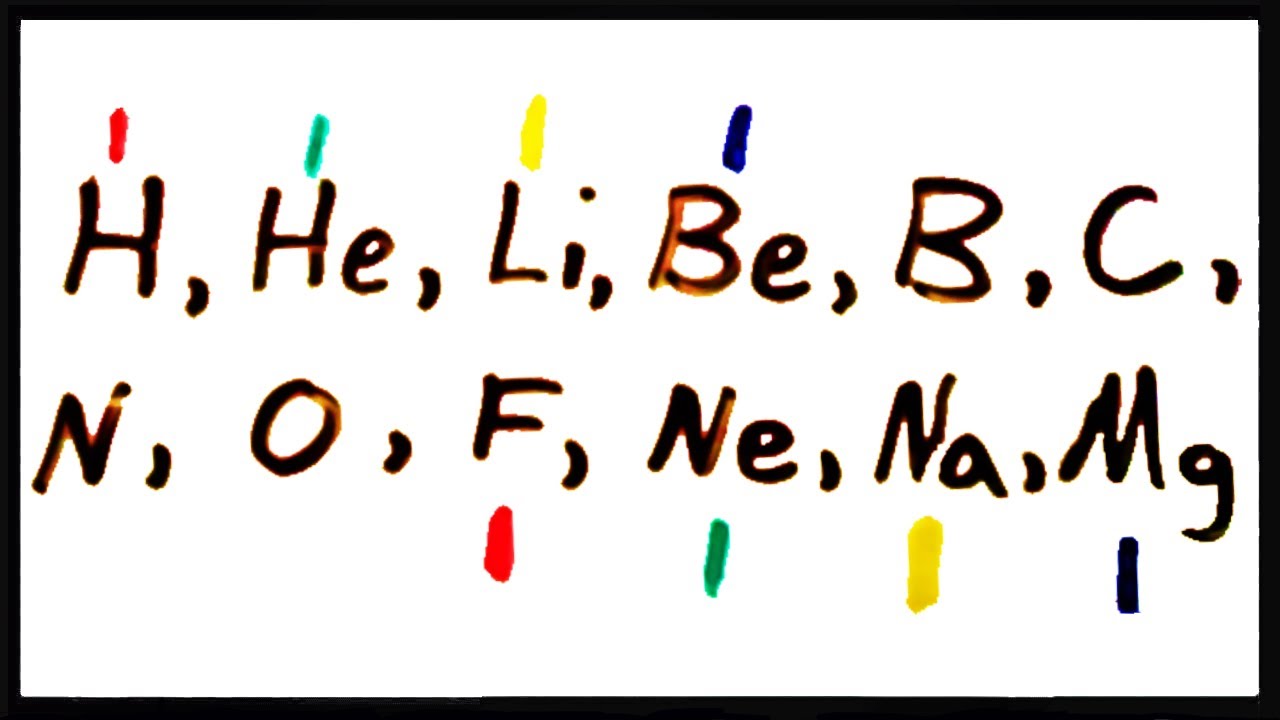
- 😀 John Newlands proposed the Law of Octaves in 1865, which stated that every eighth element had similar properties to the first when arranged by atomic weight.
- 😀 Newlands' Law of Octaves worked well for the first few elements but failed beyond calcium, leading to its dismissal.
Q & A
How many elements are known to the world today?
-There are a total of 118 elements known to the world, of which 92 are naturally occurring and the remaining are synthetically produced.
Why is it important to classify the elements?
-Classifying elements helps to study their properties, behavior, and chemistry, understand known facts, and predict properties of elements that are yet to be discovered.
Who first classified elements into metals and non-metals?
-Antoine Lavoisier was the first to classify elements into metals and non-metals.
What was Johann Döbereiner's contribution to element classification?
-Johann Döbereiner classified elements into groups of three, called 'triads,' based on similarities in their chemical and physical properties. He noted that the atomic weight of the middle element in a triad is approximately the average of the atomic weights of the other two.
Can you give an example of Döbereiner’s triads?
-An example of Döbereiner's triads includes Lithium (Li), Sodium (Na), and Potassium (K). The average atomic weight of Lithium and Potassium is close to that of Sodium.
Why was Döbereiner's law of triads dismissed?
-Döbereiner's law of triads was dismissed because not all elements followed the pattern he proposed.
What was John Newlands' contribution to element classification?
-John Newlands proposed the 'law of octaves' in 1865, where he observed that every eighth element, when arranged in increasing atomic weight, showed properties similar to the first element in the series.
What is the 'law of octaves' and how did it work?
-The 'law of octaves' proposed by Newlands suggested that every eighth element, when arranged in increasing atomic weight, had similar properties to the first. For example, Hydrogen (H) shares properties with Fluorine (F), and Sodium (Na) with Lithium (Li).
Why was John Newlands' law of octaves dismissed?
-Newlands' law of octaves was dismissed because the pattern he proposed worked only up to the element calcium, and beyond that, it did not hold true.
What are the main reasons why the classification systems of Döbereiner and Newlands were not fully accepted?
-Both Döbereiner and Newlands' classification systems were not universally accepted because the patterns they identified did not apply to all elements. Döbereiner's triads were limited in scope, and Newlands' octaves only worked up to calcium.
Outlines

This section is available to paid users only. Please upgrade to access this part.
Upgrade NowMindmap

This section is available to paid users only. Please upgrade to access this part.
Upgrade NowKeywords

This section is available to paid users only. Please upgrade to access this part.
Upgrade NowHighlights

This section is available to paid users only. Please upgrade to access this part.
Upgrade NowTranscripts

This section is available to paid users only. Please upgrade to access this part.
Upgrade Now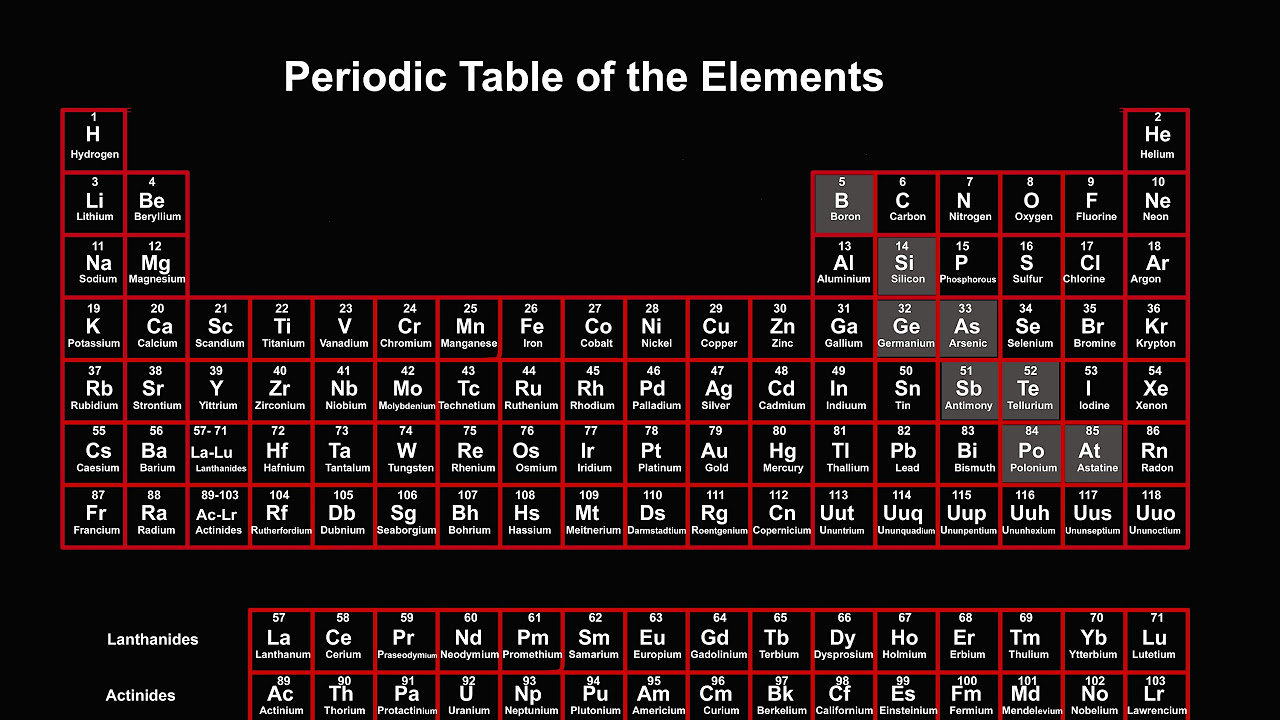



5.0 / 5 (0 votes)
