Perang Badar, 17 Ramadhan 2H/13 Maret 624 (Celoteh Sejarah)
Summary
TLDRThis transcript narrates the early life and struggles of Prophet Muhammad (PBUH) as he received the first revelation in the Cave of Hira, marking the start of his prophethood. It details his journey of spreading Islam despite fierce opposition from the Quraysh, including the persecution of early Muslims, the migration to Abyssinia, the economic boycott, and the death of key supporters like Abu Talib and Khadijah. The narrative also covers the hijra (migration) to Medina, the beginning of military conflicts, and the strategic battles like Badr, highlighting the steadfastness of the Prophet and his companions.
Takeaways
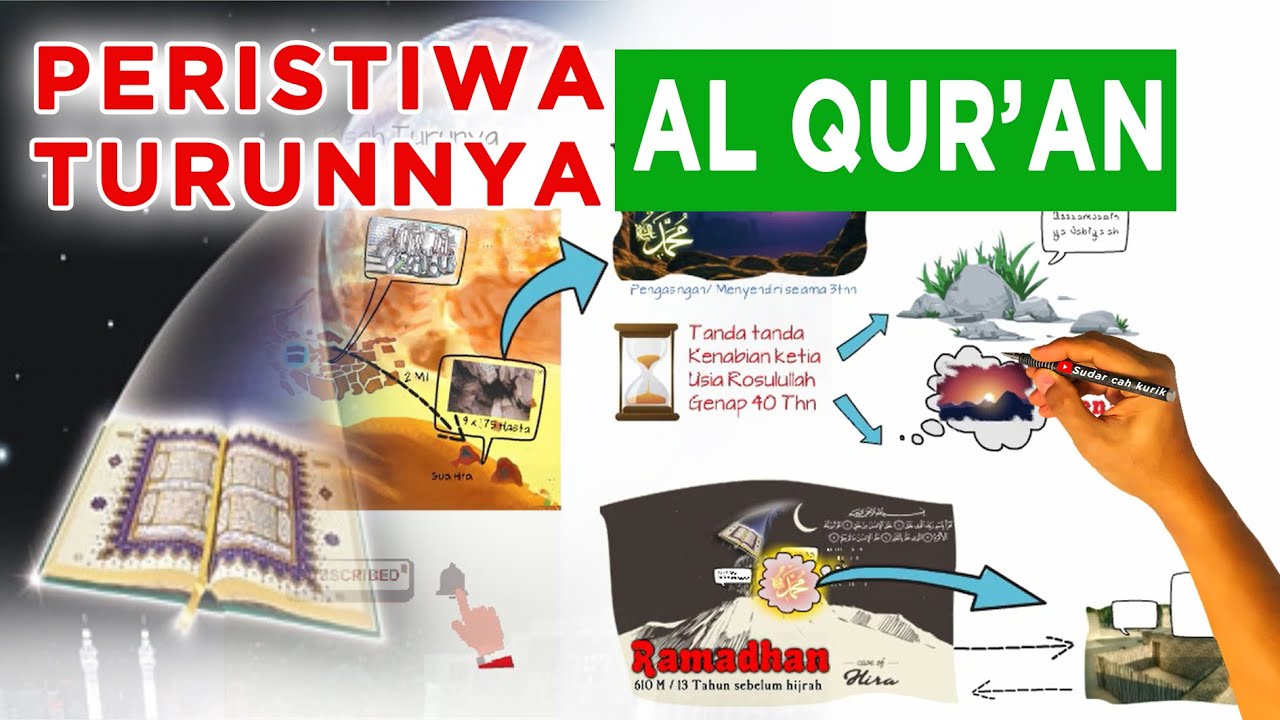
- 😀 The beginning of Prophet Muhammad's prophethood is marked by his revelation in the Cave of Hira on August 6, when Angel Jibril brought down the first verses of Surah Al-Alaq (1-5).
- 😀 Prophet Muhammad's first believer was his wife, Sayyidah Khadijah, who immediately accepted his prophethood and became the first to embrace Islam.
- 😀 In the early stages of the da’wah (propagation of Islam), the Prophet spread the message in secrecy due to the hostile environment in Mecca, where polytheism was dominant.
- 😀 The first converts to Islam were close relatives of Prophet Muhammad, known as 'assabiqunal-awwalun' (the first to embrace Islam), including the four future caliphs: Abu Bakr, Umar, Uthman, and Ali.
- 😀 After the revelation of Surah Al-Hijr (94), the Prophet was commanded to openly preach Islam, leading to open hostility and persecution from the Quraysh, including the rejection of his message by his uncle, Abu Lahab.
- 😀 Prophet Muhammad received protection from his uncle, Abu Talib, who was a respected leader of the Banu Hashim, but persecution of Muslims intensified, especially for those outside the protection of the clan.
- 😀 The persecution of early Muslims led to the migration of a group to Abyssinia (modern-day Ethiopia), where they were granted protection by the Christian King Najashi.
- 😀 The Quraysh attempted to stop the migration by bribing King Najashi, but their efforts were thwarted when Ja'far ibn Abi Talib successfully defended their case, leading to their safe stay in Abyssinia.
- 😀 The year 619 was called the Year of Sorrow, marking the deaths of Abu Talib and Khadijah, which further exposed the Prophet to attacks and persecution.
- 😀 The event of Isra and Mi'raj, where Prophet Muhammad traveled from Masjid al-Haram in Mecca to Masjid al-Aqsa and then ascended to the heavens, was a pivotal moment, bringing about the five daily prayers.
- 😀 In 622, Prophet Muhammad migrated (Hijrah) from Mecca to Medina after a failed assassination attempt by the Quraysh. This migration marked the beginning of the Islamic calendar, and the Muslims in Medina welcomed the Prophet with joy, providing him a safe haven.
- 😀 The early years in Medina involved military confrontations with the Quraysh, beginning with the Battle of Badr, where despite being outnumbered, the Muslims triumphed over the Quraysh in a significant victory.
Q & A
What was the significance of the event that occurred on August 6th, as described in the script?
-On August 6th, the first revelation of the Qur'an to Prophet Muhammad occurred in the Cave of Hira. The angel Jibril (Gabriel) brought down the first verses of Surah Al-Alaq, marking the beginning of Muhammad's prophethood.
How did Khadijah react to the Prophet Muhammad's experience in the Cave of Hira?
-Khadijah immediately believed in Muhammad’s prophethood and became the first person to embrace Islam without hesitation after he shared his fearful experience in the cave.
Why did Prophet Muhammad initially spread Islam in secret in Mecca?
-Islam was a new religion that directly opposed the polytheistic beliefs of the Quraysh tribe in Mecca. Given the dangers posed by the opposition, Prophet Muhammad initially preached Islam secretly, starting with close family and friends.
Who were the first four leaders (Rashidun Caliphs) to accept Islam, and why were they significant?
-The first four leaders to embrace Islam were Abu Bakr, Umar, Uthman, and Ali. They are known as the 'Rashidun' or rightly guided caliphs, and they played critical roles in the early expansion and leadership of the Islamic community after the death of Prophet Muhammad.
What happened when Prophet Muhammad publicly declared his prophethood on Mount Safa?
-When Prophet Muhammad publicly declared his prophethood on Mount Safa, his uncle, Abu Lahab, reacted angrily, even throwing stones at him. The Quraysh tribe initially rejected his message, and this led to an increase in persecution of Muslims.
How did Abu Talib support Prophet Muhammad during the early persecution in Mecca?
-Abu Talib, despite not accepting Islam himself, offered crucial protection to Prophet Muhammad. He refused to align with the Quraysh tribe's efforts to oppose Muhammad and defended him against the increasing persecution.
What led to the migration of Muslims to Abyssinia (modern-day Ethiopia)?
-In 615, as the persecution of early Muslims worsened in Mecca, Prophet Muhammad instructed a group of followers to migrate to Abyssinia, where they found refuge under the protection of the Christian King Negus, who offered them safety.
What was the significance of the boycott against the Banu Hashim and Banu Muttalib tribes?
-The Quraysh tribe enforced a boycott against the Banu Hashim and Banu Muttalib tribes in 616, hoping to force them to abandon their support of Prophet Muhammad. The boycott caused significant hardship, including food shortages, but it eventually failed after the piagam (written agreement) was miraculously eaten by termites, signaling its collapse.
What tragedy did Prophet Muhammad face in the year 619, and how did it affect him?
-In 619, Prophet Muhammad faced the death of his uncle Abu Talib and his wife Khadijah, both of whom had been his primary supporters. This year, known as the 'Year of Sorrow,' marked a period of intensified hardship and persecution for the Prophet.
What was the Isra and Mi'raj, and how did it impact Prophet Muhammad and the Muslim community?
-The Isra and Mi'raj was a miraculous night journey where Prophet Muhammad traveled from the Kaaba in Mecca to the Al-Aqsa Mosque in Jerusalem and then ascended to the heavens to meet Allah. This event affirmed his prophethood and resulted in the command for Muslims to pray five times a day.
What led to the decision for the migration (Hijrah) of Prophet Muhammad and his followers to Medina?
-After the loss of protection from his uncle Abu Talib and the increasing hostility in Mecca, Prophet Muhammad decided to migrate to Medina in 622, where the people had already accepted Islam. This migration marked a new phase in the development of the Muslim community.
What event triggered the Battle of Badr, and how did Prophet Muhammad’s followers respond?
-The Battle of Badr was triggered when Prophet Muhammad and his followers intercepted a Quraysh caravan led by Abu Sufyan. Although the initial intent was to disrupt the caravan’s trade, it escalated into a full-scale battle when the Quraysh sent an army to confront the Muslims. Despite being outnumbered, the Muslims emerged victorious.
Outlines

This section is available to paid users only. Please upgrade to access this part.
Upgrade NowMindmap

This section is available to paid users only. Please upgrade to access this part.
Upgrade NowKeywords

This section is available to paid users only. Please upgrade to access this part.
Upgrade NowHighlights

This section is available to paid users only. Please upgrade to access this part.
Upgrade NowTranscripts

This section is available to paid users only. Please upgrade to access this part.
Upgrade NowBrowse More Related Video

KISAH TELADAN NABI MUHAMMAD SAW

SIRAH : Kisah Penurunan Wahyu Pertama dan Dakwah Secara Sulit (Kartun Animasi)

E-Pembelajaran Tahun 3 KAFA (SIRAH) PERISTIWA TURUNNYA WAHYU

SKI Kelas 3 Peristiwa Kerasulan Nabi Muhammad Saw.

Story Telling Kelahiran nabi Muhammad SAW
sejarah turunnya Al Quran dan Diangkat Menjadi Nabi
5.0 / 5 (0 votes)
