Ciclo Ovarico, Mestruale e Fecondazione – Apparato Riproduttore (parte 2) | Il Corpo Umano
Summary
TLDRThis educational video script explains the menstrual cycle, detailing the changes in the uterine lining and the different phases: menstruation, proliferation, and the luteal phase. It also covers the fertilization process, highlighting how the ovum is fertilized by sperm, the barriers involved, and the crucial reaction preventing polyspermy. The fusion of sperm and egg forms a zygote with 46 chromosomes, which then travels through the fallopian tube to the uterus, where implantation occurs. The transcript concludes by thanking supporters of the channel and encouraging further learning, emphasizing the complexity and significance of these biological processes.
Takeaways
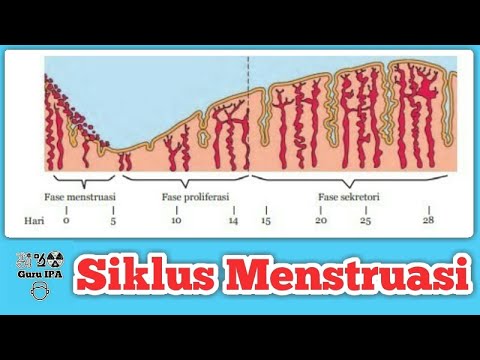
- 😀 The menstrual cycle involves the shedding of the functional layer of the endometrium, while the basal layer remains to regenerate it.
- 😀 Menstruation lasts 3-6 days, during which the functional layer of the endometrium is expelled along with blood.
- 😀 After menstruation, the proliferative phase begins, where the endometrium regenerates and becomes thicker, supported by new blood vessels.
- 😀 The thickened endometrium prepares the uterus for a potential pregnancy, making it suitable to nurture a fertilized egg.
- 😀 If the ovum is not fertilized, the uterine lining sheds, triggering the start of a new menstrual cycle.
- 😀 During ovulation, a mature follicle is released, and the egg travels through the fallopian tubes, where fertilization can occur.
- 😀 Fertilization typically occurs in the first third of the fallopian tube, and only one sperm successfully fertilizes the egg after overcoming multiple protective layers.
- 😀 The sperm's acrosome releases enzymes to break down the egg's protective barriers, allowing the sperm to fuse with the egg.
- 😀 Once the sperm and egg membranes fuse, the egg completes its second meiotic division and the sperm’s nucleus merges with the egg’s nucleus, forming a zygote.
- 😀 The zygote, with 46 chromosomes, begins its journey down the fallopian tube, undergoing mitosis to create the cells necessary for embryo development.
- 😀 The process of fertilization and early development marks the beginning of a potential pregnancy, which continues with embryo implantation in the uterus.
Q & A
What are the two main layers of the endometrium, and what is their role in the menstrual cycle?
-The endometrium has two layers: the functional layer, which is shed during menstruation, and the basal layer, which remains intact and regenerates the functional layer every cycle.
What happens during the menstrual phase of the cycle?
-During the menstrual phase, the functional layer of the endometrium is degenerated and shed, along with blood, lasting approximately 3-6 days.
How does the uterine mucosa regenerate after menstruation?
-After menstruation, the basal layer of the endometrium remains intact, and new cells begin to form, regenerating the uterine mucosa to prepare for possible pregnancy.
What is the role of blood vessels during the proliferative phase?
-During the proliferative phase, the cells of the endometrial mucosa proliferate, and blood vessels develop to nourish the growing tissue in preparation for a potential pregnancy.
What happens in the luteal phase if the ovum is not fertilized?
-If the ovum is not fertilized during the luteal phase, the uterine mucosa stops growing, and the cycle ends with the shedding of the mucosa, leading to a new menstrual phase.
Where does fertilization typically occur in the female reproductive system?
-Fertilization typically occurs in the first third of the Fallopian tube, where the sperm meets the egg.
What are the barriers the sperm must overcome to fertilize the egg?
-The sperm must penetrate the corona radiata and the zona pellucida, which are protective layers around the egg. The sperm uses enzymes in its acrosome to break through these barriers.
What is the significance of the fusion of the sperm and egg membranes?
-When the sperm and egg membranes fuse, it triggers the completion of the egg’s second meiotic division and allows the sperm's nucleus to merge with the egg's nucleus, forming a zygote.
What is a zygote, and what is its chromosome composition?
-A zygote is the fertilized egg that forms when the sperm and egg nuclei fuse. It contains 46 chromosomes, with 23 from the sperm and 23 from the egg.
What occurs after fertilization in terms of cell division?
-After fertilization, the zygote undergoes mitotic divisions to begin developing into a new individual.
Outlines

This section is available to paid users only. Please upgrade to access this part.
Upgrade NowMindmap

This section is available to paid users only. Please upgrade to access this part.
Upgrade NowKeywords

This section is available to paid users only. Please upgrade to access this part.
Upgrade NowHighlights

This section is available to paid users only. Please upgrade to access this part.
Upgrade NowTranscripts

This section is available to paid users only. Please upgrade to access this part.
Upgrade NowBrowse More Related Video

The Menstrual Cycle

The Menstrual Cycle Explained - 4 PHASES OF MENSTRUAL CYCLE MADE EASY!

Female Reproductive Cycle | Menstrual Cycle

THE MENSTRUAL CYCLE
siklus menstruasi pada wanita - fase menstruasi - hormon yang bekerja pada saat menstruasi

Menstrual Cycle Phases Nursing | Follicular Phase & Luteal Phase Med Surg
5.0 / 5 (0 votes)
