Film Theory: Is Disney+ Worth Signing Your Life Away?
Summary
TLDRThe video script discusses a legal case where Disney attempted to use a broad arbitration clause from their Disney Plus Terms of Service to avoid a lawsuit following a fatal allergic reaction at one of their restaurants. The script explores the implications of such clauses, questioning their legality and fairness, and highlights the importance of reading terms and conditions. It concludes with Disney backing down from using the clause after public backlash, emphasizing the need for consumer vigilance and collective action against overreaching corporate terms.
Takeaways
- 📜 Disney's Terms of Service include clauses that prevent customers from suing Disney if they get hurt at one of their parks.
- 🍽️ A woman named Dr. Kanokporn Tangsuan died from an allergic reaction to food at a Disney-owned restaurant, prompting her husband to sue Disney for wrongful death.
- 🤝 Disney attempted to use a legal loophole in their Disney+ terms to argue that the case should be settled through arbitration instead of in court.
- 📱 Jeffrey Piccolo, the husband of the deceased, had signed up for Disney+, and Disney claimed this meant he agreed to arbitration for any disputes related to Disney.
- 🏢 Arbitration is a private dispute resolution method that corporations prefer as it keeps legal issues out of the public eye.
- 📝 The terms and conditions of Disney+ claim that any disputes, even those unrelated to the service, must be resolved through arbitration.
- 🚫 The broad terms are potentially unconscionable, as they could prevent customers from suing Disney for serious issues that have nothing to do with the service they signed up for.
- 🏛️ Despite the legal argument that the terms might be unconscionable, courts have often upheld similar arbitration clauses as legal and enforceable.
- 🔍 The case gained public attention, leading to a backlash against Disney, which eventually agreed to go to court instead of arbitration.
- 👥 Consumers are often unaware of the extent to which they give up rights by agreeing to terms and conditions without reading them, which companies exploit.
Q & A
What is the main issue discussed in the video script?
-The main issue discussed is Disney's attempt to use a legal loophole in their Disney Plus Terms of Service to avoid a lawsuit for a wrongful death that occurred at one of their restaurants.
What happened to Dr. Kanokporn Tangsuan at the Disney Springs restaurant?
-Dr. Kanokporn Tangsuan suffered a severe allergic reaction to food served at Raglan Road restaurant in Disney Springs, which resulted in her death due to the presence of nuts and dairy in the meal.
Why is Disney trying to prevent the case from going to court?
-Disney is trying to prevent the case from going to court by invoking an arbitration clause in their Disney Plus Terms of Service, which they argue covers all disputes related to the Walt Disney Company or its affiliates.
What is the significance of Jeffrey Piccolo's agreement to Disney Plus Terms of Service in this case?
-Jeffrey Piccolo's agreement to Disney Plus Terms of Service is significant because Disney argues that it waives his right to sue any part of Disney, including for incidents at their parks or restaurants, due to the broad language in the terms.
What is arbitration and why does Disney prefer it over going to court?
-Arbitration is an alternative dispute resolution method outside of the court system, involving a neutral arbitrator. Disney prefers arbitration because it is typically quicker, private, and less public than a court trial.
What is the legal term used to describe a contract term that is so unfair it cannot be enforced?
-The legal term used to describe an unfair contract term that cannot be enforced is 'unconscionable.'
How did the United States Supreme Court rule on similar arbitration clauses in the past?
-The United States Supreme Court has ruled that arbitration clauses, like the ones used by AT&T and potentially Disney, are legal and enforceable, even if they are broad and one-sided.
What was the public's reaction to Disney's attempt to use the arbitration clause in this case?
-The public reaction was negative, with a swift backlash against Disney for attempting to use the arbitration clause to avoid responsibility for the incident at the restaurant.
Did Disney change their Terms of Service as a result of this case?
-Disney did not change their Terms of Service as a result of this case. They only waived their right to arbitration for this specific case after public backlash.
What is the call to action for viewers at the end of the video script?
-The call to action is for viewers to be vigilant about the terms and conditions they agree to, to collectively hold corporations accountable for their terms, and to make changes by raising awareness and calling out unreasonable terms.
Outlines

This section is available to paid users only. Please upgrade to access this part.
Upgrade NowMindmap

This section is available to paid users only. Please upgrade to access this part.
Upgrade NowKeywords

This section is available to paid users only. Please upgrade to access this part.
Upgrade NowHighlights

This section is available to paid users only. Please upgrade to access this part.
Upgrade NowTranscripts

This section is available to paid users only. Please upgrade to access this part.
Upgrade NowBrowse More Related Video
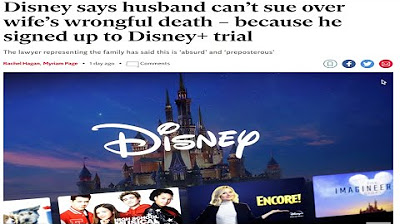
Disney Allergy Lawsuit is Crazy
What Disney & Uber Don’t Want You to Know
Steam altered the terms of the sale; you'll be happy they altered it further!

NÃO PODE MAIS PROCESSAR AS EMPRESAS?

Nintendo's Updated EULA Tries To Waive Your Right To Class Action Lawsuits As Switch 2 Launch Nears

"Studi Kasus Penukaran Tanah Wakaf Di Aceh" (H&A LKS) Kelompok 2
5.0 / 5 (0 votes)
