Hypothyroidism Explained Clearly
Summary
TLDRHypothyroidism is a condition characterized by underproduction of thyroid hormones, affecting metabolism, heart rate, and more. It can result from primary issues within the thyroid, or secondary and tertiary causes related to the pituitary or hypothalamus. Symptoms include fatigue, cold intolerance, and depression, among others, with severe cases leading to myxedema coma. Diagnosis involves lab tests for T3, T4, and TSH levels, with treatment typically involving synthetic thyroxine (levothyroxine). Central hypothyroidism may require hormone replacement for adrenal insufficiency and other related conditions.
Takeaways
- 🧠 Hypothyroidism is a clinical state caused by underproduction of thyroid hormones, primarily T4 and T3.
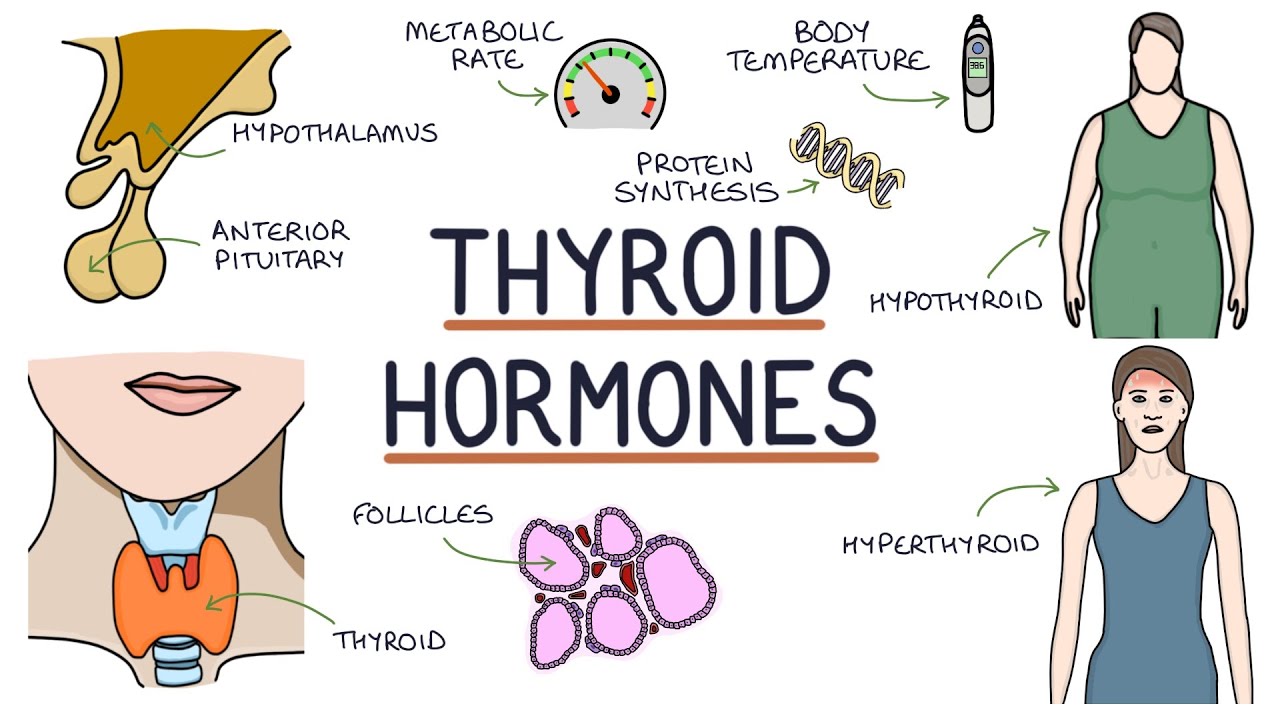
- ⚖️ Thyroid hormones regulate metabolism, thermogenesis, protein synthesis, and have a permissive effect on catecholamines.
- 🔄 The hypothalamic-pituitary-thyroid axis controls thyroid hormone levels via TRH, TSH, and negative feedback from T3/T4.
- 🏥 Primary hypothyroidism, caused by thyroid gland dysfunction, accounts for over 95% of cases; autoimmune thyroiditis is most common in iodine-sufficient areas.
- 🌍 Iodine deficiency remains a global cause of hypothyroidism but is less common in iodine-sufficient regions.
- 💊 Drugs like amiodarone and lithium, as well as thyroid surgery or radioactive iodine therapy, can induce hypothyroidism.
- 🩺 Symptoms often include fatigue, weight gain, cold intolerance, constipation, hair and skin changes, depression, and menstrual irregularities.
- 👁️ Physical signs include bradycardia, slow movements, and myxedema, with severe cases potentially leading to myxedema coma, which has high mortality.
- 🧪 Diagnosis relies on lab tests: low T4 and high TSH indicate primary hypothyroidism, whereas low T4 with low/normal TSH suggests central causes.
- 💉 Treatment primarily involves levothyroxine replacement therapy, with careful dose adjustment and monitoring of TSH levels; central causes also require management of other hormonal deficiencies.
- 🧬 Antibody testing (TPO, TTG) can help identify autoimmune causes, while imaging is indicated for suspected central hypothyroidism.
- 🩺 Subclinical hypothyroidism may be considered for treatment, especially in elderly patients or those with cardiovascular disease, using lower initial doses.
Q & A
What is hypothyroidism?
-Hypothyroidism is a clinical state characterized by the underproduction of thyroid hormones, primarily thyroxine (T4) and triiodothyronine (T3), which can lead to a slowdown in metabolic processes throughout the body.
What are the main hormones produced by the thyroid and their functions?
-The thyroid primarily produces thyroxine (T4), which is converted into the more active form triiodothyronine (T3) in tissues. These hormones influence metabolism, including basal metabolic rate, thermogenesis, protein synthesis, lipid and carbohydrate metabolism, and affect the body's response to catecholamines by increasing beta receptor expression.
How is thyroid hormone production regulated in the body?
-Thyroid hormone production is regulated through the hypothalamic-pituitary-thyroid axis. The hypothalamus releases thyrotropin-releasing hormone (TRH), which stimulates the anterior pituitary gland to produce thyroid-stimulating hormone (TSH). TSH stimulates the thyroid to release T4 and T3, which, in turn, inhibit the release of TRH and TSH through a negative feedback loop.
What is the most common cause of hypothyroidism worldwide?
-The most common cause of hypothyroidism worldwide is iodine deficiency. However, in iodine-sufficient areas, autoimmune thyroiditis (Hashimoto's thyroiditis) is the leading cause.
What are the symptoms of hypothyroidism?
-Symptoms of hypothyroidism often include fatigue, weakness, cold intolerance, weight gain, thinning hair, constipation, mental health changes (such as depression), and menstrual irregularities. Physical signs may include bradycardia, slow movement and speech, and non-pitting edema (particularly in the lower legs and eyes).
What is myxedema coma and when can it occur?
-Myxedema coma is a rare, life-threatening complication of severe hypothyroidism, particularly in older patients. It is characterized by hypothermia, hypotension, hypoventilation, mental status changes, and diffuse non-pitting edema. It is often triggered by an underlying illness and has a high mortality rate (25-60%).
What is the difference between primary, secondary, and tertiary hypothyroidism?
-Primary hypothyroidism is caused by a failure of the thyroid gland to produce adequate thyroid hormones. Secondary hypothyroidism occurs due to a disorder in the pituitary gland affecting TSH production, while tertiary hypothyroidism results from a disturbance in the hypothalamus affecting the release of TRH. Secondary and tertiary hypothyroidism are often grouped together as central hypothyroidism.
What laboratory tests are used to diagnose hypothyroidism?
-Diagnosis of hypothyroidism involves testing levels of free T3, T4, and TSH. In primary hypothyroidism, TSH levels are typically elevated while T4 levels are low. In central hypothyroidism, both TSH and T4 levels are usually low. Antibody tests (e.g., TTG, TPO) can help identify autoimmune causes. Other tests like full blood count and blood glucose may also be performed.
How is primary hypothyroidism treated?
-Primary hypothyroidism is commonly treated with synthetic thyroxine (levothyroxine) to replace the missing thyroid hormone. The treatment is tailored based on the patient’s symptoms and laboratory results, with the goal of normalizing TSH levels. Regular follow-up tests are conducted to adjust dosage as needed.
What are the treatment options for central hypothyroidism?
-Treatment for central hypothyroidism focuses on thyroid hormone replacement (similar to primary hypothyroidism), but may also include the management of other insufficiencies, such as adrenal insufficiency, with corticosteroids like hydrocortisone or prednisolone. In some cases, pituitary tumors may be treated with medications (e.g., somatostatin analogs) or surgical/radiotherapy options.
Outlines

Этот раздел доступен только подписчикам платных тарифов. Пожалуйста, перейдите на платный тариф для доступа.
Перейти на платный тарифMindmap

Этот раздел доступен только подписчикам платных тарифов. Пожалуйста, перейдите на платный тариф для доступа.
Перейти на платный тарифKeywords

Этот раздел доступен только подписчикам платных тарифов. Пожалуйста, перейдите на платный тариф для доступа.
Перейти на платный тарифHighlights

Этот раздел доступен только подписчикам платных тарифов. Пожалуйста, перейдите на платный тариф для доступа.
Перейти на платный тарифTranscripts

Этот раздел доступен только подписчикам платных тарифов. Пожалуйста, перейдите на платный тариф для доступа.
Перейти на платный тарифПосмотреть больше похожих видео



5.0 / 5 (0 votes)

