Quem Inventou o Ventilador?
Summary
TLDRThis video explores the fascinating history of the electric fan, from ancient manual hand fans used by Greeks, Romans, and Asians to innovative mechanical and early electric designs. It highlights key inventors like James, Ding Huan, Schuyler Wheeler, and Philip Diehl, tracing how their inventions evolved into the modern fans we know today, including ceiling fans. The video also explains how fans work to cool humans and objects, and even how ceiling fans can help warm a room. Engaging and informative, it combines historical insights with practical knowledge, revealing the ingenuity behind this everyday device.
Takeaways
- 🌬️ The concept of cooling with air movement has existed for centuries, with ancient civilizations like Greeks, Romans, and Egyptians using hand fans made of leaves and feathers.
- 🪶 Hand fans likely originated from simple, natural methods of cooling and were widely adopted in various cultures, especially in Asia, where they became a cultural symbol.
- 🎨 The European adoption of fans in the 15th century came via Portuguese trade routes, integrating into fashion and social life in subsequent centuries.
- ⚙️ Early mechanical ventilators appeared in the 1800s, often using weights, pulleys, or the motion of rocking chairs to rotate fan blades, but were complex and inefficient.
- 🇨🇳 An ancient Chinese inventor, Ding Huan, created a multi-wheel mechanical fan in the Han dynasty that could ventilate entire rooms using a single person.
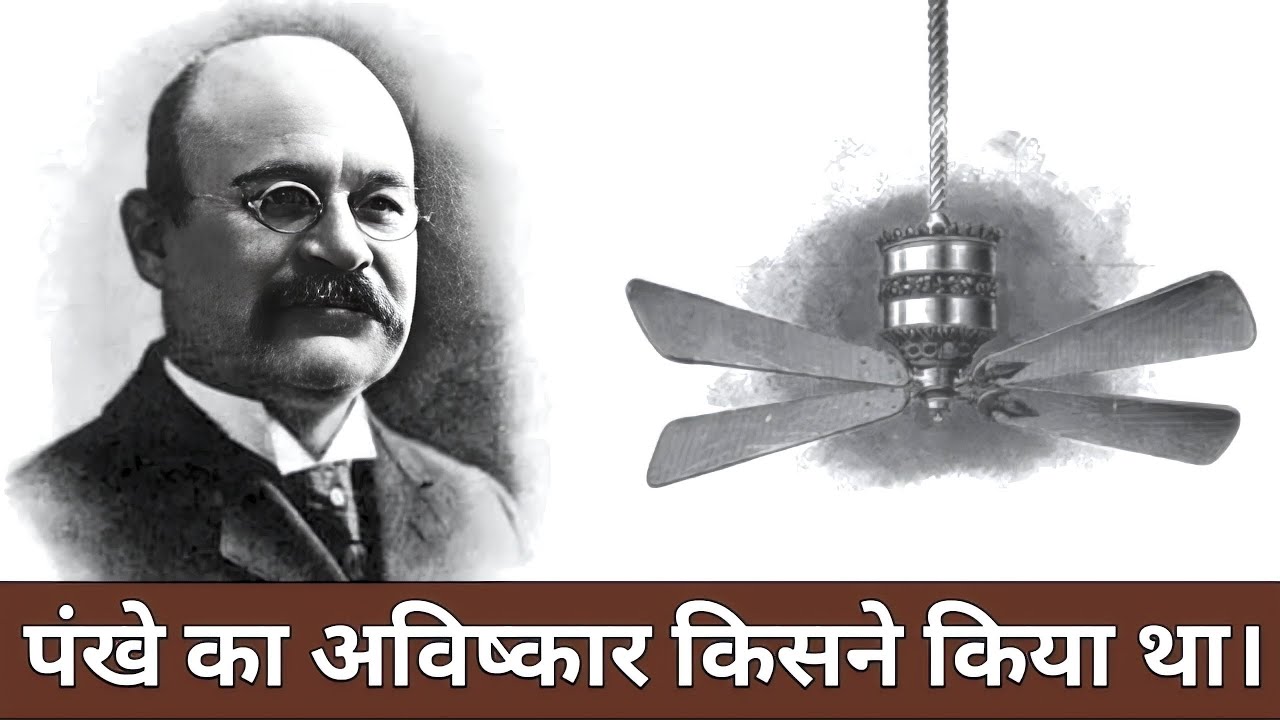
- 🔌 The invention of the electric motor enabled the creation of modern electric fans, with Schuyler Wheeler developing the first electric fan around 1886, patented in 1893.
- 💡 Philip Diehl innovated the ceiling fan in 1889, adapting electric motors from sewing machines and adding features like integrated lighting, making it a household staple.
- ⚖️ Wheeler's and Diehl's patents were chronologically confusing, but Wheeler is recognized for constructing and publicly presenting the first electric fan.
- 🌡️ Fans do not lower room temperature like air conditioning; they work by transferring heat from objects and speeding up evaporation from the skin to create a cooling effect.
- 🔥 Ceiling fans can also redistribute warm air in winter by blowing air upwards, helping to circulate heat more evenly throughout a room.
- 💰 The commercialization of fans contributed to the growth of electricity consumption and helped establish early electric utility businesses.
- 🎥 Simple inventions like the fan have fascinating histories, showing human creativity in addressing everyday problems like heat.
Q & A
What was the primary purpose of hand-held fans in ancient civilizations?
-Hand-held fans, such as the leques, were used to alleviate heat in ancient civilizations, including the Greeks, Egyptians, and Romans. They were made from materials like feathers and leaves and were essential in providing relief from the intense heat.
Who is considered the inventor of the first electric fan?
-Schuyler Wheeler is credited with inventing the first electric fan. He developed and presented the fan in the period between 1882 and 1886, with the patent granted in 1893.
What was the major flaw in Schuyler Wheeler's original electric fan design?
-Wheeler's original design lacked protective grills around the fan blades, making it potentially dangerous. Additionally, the fan blades were small in relation to the motor size, indicating inefficiency.
How did the ceiling fan invention come about?
-The ceiling fan was invented by Philip Diehl in 1889. He combined the design of Wheeler’s electric fan with a sewing machine motor, making it suitable for ceiling installation. Diehl also innovated by adding a light to the center of the fan.
What makes the hand-held fans in Asian cultures particularly significant?
-In Asian cultures, hand-held fans became iconic cultural symbols. They were not only functional for cooling but also had artistic and symbolic significance, often represented in art and performance.
What did some Roman emperors do to combat the heat?
-Roman emperors would sometimes have snow brought from nearby mountains to cool their surroundings and combat the intense heat.
How did Ding Huan's ancient ventilator differ from later mechanical fans?
-Ding Huan, a Chinese inventor during the Han dynasty, created a large, mechanical ventilator made up of seven 3-meter wheels, operated by a man turning a crank. This early ventilator was capable of cooling an entire hall, a precursor to later mechanical and electric fans.
Why did Schuyler Wheeler lose the patent for the first electric fan?
-Wheeler lost the patent for the electric fan because he delayed filing the patent until 1892, even though he had developed and demonstrated the invention earlier. As a result, Philip Diehl received the patent for the ceiling fan, which was considered an improvement of Wheeler's design.
How does a fan actually affect the temperature of a room?
-A fan does not reduce the room temperature like an air conditioner. Instead, it helps lower the temperature of objects, including the human body, by facilitating the evaporation of sweat and moving heat from warmer objects into the surrounding environment.
How can a ceiling fan help heat a room during colder weather?
-In cold weather, a ceiling fan can be set to run in reverse (exhaust mode), pushing warm air that accumulates near the ceiling down into the living space, effectively circulating heat and warming the room.
Outlines

Этот раздел доступен только подписчикам платных тарифов. Пожалуйста, перейдите на платный тариф для доступа.
Перейти на платный тарифMindmap

Этот раздел доступен только подписчикам платных тарифов. Пожалуйста, перейдите на платный тариф для доступа.
Перейти на платный тарифKeywords

Этот раздел доступен только подписчикам платных тарифов. Пожалуйста, перейдите на платный тариф для доступа.
Перейти на платный тарифHighlights

Этот раздел доступен только подписчикам платных тарифов. Пожалуйста, перейдите на платный тариф для доступа.
Перейти на платный тарифTranscripts

Этот раздел доступен только подписчикам платных тарифов. Пожалуйста, перейдите на платный тариф для доступа.
Перейти на платный тарифПосмотреть больше похожих видео





5.0 / 5 (0 votes)

