Teorema Pythagoras [Part 2] - Penerapan Teorema Pythagoras
Summary
TLDRIn this educational video, Pak Beni explores the application of the Pythagorean theorem beyond basic triangle problems. He demonstrates how to calculate distances between points on a plane, determine areas involving geometric shapes like semicircles, and find diagonals in three-dimensional objects such as blocks. The lesson extends to real-world scenarios, including calculating distances between aircraft using radar data. Through step-by-step explanations and examples, viewers learn to confidently apply the Pythagorean theorem in both two-dimensional and three-dimensional contexts, enhancing problem-solving skills and understanding of geometric relationships in practical situations.
Takeaways
- 😀 The main goal of the video is to teach the application of the Pythagorean theorem on flat planes, solid shapes, and real-world problems.
- 😀 The Pythagorean theorem states that in a right-angled triangle, the square of the hypotenuse equals the sum of the squares of the other two sides: c² = a² + b².
- 😀 Identifying the hypotenuse is crucial, as it is always the side opposite the right angle and the longest side of the triangle.
- 😀 The theorem can be applied to find distances between two points on a coordinate plane using the differences in their x and y coordinates.
- 😀 When solving for lengths or distances that result in non-integer square roots, simplifying the square root is recommended, e.g., √80 = 4√5.
- 😀 The Pythagorean theorem can be used to calculate areas indirectly, such as finding the radius of a semicircle attached to a triangle for area calculations.
- 😀 In 3D shapes like cuboids, the theorem can determine face diagonals and space diagonals by applying it in two steps: first for the base, then including height.
- 😀 Real-world applications include calculating distances in aviation, using the theorem to find the distance between objects given their positions relative to a radar.
- 😀 Drawing diagrams and sketches is emphasized as a helpful tool for visualizing problems and ensuring accurate application of the theorem.
- 😀 Practice with various types of problems, including 2D and 3D shapes and real-life scenarios, is encouraged to gain a deeper understanding of the theorem’s applications.
Q & A
What is the main purpose of the video by Pak Beni?
-The main purpose is to teach how to apply the Pythagorean Theorem in various contexts, including plane geometry, three-dimensional shapes, and real-world problems.
What is the formula for the Pythagorean Theorem and what do the variables represent?
-The formula is c² = a² + b², where 'c' is the hypotenuse (the side opposite the right angle) and 'a' and 'b' are the other two sides of a right-angled triangle.
How do you determine the hypotenuse in a right-angled triangle?
-The hypotenuse is the side opposite the right angle and is always the longest side of the triangle.
How is the Pythagorean Theorem applied to find the distance between two points on a coordinate plane?
-By treating the horizontal and vertical differences between the points as the two legs of a right triangle and applying the theorem: distance² = (horizontal difference)² + (vertical difference)².
How is the Pythagorean Theorem used to calculate the radius of a semicircle attached to a right triangle?
-First, use the theorem to find the missing side of the triangle (opposite the right angle). The radius of the semicircle is half of that side, which is then used to calculate the area of the semicircle.
How do you calculate the area of a semicircle given its radius?
-The area of a semicircle is (1/2) × π × r², where 'r' is the radius of the semicircle.
How is the Pythagorean Theorem applied to three-dimensional shapes like a cuboid?
-It is used to calculate the length of diagonal lines. First, apply the theorem to a rectangle on one face, then use it again with the height to find the spatial diagonal.
What are the steps to find the distance between two airplanes detected by radar using Pythagoras?
-1. Represent the positions as points forming right triangles. 2. Use the theorem to calculate the distances from the radar to each plane. 3. Subtract the smaller segment from the larger to find the distance between the planes.
Why is it important to simplify square roots when applying the Pythagorean Theorem?
-Simplifying square roots makes the results easier to interpret, compare, and use in further calculations, especially when the root is not a perfect square.
Can the Pythagorean Theorem be applied to shapes other than triangles?
-Yes, it can be applied indirectly to various geometric shapes and real-world problems where right triangles can be identified or constructed, such as calculating distances, diagonals, and heights.
What types of problems are suggested for practice to strengthen understanding of the Pythagorean Theorem?
-Practice should include problems involving distances on coordinate planes, areas involving semicircles or triangles, diagonals of cuboids or prisms, and real-life navigation problems.
Outlines

Этот раздел доступен только подписчикам платных тарифов. Пожалуйста, перейдите на платный тариф для доступа.
Перейти на платный тарифMindmap

Этот раздел доступен только подписчикам платных тарифов. Пожалуйста, перейдите на платный тариф для доступа.
Перейти на платный тарифKeywords

Этот раздел доступен только подписчикам платных тарифов. Пожалуйста, перейдите на платный тариф для доступа.
Перейти на платный тарифHighlights

Этот раздел доступен только подписчикам платных тарифов. Пожалуйста, перейдите на платный тариф для доступа.
Перейти на платный тарифTranscripts

Этот раздел доступен только подписчикам платных тарифов. Пожалуйста, перейдите на платный тариф для доступа.
Перейти на платный тарифПосмотреть больше похожих видео

Teorema Pythagoras Kelas 8 Semester 2
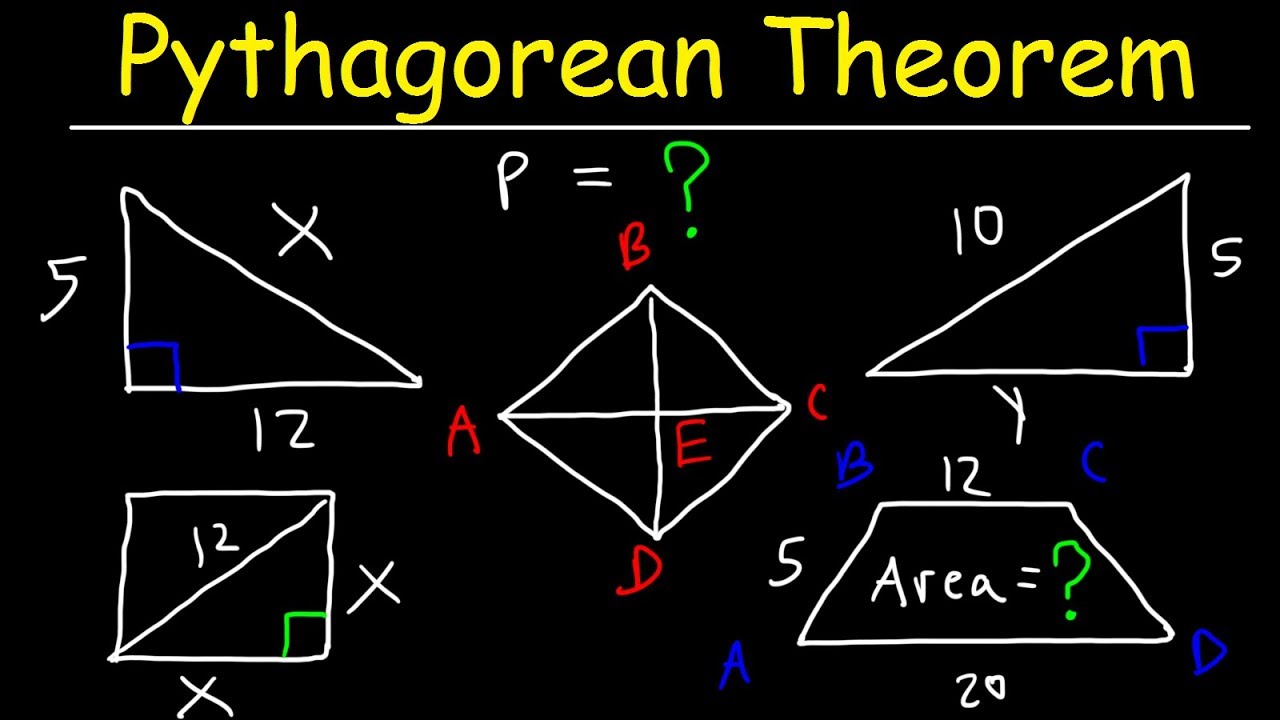
Pythagorean Theorem
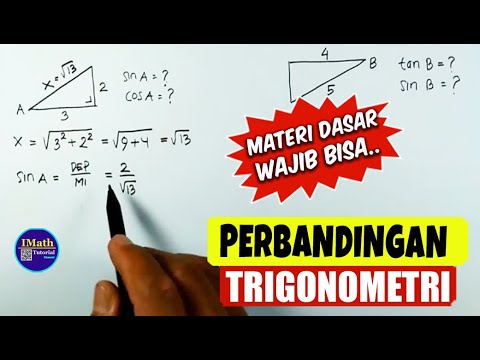
Menentukan Nilai Trigonometri Segitiga Siku Siku Perbandingan Trigonometri segitiga Siku Siku

MATEMATIKA Kelas 8 - Teorema Phytagoras | GIA Academy
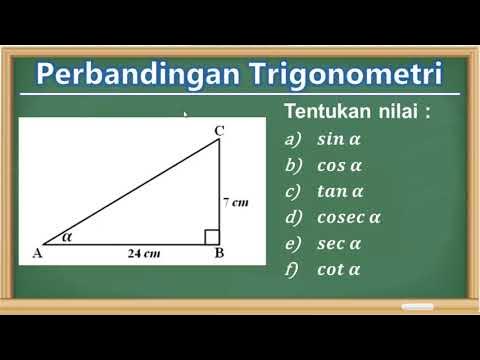
Perbandingan Trigonometri Pada Segitiga Siku-siku
Teorema Pythagoras [Part 1] - Menentukan Panjang Salah Satu Sisi Pada Segitiga Siku-siku
5.0 / 5 (0 votes)

