Latihan Soal UJIAN SEKOLAH (US/ASAJ) KIMIA Kelas 12 Kurikulum Merdeka & Pembahasan Tahun 2026
Summary
TLDRThis video provides a comprehensive chemistry practice session for 12th-grade students following the Merdeka Curriculum 2026, covering topics from reaction rates, catalysts, and activation energy to chemical equilibrium, titration, buffers, and homogeneous catalysts. Each concept is explained clearly with multiple-choice questions and their correct answers, offering students a structured way to reinforce learning. Real-world examples, such as industrial applications of catalysts, are included to enhance understanding. The content is designed to prepare students for school exams, US, or ASAT assessments, combining instructional guidance with interactive problem-solving to boost confidence and mastery in chemistry.
Takeaways
- 😀 Reaction rate refers to the change in concentration of reactants or products over time.
- 😀 Factors affecting reaction rate include temperature, concentration, catalyst, and surface area, with volume having no effect.
- 😀 A catalyst lowers the activation energy of a reaction, speeding it up without being consumed.
- 😀 Increasing temperature generally increases the reaction rate by providing more energy to reactants.
- 😀 Activation energy is the minimum energy required to start a chemical reaction.
- 😀 An example of a catalytic process in industry is ammonia production via the Haber process.
- 😀 Larger surface areas of reactants speed up reactions by allowing more collisions between particles.
- 😀 The order of a reaction indicates how the concentration of reactants influences the reaction rate.
- 😀 Chemical equilibrium occurs when the rates of the forward and reverse reactions are equal.
- 😀 In titration, the titrant is the solution with a known concentration, used to determine the concentration of another substance.
- 😀 Buffer solutions resist changes in pH when small amounts of acid or base are added, and are important in maintaining pH in biological systems.
Q & A
What is meant by the rate of reaction?
-The rate of reaction refers to the change in concentration of reactants or products per unit of time.
Which factor does not affect the rate of reaction?
-Volume does not affect the rate of reaction.
What is the function of a catalyst in a chemical reaction?
-A catalyst lowers the activation energy of a reaction, making it easier for the reaction to occur.
How does increasing the temperature affect the rate of reaction?
-Increasing the temperature typically increases the rate of reaction, as molecules move faster and collide more frequently.
What is activation energy in a chemical reaction?
-Activation energy is the minimum energy required to start a chemical reaction.
What is an example of catalyst application in industry?
-The Haber process for producing ammonia uses a catalyst to speed up the reaction.
How does surface area affect the rate of reaction?
-A larger surface area increases the rate of reaction by allowing more reactant molecules to collide.
What is meant by reaction order?
-Reaction order refers to how the rate of reaction depends on the concentration of reactants.
What is a buffer solution?
-A buffer solution is one that can maintain its pH even when small amounts of acid or base are added.
What happens if an inert gas is added to a system at equilibrium with constant volume?
-The equilibrium does not shift because an inert gas does not affect the concentration of reactants or products.
Outlines

Этот раздел доступен только подписчикам платных тарифов. Пожалуйста, перейдите на платный тариф для доступа.
Перейти на платный тарифMindmap

Этот раздел доступен только подписчикам платных тарифов. Пожалуйста, перейдите на платный тариф для доступа.
Перейти на платный тарифKeywords

Этот раздел доступен только подписчикам платных тарифов. Пожалуйста, перейдите на платный тариф для доступа.
Перейти на платный тарифHighlights

Этот раздел доступен только подписчикам платных тарифов. Пожалуйста, перейдите на платный тариф для доступа.
Перейти на платный тарифTranscripts

Этот раздел доступен только подписчикам платных тарифов. Пожалуйста, перейдите на платный тариф для доступа.
Перейти на платный тарифПосмотреть больше похожих видео

Catalysts and Homogeneous and Heterogeneous Catalysis (A-Level IB Chemistry)
A Level Chemistry Revision "Heterogeneous and Homogeneous Catalysts"

Chemical Kinetics | A Model for Chemical Kinetics & Catalysis.
[MDQ] - Cinética Química - Teoria das colisões
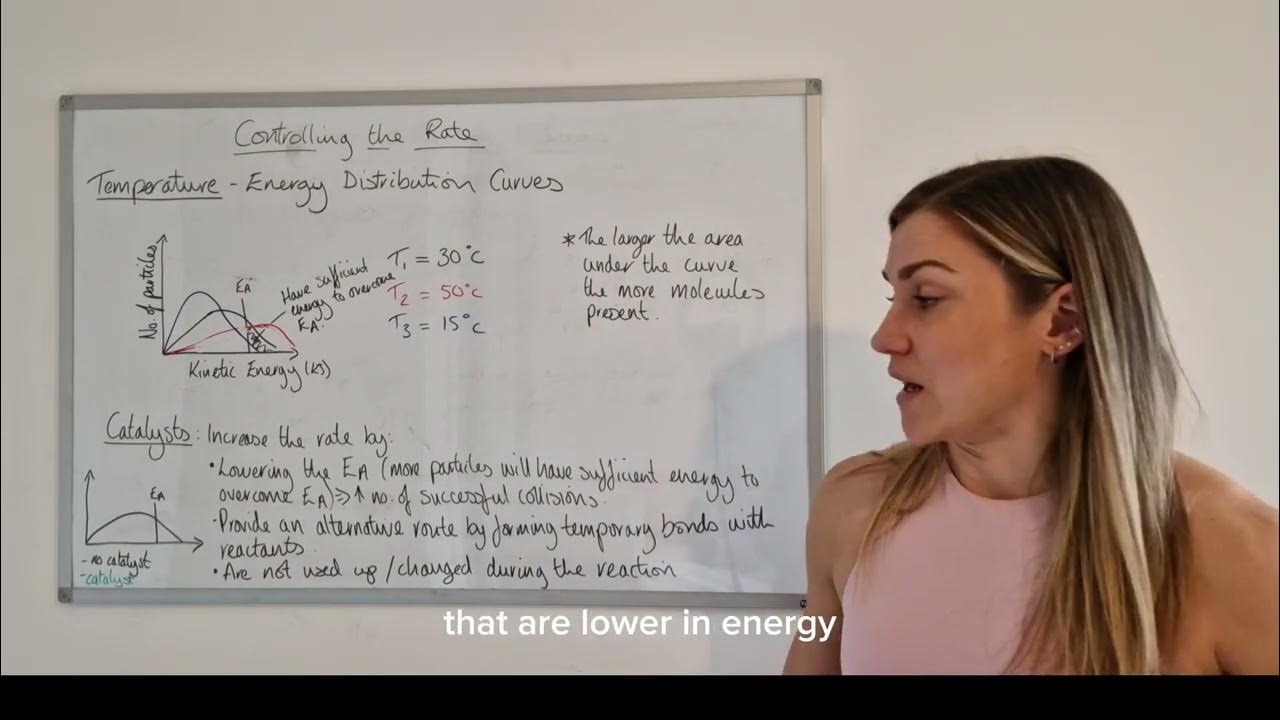
Higher Chemistry: Unit 3 - Controlling the Rate: Factors Effecting Rate

Latihan Soal UJIAN SEKOLAH (US/ASAJ) FISIKA Kelas 12 Kurikulum Merdeka & Pembahasan Tahun 2026
5.0 / 5 (0 votes)

