The power of Bayesian reasoning | BBC Ideas
Summary
TLDRBayesian reasoning, introduced by 18th-century clergyman Thomas Bayes, is a method for updating beliefs based on new information. From cracking the Enigma code in WWII to email spam filters and medical testing, Bayesian analysis helps refine probabilities as evidence accumulates. It treats beliefs as probabilities, which are updated to reflect new data, exemplified by mammogram screening where prior cancer risk is revised after a positive result. Beyond practical applications, Bayesian thinking influences scientific inference and may even mirror how human brains interpret the world, highlighting how we learn from experience in an uncertain world.
Takeaways
- 📜 Bayesian reasoning is a method for updating beliefs based on new information, formalized by Thomas Bayes in the 18th century.
- 🧑🔬 Bayes introduced the ideas that beliefs can be expressed as probabilities and should be revised when new evidence is obtained.
- 🕵️♂️ Bayesian analysis has real-world applications, such as helping Alan Turing crack the Enigma code during World War II.
- 📧 Modern technologies like spam filters use Bayesian reasoning to improve their accuracy as new patterns are detected.
- 🏥 In medical testing, Bayesian analysis helps interpret results more accurately by considering base rates, such as in breast cancer screening.
- ➗ Even highly accurate tests can yield counterintuitive results when the underlying prevalence of a condition is low, as illustrated by false positives in mammograms.
- 🔬 Bayesian inference in science acknowledges that prior knowledge influences data interpretation, rather than assuming complete objectivity.
- 💊 Clinical trials benefit from Bayesian methods by using existing evidence to design more efficient studies and prioritize investigations.
- 🧠 Human perception may operate in a Bayesian manner, constantly updating expectations based on prior knowledge and new sensory input.
- 🌍 Overall, Bayesian reasoning reflects a fundamental way humans learn from experience and manage uncertainty in everyday life and scientific inquiry.
Q & A
What is Bayesian reasoning?
-Bayesian reasoning is a method of decision-making that involves updating our beliefs based on new information. It was first introduced by Reverend Thomas Bayes in the 18th century and plays a significant role in various fields, such as science, medicine, and artificial intelligence.
Who was Thomas Bayes, and what was his contribution to Bayesian reasoning?
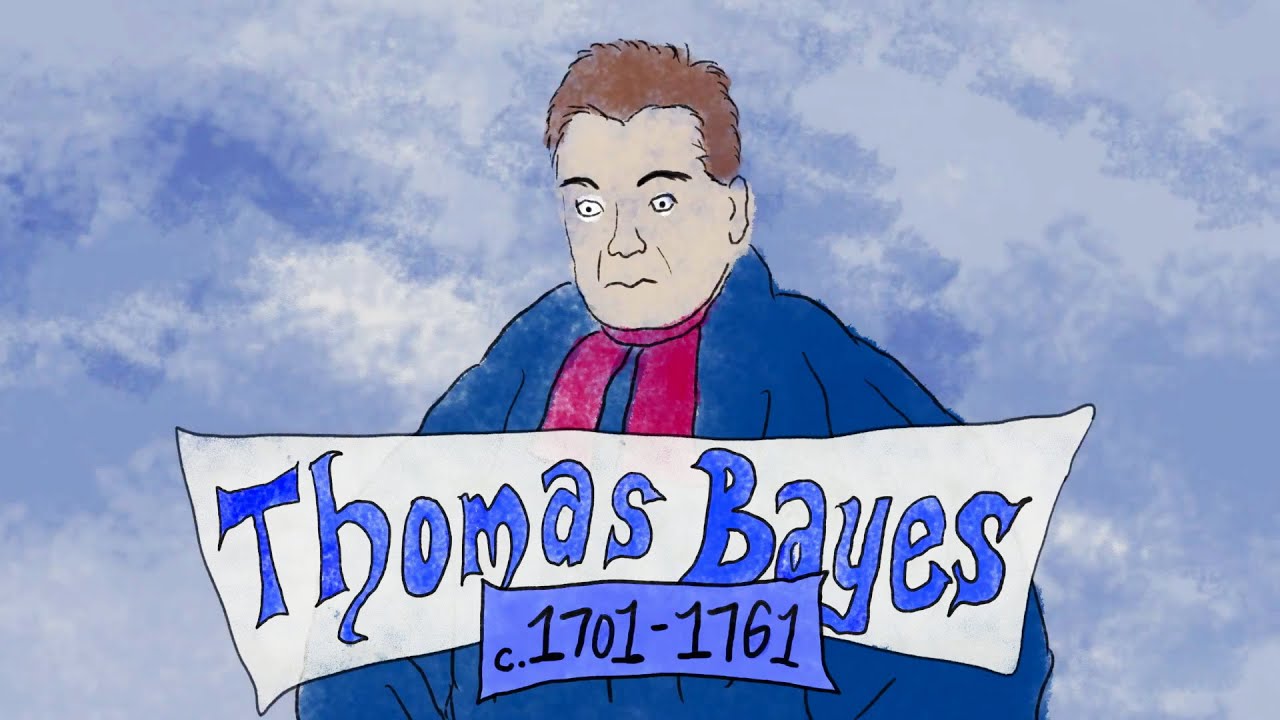
-Thomas Bayes was an 18th-century clergyman from Tunbridge Wells, England. His major contribution was the development of Bayesian reasoning, which involves expressing beliefs as probabilities and updating them based on new information.
How does Bayesian reasoning impact our daily decisions?
-Bayesian reasoning affects daily decisions when we reconsider our choices based on new information, such as when we change our opinion after receiving advice from a friend. It's a method of adjusting our beliefs with each new piece of relevant information.
How did Bayesian reasoning help crack the Enigma code during World War II?
-During World War II, Alan Turing and his team at Bletchley Park used Bayesian analysis to refine their understanding of the settings of Nazi Enigma machines. As they gathered new data, they updated their beliefs, helping them eventually decipher the code.
What is an example of Bayesian reasoning in everyday technology?
-One example is the spam filter in email accounts. It uses Bayesian analysis to continually adjust its probability that an incoming email is spam based on features it detects, such as certain words or patterns.
How does Bayesian reasoning apply to medical tests, like mammograms?
-In medical tests like mammograms, Bayesian reasoning helps adjust the probability of a woman having cancer based on the test results. For example, even if a mammogram shows a positive result, the actual probability of cancer is revised by taking into account the base rate of cancer among women being tested.
What does 'posterior probability' mean in the context of Bayesian reasoning?
-Posterior probability refers to the updated probability after new information is considered. In the case of medical tests, the posterior probability is the revised likelihood that someone has a condition, given their test results and prior knowledge.
Why might a positive result on a mammogram not always indicate cancer?
-A positive mammogram result doesn't always mean cancer because there is a small chance of a false positive. This means that some women who test positive for cancer may not actually have the disease. Bayesian reasoning helps update the probability of cancer based on the test results and the base rate of cancer.
What is the traditional view of science, and how does Bayesian inference challenge it?
-The traditional view of science is that it is an objective process where data is analyzed without preconceptions. Bayesian inference, however, acknowledges that data analysis often starts with prior knowledge and judgments, which influence how the data is interpreted and how new information is incorporated.
What is meant by the term 'Bayesian brains'?
-'Bayesian brains' refers to the idea that humans use Bayesian reasoning to interpret the world. We constantly update our beliefs about what we expect to happen based on prior experiences and new information, much like how Bayesian reasoning works in statistics and decision-making.
Outlines

Этот раздел доступен только подписчикам платных тарифов. Пожалуйста, перейдите на платный тариф для доступа.
Перейти на платный тарифMindmap

Этот раздел доступен только подписчикам платных тарифов. Пожалуйста, перейдите на платный тариф для доступа.
Перейти на платный тарифKeywords

Этот раздел доступен только подписчикам платных тарифов. Пожалуйста, перейдите на платный тариф для доступа.
Перейти на платный тарифHighlights

Этот раздел доступен только подписчикам платных тарифов. Пожалуйста, перейдите на платный тариф для доступа.
Перейти на платный тарифTranscripts

Этот раздел доступен только подписчикам платных тарифов. Пожалуйста, перейдите на платный тариф для доступа.
Перейти на платный тарифПосмотреть больше похожих видео

The medical test paradox, and redesigning Bayes' rule

The Bayesian Trap

Probabilitas (Peluang) - Pengantar Statistika Ekonomi dan Bisnis (Statistik 1) | E-Learning STA

Think more rationally with Bayes’ rule | Steven Pinker
Everything You Ever Wanted to Know About Bayes' Theorem But Were Afraid To Ask.

Cara Menggunakan Teorema bayes dan Diagram Pohon
5.0 / 5 (0 votes)

