Crush Everyone with the Most Aggressive Opening for White
Summary
TLDRGrandmaster Igor Spof presents a detailed guide to the Scotch Gambit, a powerful opening for players seeking to outmaneuver opponents rated below 1500. He explains key tactical ideas, including early pawn attacks, rapid development, and strategic sacrifices on F7 to expose the enemy king. The video covers common responses by Black, offers precise counter-strategies, and demonstrates how to exploit weaknesses to achieve checkmate in under ten moves. Igor also outlines middle-game plans, emphasizing pawn advancement, piece coordination, and blockade strategies to maintain a strong positional advantage. This tutorial equips players with practical, high-impact tactics for dominating early-game play.
Takeaways
- ♟️ The Scotch Gambit is an aggressive opening designed to punish beginners and intermediate players by prioritizing quick development and tactical threats.
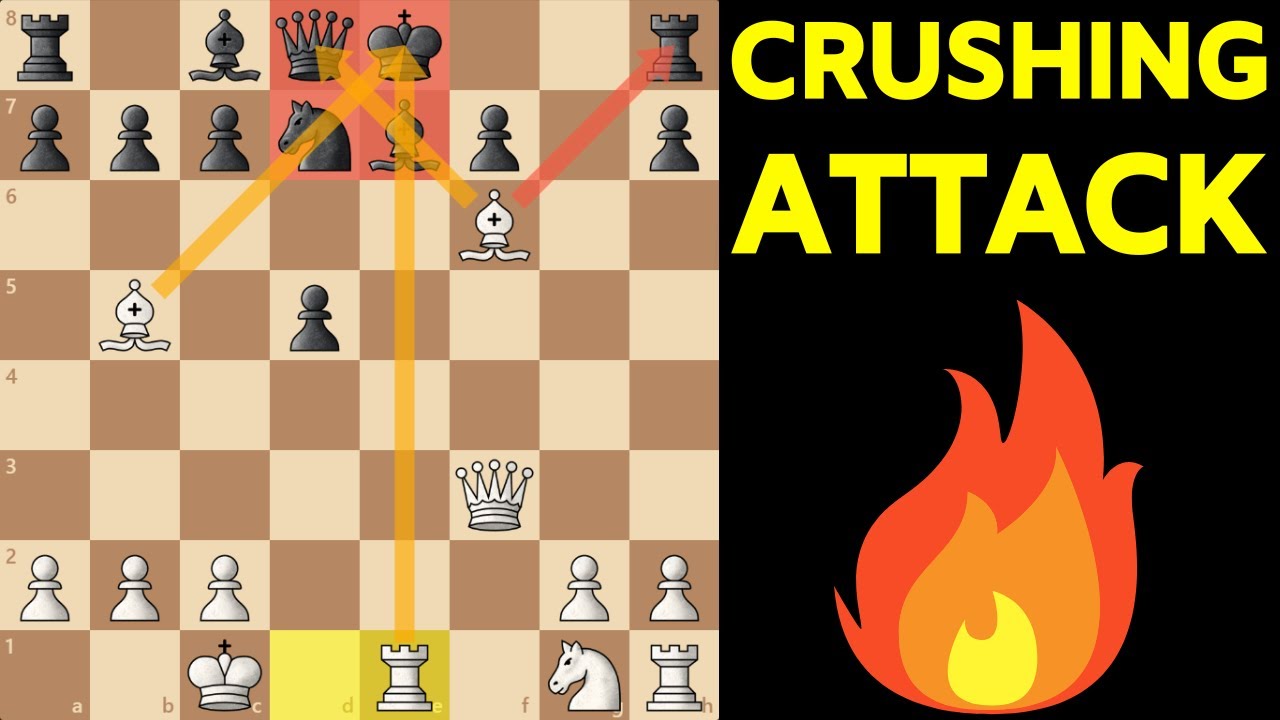
- 🗡️ Sacrificing the bishop on F7 is a key tactic to expose the opponent's king and initiate a rapid attack.
- 👀 Typical mistakes by lower-rated opponents include moving the knight to g4 or e4, or wasting tempo with moves like h6, which can be exploited for a quick win.
- ♔ Using queen checks (Qf3 or Qd5) creates double threats and often leads to checkmate in a few moves if opponents are unprepared.
- 🚀 Prioritizing development over immediate material recovery is crucial in the opening phase to maintain momentum.
- 🔒 The middle-game plan focuses on controlling key squares, blocking opponent pawns, and advancing your own pawn majority on the kingside.
- ⚔️ Tactical motifs to watch for include pins, discovered attacks, double attacks, and exploiting weak diagonals and squares around the king.
- 🏰 Castling early consolidates your position while keeping attacking options open and prepares rook activity along the e-file.
- 📈 Against more experienced players who know the Scotch Gambit, playing carefully and maintaining pressure with moves like c3, Bd5, and F3-F4 is necessary to retain an advantage.
- 🎯 Overall, combining rapid development, tactical sacrifices, and strategic middle-game planning can consistently lead to a strong position or a decisive victory against sub-1500 opponents.
Q & A
What is the main idea behind the Scotch Gambit in chess?
-The Scotch Gambit focuses on quickly developing pieces, particularly the bishop, while sacrificing the pawn on d4. The goal is to pressure the opponent's center and create early tactical threats, making it difficult for them to develop smoothly.
Why is playing Bishop to C4 an important move in the Scotch Gambit?
-Bishop to C4 is critical because it prioritizes rapid development over capturing the pawn on d4. This move puts pressure on the opponent’s position, especially targeting weak spots like f7, and keeps the initiative, making it harder for the opponent to defend without precise knowledge of the opening.
What is the most common mistake made by players in response to the Scotch Gambit?
-A common mistake by beginners to intermediate players is failing to recognize the need for precise defensive responses. They often overlook the counterintuitive counterblow of Pawn to d5, which is the only good defense to hold onto the game.
Why is Knight to G4 a risky move for black in the Scotch Gambit?
-Knight to G4 is risky because it exposes the knight to early tactical blows. It might seem like a good move to attack the e5 pawn, but it leaves the knight vulnerable to a bishop sacrifice on f7, which can lead to a devastating attack, especially after the follow-up Knight to G5 and Queen to f3.
How does White exploit the Knight’s vulnerability on G4 in the Scotch Gambit?
-White exploits the Knight on G4 by first sacrificing the bishop on f7, forcing Black to capture it. Then, White plays Knight to G5 with a check, which opens up a discovered attack on Black’s knight, causing significant material loss and a weakened position for Black.
What is the significance of the move Queen to F3 in the Scotch Gambit?
-Queen to F3 is a powerful move because it threatens a Scholar’s Checkmate, forcing Black to respond. It also sets up a second hidden threat with Queen to D5, creating a double attack on the Black king and other key squares, often catching the opponent off guard.
Why is it crucial to be aware of the Pawn structure in the Scotch Gambit?
-The pawn structure is crucial because, if White can maintain the advanced central pawns (especially the e5 pawn), they gain a significant spatial advantage and create attacking opportunities, particularly against the Black king. Black must avoid allowing White to push these pawns forward without challenge.
What are the typical responses from Black to the Scotch Gambit, and why do they fail?
-Typical responses like developing the bishop or playing Pawn to H6 can fail because they either waste time or leave Black exposed. For instance, Pawn to H6 weakens the kingside, allowing White to develop rapidly and build an overwhelming position. The key for Black is to neutralize White’s initiative early, which is difficult without precise play.
What should White aim for after sacrificing the bishop on f7 in the Scotch Gambit?
-After sacrificing the bishop on f7, White should aim to follow up with an aggressive attack, often bringing the knight to G5 and the queen to F3. This puts pressure on Black’s king and often leads to winning material or delivering checkmate in the next few moves.
How does the move Pawn to F3 help White in the Scotch Gambit against experienced opponents?
-Pawn to F3 helps White by attacking the Black knight on E4 and preparing to launch further pressure, particularly with moves like F4 to displace the knight and advance the central pawns. This move also clears the path for White’s pieces to develop, maintaining control of the center while limiting Black’s options.
Outlines

Этот раздел доступен только подписчикам платных тарифов. Пожалуйста, перейдите на платный тариф для доступа.
Перейти на платный тарифMindmap

Этот раздел доступен только подписчикам платных тарифов. Пожалуйста, перейдите на платный тариф для доступа.
Перейти на платный тарифKeywords

Этот раздел доступен только подписчикам платных тарифов. Пожалуйста, перейдите на платный тариф для доступа.
Перейти на платный тарифHighlights

Этот раздел доступен только подписчикам платных тарифов. Пожалуйста, перейдите на платный тариф для доступа.
Перейти на платный тарифTranscripts

Этот раздел доступен только подписчикам платных тарифов. Пожалуйста, перейдите на платный тариф для доступа.
Перейти на платный тарифПосмотреть больше похожих видео

ONE Main Reason Why You LOSE At Chess [And How To Prevent It]
Universal & Aggressive Chess Opening for White | Powerful Gambit

How To Play The Queen's Gambit

How To Avoid Blunders In Chess [Anti-Blunder Checklist]

Chess Is SO MUCH Easier Once You Understand THIS

People waste years losing at chess, until they learn this SIMPLE STRATEGY
5.0 / 5 (0 votes)

