Manajemen: Pengertian, Definisi, Tingkatan
Summary
TLDRThe lecture explains the fundamental concept of management and why it is essential for organizations. It outlines management as a process consisting of four key functions: planning, organizing, actuating, and controlling (POAC). Planning involves setting goals, defining measurable targets, creating programs, and allocating budgets. Organizing focuses on distributing resources and responsibilities within an organization. Actuating emphasizes motivating and leading people to carry out planned activities, while controlling ensures goals are achieved through monitoring and evaluation. The lecture also discusses management levels—top, middle, and first-line managers—and distinguishes management from entrepreneurship, supervision, and administration, highlighting its role in achieving goals effectively and efficiently.
Takeaways
- 😀 Management is the process of planning, organizing, directing, and controlling resources to achieve organizational goals.
- 😀 The four core functions of management are Planning, Organizing, Actuating, and Controlling (POAC).
- 😀 Planning involves setting clear goals, developing measurable objectives, and creating programs to achieve them.
- 😀 Organizing refers to the allocation of resources like human, financial, and material resources across the organization.
- 😀 Actuating focuses on motivating and leading individuals to perform tasks and achieve organizational goals.
- 😀 Controlling ensures that goals are met, through monitoring progress, evaluating results, and making necessary adjustments.
- 😀 Management is necessary to ensure coordination between departments and resolve conflicts within an organization.
- 😀 Efficiency is about doing tasks correctly with minimal resources, while effectiveness is about achieving the right goals.
- 😀 Management is considered an art that involves skillfully achieving organizational goals with minimal resources.
- 😀 There are three levels of management: First-line management, Middle management, and Top management, each with distinct responsibilities.
- 😀 Management differs from entrepreneurship, supervision, and administration in its broader, more strategic approach to achieving organizational goals.
Q & A
What is the general definition of management according to the transcript?
-Management is the process of planning, organizing, directing (actuating), and controlling resources, especially human resources, to achieve organizational goals efficiently and effectively.
What are the four main functions of management described in the transcript?
-The four main functions of management are: Planning (perencanaan), Organizing (pengorganisasian), Actuating/Directing (pengarahan), and Controlling (pengawasan/pengendalian).
How does planning function within management?
-Planning involves setting organizational goals, breaking them into measurable objectives, developing programs to achieve these objectives, and preparing financial and resource allocations (budgets) for implementation.
What is the purpose of the organizing function in management?
-Organizing allocates resources such as human, financial, and material resources into departments or groups according to their functions, ensuring that responsibilities and authority are clearly defined.
How does actuating/directing differ from simply executing tasks?
-Actuating involves motivating, communicating, and leading people to implement plans effectively, not just executing tasks. It emphasizes influencing people to achieve organizational objectives.
What is the role of controlling in management?
-Controlling ensures that organizational goals are achieved by monitoring performance, making necessary adjustments to plans or programs, and providing feedback to improve future processes.
Why is management considered necessary in organizations?
-Management is necessary to achieve organizational goals efficiently and effectively, balance conflicting objectives among different departments, and ensure proper utilization of resources.
What is the difference between efficiency and effectiveness in management?
-Efficiency is the ability to complete tasks correctly with minimal resources, while effectiveness is the ability to achieve the right goals or objectives. Management aims to achieve both.
How do the levels of management differ?
-Top management (strategic) focuses on overall organizational goals and external/internal environment, middle management (tactical) coordinates between top and lower levels, and first-line management (operational) supervises day-to-day activities and operational staff.
What is the difference between management, entrepreneurship, supervision, and administration?
-Management focuses on planning, organizing, directing, and controlling within an organization. Entrepreneurship involves starting and running a business and taking risks. Supervision focuses on ensuring quality and performance of tasks. Administration deals with recording, implementing policies, and governance functions.
How can management be considered a 'science' and an 'art'?
-Management is a science because it involves systematic processes and principles to solve organizational problems. It is an art because it requires skill, judgment, and creativity to achieve maximum results with minimal resources.
Outlines

Этот раздел доступен только подписчикам платных тарифов. Пожалуйста, перейдите на платный тариф для доступа.
Перейти на платный тарифMindmap

Этот раздел доступен только подписчикам платных тарифов. Пожалуйста, перейдите на платный тариф для доступа.
Перейти на платный тарифKeywords

Этот раздел доступен только подписчикам платных тарифов. Пожалуйста, перейдите на платный тариф для доступа.
Перейти на платный тарифHighlights

Этот раздел доступен только подписчикам платных тарифов. Пожалуйста, перейдите на платный тариф для доступа.
Перейти на платный тарифTranscripts

Этот раздел доступен только подписчикам платных тарифов. Пожалуйста, перейдите на платный тариф для доступа.
Перейти на платный тарифПосмотреть больше похожих видео

EKMA4116 Manajemen - Konsep Dasar dan Perkembangan Manajemen
Pertemuan Ke 6 Strategi Manajemen Berfokus Masa Depan
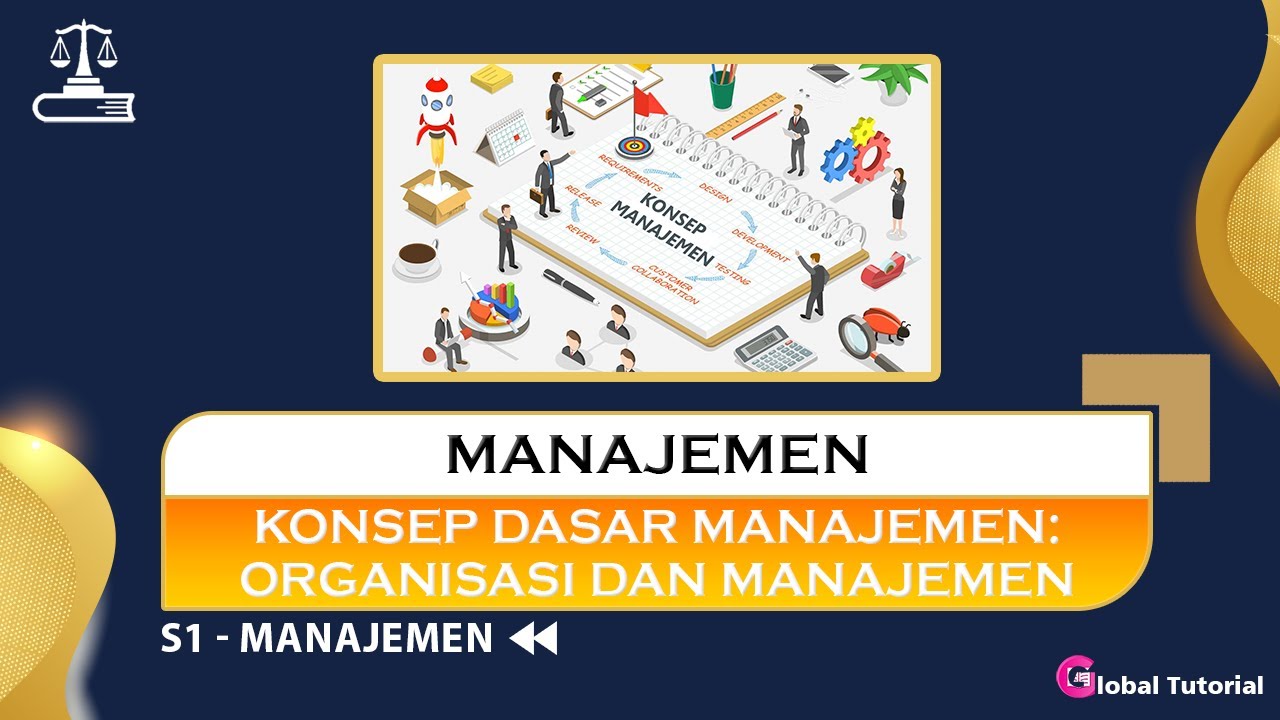
Topik 01 Manajemen | Konsep Dasar Manajemen: Organisasi dan Manajemen

Model Blok Diagram Sistem Informasi Manajemen | Anshar Akil

Definition and Basic Characteristics of Insurance

EKMA4265 Manajemen Kualitas - Pengenalan Manajemen Kualitas
5.0 / 5 (0 votes)

