IDENTIFIKASI SENYAWA TURUNAN ALKANA
Summary
TLDRThis video delves into the functional isomerism of alkane derivatives, explaining how alcohols and ethers, despite having the same molecular formula (C3H8O), can be distinguished through specific tests such as reactions with sodium and PCl5. It covers the oxidation and reduction of alcohols, aldehydes, and ketones, illustrating the transformation of functional groups while preserving the carbon chain. The script also includes a series of example problems, helping viewers understand the identification of alcohols (primary, secondary, tertiary), oxidation products, and specific reactions like Fehling's and Tollens' tests for aldehydes and ketones.
Takeaways
- 😀 Alcohol and ether are functional isomers with the same molecular formula (C3H8O), but they can be distinguished using specific reactions.
- 😀 Sodium metal reacts with alcohols to produce hydrogen gas, but not with ethers.
- 😀 Alcohols react with PCl5 to produce HCl gas, while ethers do not react in the same way.
- 😀 Aldehydes can be identified using Fehling's reagent, which produces a red precipitate, unlike ketones.
- 😀 Tollens' reagent creates a silver mirror when reacting with aldehydes but not with ketones.
- 😀 Oxidation of a primary alcohol produces an aldehyde, which can be further oxidized to a carboxylic acid (e.g., 1-propanol to propanoic acid).
- 😀 Reduction of carboxylic acids leads to aldehydes, and reduction of aldehydes yields primary alcohols.
- 😀 Secondary alcohols oxidize to ketones, and ketones can be further oxidized to esters.
- 😀 The reduction of esters results in ketones, while the reduction of ketones forms secondary alcohols.
- 😀 Alcohols can be classified as primary, secondary, or tertiary based on the carbon to which the hydroxyl group is attached.
Q & A
How can we distinguish between alcohols and ethers with the same molecular formula (e.g., C3H8O)?
-We can distinguish alcohols from ethers by using two reactions. First, alcohols react positively with sodium metal, releasing hydrogen gas, while ethers do not. Second, alcohols react with PCl5 to release HCl gas, whereas ethers do not produce HCl gas during the reaction.
What is the reaction of aldehydes with Fehling's reagent and Tollens' reagent?
-Aldehydes react positively with Fehling's reagent, producing a red precipitate. They also react with Tollens' reagent, forming a silver mirror on the surface, which is characteristic of aldehydes.
How does the oxidation of a primary alcohol proceed?
-The oxidation of a primary alcohol first produces an aldehyde. Upon further oxidation, the aldehyde is converted into a carboxylic acid. For example, the oxidation of 1-propanol forms propanal, which can be further oxidized to propanoic acid.
What happens when aldehydes and ketones are reduced?
-Aldehydes are reduced to primary alcohols, while ketones are reduced to secondary alcohols. For example, the reduction of propanal produces 1-propanol, and the reduction of propanone produces 2-propanol.
What distinguishes primary, secondary, and tertiary alcohols?
-In primary alcohols, the hydroxyl group (-OH) is attached to a carbon atom that is bound to only one other carbon. In secondary alcohols, the hydroxyl group is attached to a carbon bound to two other carbons. In tertiary alcohols, the hydroxyl group is attached to a carbon bound to three other carbons, and the carbon also has alkyl groups attached.
What does the oxidation of a secondary alcohol produce?
-The oxidation of a secondary alcohol produces a ketone. For example, the oxidation of 2-propanol results in acetone (propanone). If further oxidized, a ketone can form an ester.
Which alcohols are resistant to oxidation by KMnO4 or K2Cr2O7?
-Tertiary alcohols are resistant to oxidation by strong oxidizers like KMnO4 or K2Cr2O7 because they do not have a hydrogen atom attached to the carbon with the hydroxyl group, making them non-reactive under these conditions.
What is the result when a secondary alcohol reacts with potassium dichromate (K2Cr2O7)?
-A secondary alcohol reacts with potassium dichromate (K2Cr2O7) in acidic conditions to form a ketone. For example, the oxidation of 2-butanol produces butanone (acetone).
How do you identify a carboxylic acid from a ketone?
-Carboxylic acids contain the functional group -COOH, while ketones contain the functional group -CO-. Carboxylic acids can be identified by their reaction with oxidizing agents, which further oxidize aldehydes to carboxylic acids.
What happens when an aldehyde is reduced to a primary alcohol?
-When an aldehyde is reduced, it gains hydrogen and converts into a primary alcohol. For example, the reduction of propanal results in the formation of 1-propanol.
Outlines

Этот раздел доступен только подписчикам платных тарифов. Пожалуйста, перейдите на платный тариф для доступа.
Перейти на платный тарифMindmap

Этот раздел доступен только подписчикам платных тарифов. Пожалуйста, перейдите на платный тариф для доступа.
Перейти на платный тарифKeywords

Этот раздел доступен только подписчикам платных тарифов. Пожалуйста, перейдите на платный тариф для доступа.
Перейти на платный тарифHighlights

Этот раздел доступен только подписчикам платных тарифов. Пожалуйста, перейдите на платный тариф для доступа.
Перейти на платный тарифTranscripts

Этот раздел доступен только подписчикам платных тарифов. Пожалуйста, перейдите на платный тариф для доступа.
Перейти на платный тарифПосмотреть больше похожих видео
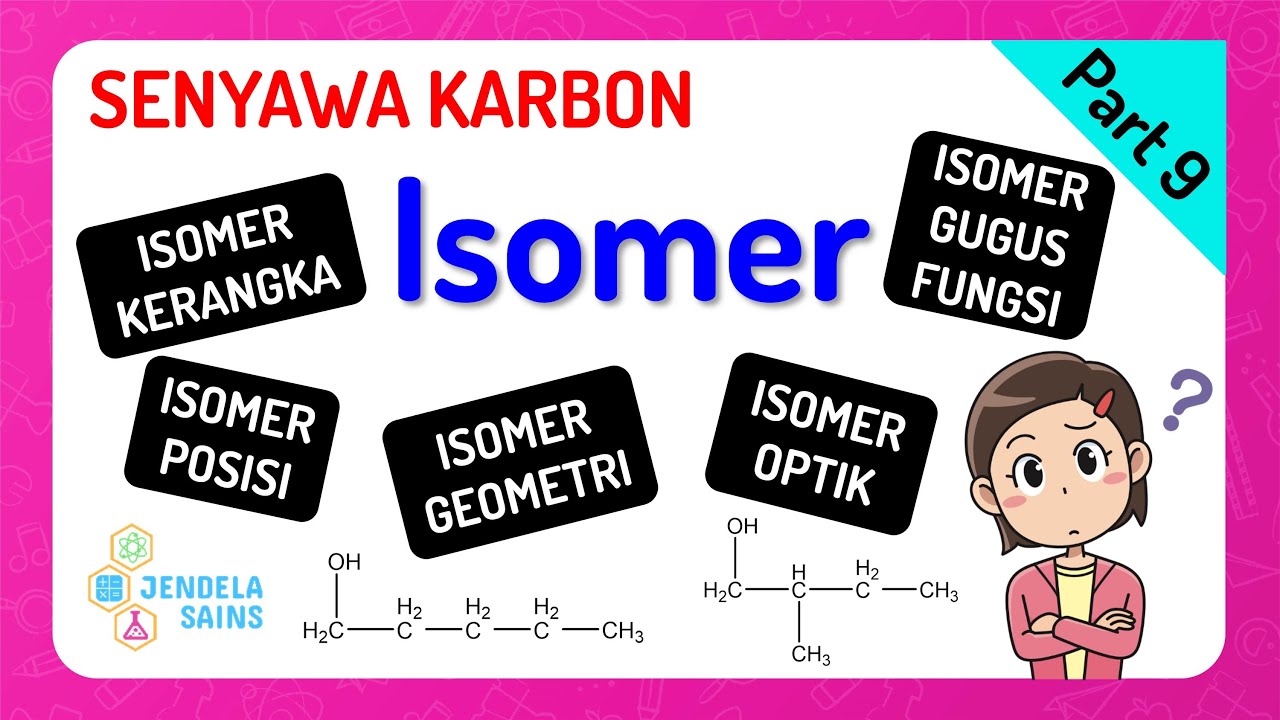
Senyawa Karbon Turunan Alkana • Part 9: Isomer Senyawa Karbon Turunan Alkana

Mengenal GUGUS FUNGSI SENYAWA TURUNAN ALKANA, mulai dari Haloalkana sampai ESTER ‼️

ALKOKSI ALKANA ( ETER ) : TATA NAMA DAN ISOMER FUNGSI

Izomerie optică – chiralitatea | Lectii-Virtuale.ro

ALKANAL (ALDEHID) : TATA NAMA, ISOMER, REAKSI KIMIA, REAKSI SINTESIS (PEMBUATAN), APLIKASI

Gugus Fungsi senyawa karbon/senyawa organik - Kimia SMA kelas 12
5.0 / 5 (0 votes)

