Western Blot / Protein Immunoblot explained
Summary
TLDRWestern blotting is a key technique in protein analysis, used to confirm the presence of specific proteins in a sample. It begins with SDS-PAGE, where proteins are separated based on molecular weight. The proteins are then transferred to a membrane, and antibodies are used to detect the target protein. A secondary antibody, conjugated with an enzyme like horseradish peroxidase, produces a chemiluminescent signal, allowing for visualization of the protein band. This process is essential for confirming the presence of a target protein in biological samples.
Takeaways
- 😀 Western blotting is a technique used to confirm the presence of a specific protein in a sample.
- 😀 SDS-PAGE is the first step, where proteins are denatured and separated by molecular weight using a polyacrylamide gel.
- 😀 The gel electrophoresis separates proteins based on their charge-to-mass ratio, and marker proteins help determine molecular weight.
- 😀 Staining the gel allows the visualization of protein bands, but it doesn't identify which proteins are present.
- 😀 To identify the target protein, a Western blot is performed using antibodies designed to bind to specific epitopes of the protein.
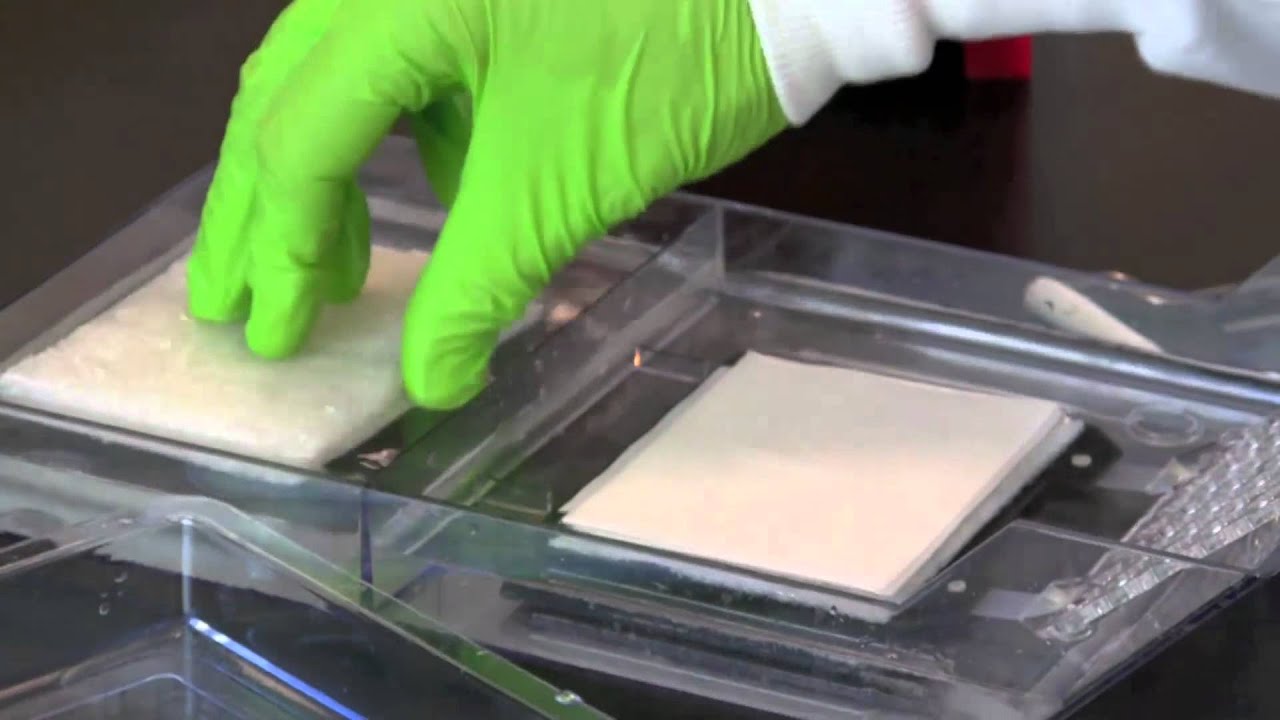
- 😀 The proteins are transferred from the gel onto a membrane, usually made of nitrocellulose, through electrophoretic transfer.
- 😀 After transfer, the membrane is blocked using milk or BSA to prevent non-specific antibody binding.
- 😀 The membrane is then incubated with a primary antibody, which binds only to the protein of interest.
- 😀 A secondary antibody, specific to the primary antibody, is used to amplify the signal after washing away unbound antibodies.
- 😀 The secondary antibody is often conjugated with horseradish peroxidase, which produces a chemiluminescent signal when exposed to a substrate.
- 😀 The chemiluminescent signal helps visualize the target protein band, confirming its presence in the sample.
Q & A
What is the purpose of the western blot technique?
-The purpose of western blotting is to confirm the presence of a specific target protein in a sample.
What happens to proteins in a sample when treated with SDS?
-When proteins are treated with SDS, they are denatured and coated with negative charges, ensuring they have a similar charge-to-mass ratio.
How are proteins separated in an SDS-PAGE?
-Proteins are separated based on their molecular weight as they travel through a gel toward the positively charged anode when treated with SDS.
What is the role of marker proteins in SDS-PAGE?
-Marker proteins serve as a reference to help determine the molecular weight of proteins in the sample.
Why is a western blot performed after an SDS-PAGE?
-A western blot is performed to confirm the presence of a specific protein, as SDS-PAGE alone cannot distinguish which proteins are present in the sample.
What is the purpose of the membrane in a western blot?
-The membrane, usually made of nitrocellulose, binds the proteins transferred from the gel and serves as the surface for antibody binding.
How are proteins transferred from the gel to the membrane?
-Proteins are transferred from the gel to the membrane using an electric current, which pulls the negatively charged proteins toward the positively charged anode.
Why is blocking necessary in the western blot process?
-Blocking prevents antibodies from binding non-specifically to the membrane or other proteins, ensuring more accurate results.
What is the role of the primary antibody in a western blot?
-The primary antibody binds specifically to the target protein of interest, ensuring that only the protein of interest is detected.
How is the protein of interest visualized in a western blot?
-The protein of interest is visualized by using a secondary antibody conjugated with an enzyme like horseradish peroxidase, which reacts with a substrate to produce a chemiluminescent signal.
What is the role of the secondary antibody in a western blot?
-The secondary antibody binds to the primary antibody, and it is conjugated with an enzyme (e.g., horseradish peroxidase) to allow for visualization of the protein through chemiluminescence.
Outlines

Этот раздел доступен только подписчикам платных тарифов. Пожалуйста, перейдите на платный тариф для доступа.
Перейти на платный тарифMindmap

Этот раздел доступен только подписчикам платных тарифов. Пожалуйста, перейдите на платный тариф для доступа.
Перейти на платный тарифKeywords

Этот раздел доступен только подписчикам платных тарифов. Пожалуйста, перейдите на платный тариф для доступа.
Перейти на платный тарифHighlights

Этот раздел доступен только подписчикам платных тарифов. Пожалуйста, перейдите на платный тариф для доступа.
Перейти на платный тарифTranscripts

Этот раздел доступен только подписчикам платных тарифов. Пожалуйста, перейдите на платный тариф для доступа.
Перейти на платный тариф


5.0 / 5 (0 votes)

