VLSI.4.5.Octal and Hexadecimal Number System
Summary
TLDRThis video explores number systems, focusing on octal (base 8) and hexadecimal (base 16) conversions to decimal (base 10). It explains the structure of the octal system, using the example of converting 137 from octal to decimal. The tutorial also covers fractional octal values, demonstrating conversion with 31.3 (base 8). Finally, the hexadecimal system is introduced, emphasizing its use in computing, with an example converting 1ABCD from hexadecimal to decimal. This video provides foundational knowledge for understanding number systems used in programming and digital electronics.
Takeaways
- 😀 The octal number system uses 8 symbols: 0, 1, 2, 3, 4, 5, 6, 7.
- 😀 In octal, the base (or radix) is 8, and it operates similarly to other number systems with positional values.
- 😀 Example: To convert 137 (base 8) to decimal, the calculation is 1×8^2 + 3×8^1 + 7×8^0 = 95.
- 😀 When converting fractional octal numbers, you use negative powers of 8, such as 8^-1, 8^-2, etc.
- 😀 Example: 31.3 (base 8) converts to approximately 25.0625 in decimal.
- 😀 The hexadecimal number system uses 16 symbols: 0-9 and A-F (A=10, B=11, C=12, D=13, E=14, F=15).
- 😀 Hexadecimal numbers have a base (or radix) of 16, which is commonly used in computing and microprocessors.
- 😀 Example: To convert 1ABCD (base 16) to decimal, the calculation is 1×16^4 + A×16^3 + B×16^2 + C×16^1 + D×16^0 = 109517.
- 😀 The hexadecimal system is widely used in digital electronics and computer science for simplifying binary representations.
- 😀 Understanding the conversion between octal, hexadecimal, and decimal is essential for working with computer systems and programming.
Q & A
What is the octal number system?
-The octal number system is a base-8 system that uses the digits 0 through 7. It has 8 possible values or symbols, making it different from the decimal (base-10) and binary (base-2) number systems.
How is the decimal value of an octal number calculated?
-To calculate the decimal value of an octal number, you multiply each digit by 8 raised to the power of its position, starting from 0 for the rightmost digit. Then, sum all the results.
What is the decimal equivalent of 137 in octal?
-The decimal equivalent of the octal number 137 is calculated as follows: 1 × 8^2 + 3 × 8^1 + 7 × 8^0 = 64 + 24 + 7 = 95.
How do you convert an octal number with a fractional part to decimal?
-For an octal number with a fractional part, calculate the decimal equivalent of the whole number part as usual, then calculate the decimal equivalent of each fractional digit by multiplying by 8 raised to negative powers (starting from -1 for the first fractional digit).
What is the decimal equivalent of 31.32 in octal?
-The decimal equivalent of the octal number 31.32 is calculated as follows: The whole part is 3 × 8^1 + 1 × 8^0 = 24 + 1 = 25, and the fractional part is 3 × 8^-1 + 2 × 8^-2 = 0.375 + 0.03125 = 0.40625. So, the total is 25.40625.
What is the hexadecimal number system?
-The hexadecimal number system is a base-16 system that uses digits 0-9 and letters A-F, where A represents 10, B represents 11, and so on, up to F which represents 15.
Why is the hexadecimal system important in computing?
-The hexadecimal system is widely used in computing because it provides a compact way to represent binary data. It is often used in microprocessors, microcontrollers, and digital electronics due to its ease of conversion to and from binary.
How do you convert a hexadecimal number to decimal?
-To convert a hexadecimal number to decimal, multiply each digit by 16 raised to the power of its position, starting from 0 for the rightmost digit. Then, sum all the results.
What is the decimal equivalent of 1ABCD in hexadecimal?
-The decimal equivalent of the hexadecimal number 1ABCD is calculated as follows: 1 × 16^4 + 10 (A) × 16^3 + 11 (B) × 16^2 + 12 (C) × 16^1 + 13 (D) × 16^0 = 65536 + 40960 + 2816 + 192 + 13 = 109517.
What are the benefits of using hexadecimal numbers in digital systems?
-Hexadecimal numbers make it easier to represent large binary values in a more compact and readable form. It simplifies the conversion between binary and decimal, which is especially useful in programming and debugging in digital systems.
Outlines

Этот раздел доступен только подписчикам платных тарифов. Пожалуйста, перейдите на платный тариф для доступа.
Перейти на платный тарифMindmap

Этот раздел доступен только подписчикам платных тарифов. Пожалуйста, перейдите на платный тариф для доступа.
Перейти на платный тарифKeywords

Этот раздел доступен только подписчикам платных тарифов. Пожалуйста, перейдите на платный тариф для доступа.
Перейти на платный тарифHighlights

Этот раздел доступен только подписчикам платных тарифов. Пожалуйста, перейдите на платный тариф для доступа.
Перейти на платный тарифTranscripts

Этот раздел доступен только подписчикам платных тарифов. Пожалуйста, перейдите на платный тариф для доступа.
Перейти на платный тарифПосмотреть больше похожих видео
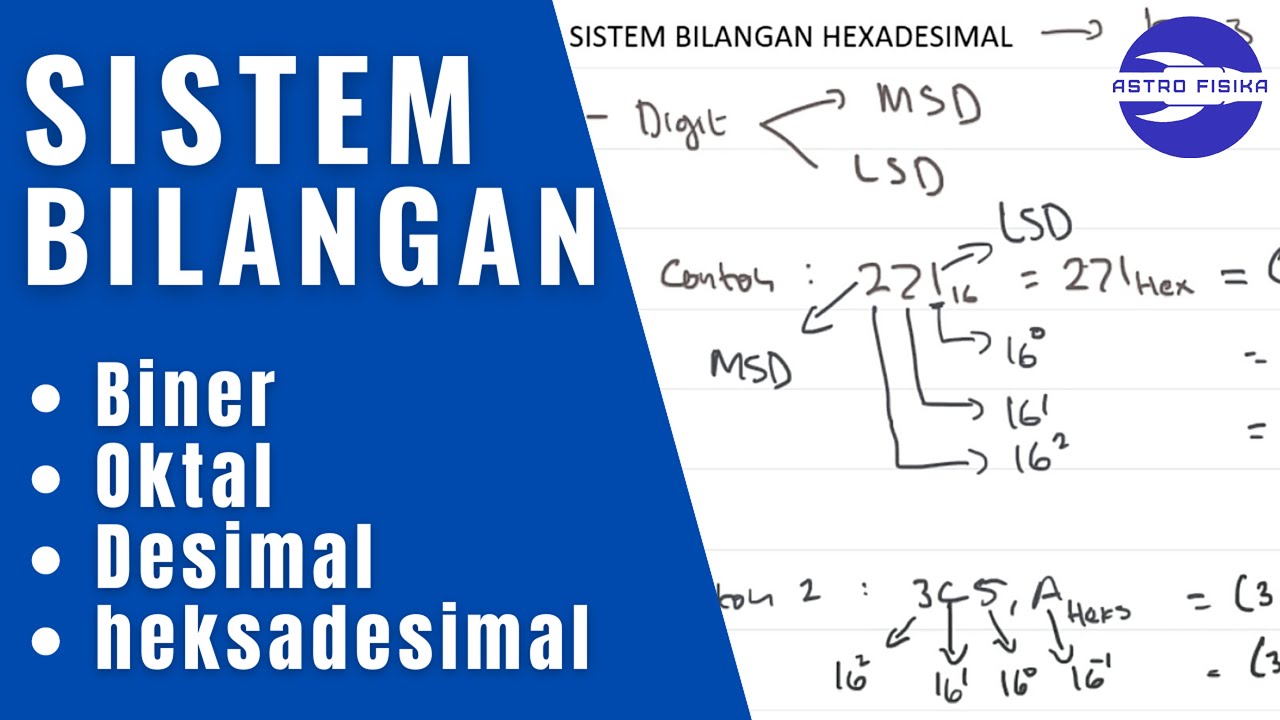
ELEKTRONIKA DIGITAL: SISTEM BILANGAN (Biner, Oktal, Desimal, Heksadesimal)
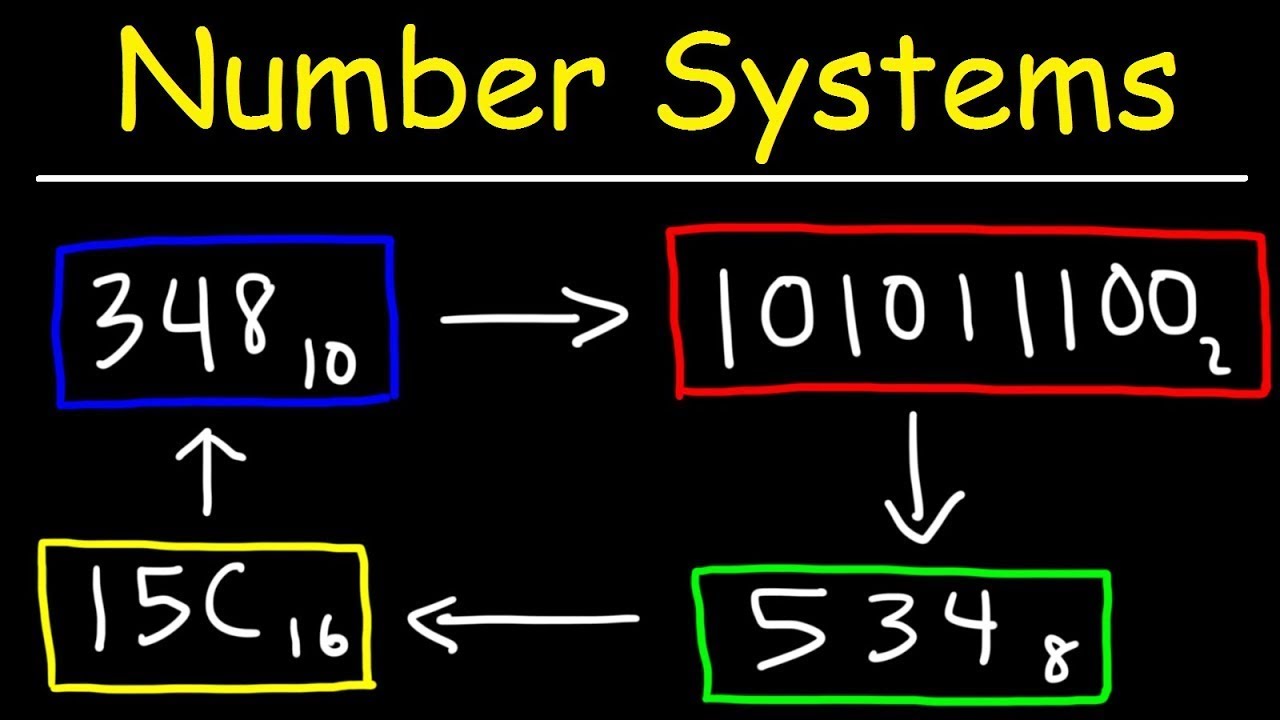
Number Systems Introduction - Decimal, Binary, Octal & Hexadecimal

SISTEM BILANGAN | Berpikir Komputasional | Informatika Kelas 8 Kurikulum Merdeka | Fase D

77. OCR A Level (H046-H446) SLR13 - 1.4 Hexadecimal representation

Mudança de base sem envolver bases com relação de potência da base 10 para alguma outra base

Tutorial Lengkap: Cara Konversi Bilangan Desimal ke Biner, Oktal dan Hexadesimal
5.0 / 5 (0 votes)

