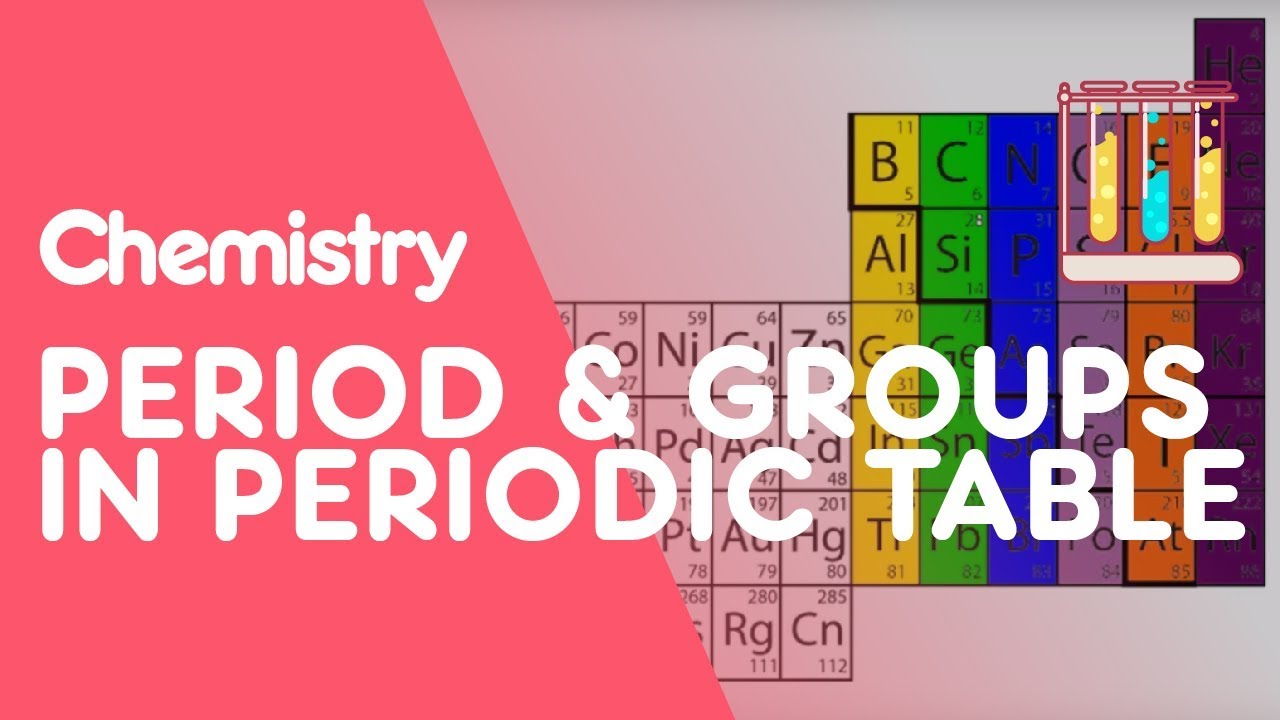
Periods & Groups In The Periodic Table | Properties of Matter | Chemistry | FuseSchool
Summary
TLDRThis video explains the structure of the periodic table, highlighting how elements are organized into periods and groups based on their recurring properties. It covers how elements in the same period share the same number of energy shells, while elements in the same group have the same number of valence electrons. The video also discusses how the number of valence electrons influences an element's reactivity, with examples like halogens (Group 7) showing similar chemical properties. The gradual changes in element properties are also illustrated across periods and groups.
Takeaways
- 😀 The periodic table organizes elements based on recurring properties.
- 😀 Elements in the same period share the same number of energy shells.
- 😀 As you move down periods, the number of energy shells increases.
- 😀 Elements in the first period have one energy shell, while those in the fourth period have four.
- 😀 The periodic table's columns are called groups, and elements in the same group have similar properties.
- 😀 Elements in the same group have the same number of electrons in their outermost shell (valence electrons).
- 😀 Valence electrons are important because they determine an element's reactivity and its ability to form bonds.
- 😀 The number of valence electrons in an element can be determined by its group number.
- 😀 Group 7 elements (e.g., fluorine, chlorine, iodine, bromine, and astatine) all have 7 valence electrons and share similar chemical properties.
- 😀 As you go down a group, the properties of the elements gradually change, while their outermost electron shells increase.
Q & A
What is the periodic table and why is it called that?
-The periodic table is a way of organizing the chemical elements based on their recurring properties. It is called 'periodic' because the properties of elements repeat at regular intervals as you move across the table.
How are the elements in the periodic table organized?
-Elements in the periodic table are organized in periods (rows) and groups (columns). Periods run from left to right and represent the number of energy shells in the elements, while groups run from top to bottom and represent elements with similar chemical properties.
What does a period in the periodic table signify?
-A period in the periodic table signifies a row of elements that all have the same number of energy shells. As you move down the periods, each new period introduces an additional energy shell.
Can you explain the concept of energy shells?
-Energy shells are layers around the nucleus of an atom where electrons are found. The number of shells increases as you move down the periods in the periodic table.
What is a group in the periodic table and what does it indicate?
-A group is a column in the periodic table where elements share similar properties. Elements in the same group have the same number of electrons in their outermost shell, which influences their chemical behavior.
What are valence electrons and why are they important?
-Valence electrons are the electrons in the outermost shell of an atom. They are important because they determine how an element reacts chemically and whether it will form bonds with other elements.
How do valence electrons affect an element's reactivity?
-The number of valence electrons affects an element's reactivity. Elements with similar numbers of valence electrons (such as those in the same group) tend to have similar chemical behaviors and reactivity.
How can you determine the number of valence electrons in an element?
-You can determine the number of valence electrons by looking at the group number of the element in the periodic table. For example, elements in group 1 have 1 valence electron, while elements in group 7 have 7 valence electrons.
Why do elements in the same group have similar properties?
-Elements in the same group have the same number of valence electrons, which is why they exhibit similar chemical properties and behaviors, such as their reactivity and tendency to form bonds in similar ways.
What happens to the properties of elements as you move down a group in the periodic table?
-As you move down a group in the periodic table, the elements' properties gradually change. For example, in group 7, elements like fluorine, chlorine, and iodine show a trend of increasing atomic size and decreasing reactivity as you go down the group.
Outlines

Этот раздел доступен только подписчикам платных тарифов. Пожалуйста, перейдите на платный тариф для доступа.
Перейти на платный тарифMindmap

Этот раздел доступен только подписчикам платных тарифов. Пожалуйста, перейдите на платный тариф для доступа.
Перейти на платный тарифKeywords

Этот раздел доступен только подписчикам платных тарифов. Пожалуйста, перейдите на платный тариф для доступа.
Перейти на платный тарифHighlights

Этот раздел доступен только подписчикам платных тарифов. Пожалуйста, перейдите на платный тариф для доступа.
Перейти на платный тарифTranscripts

Этот раздел доступен только подписчикам платных тарифов. Пожалуйста, перейдите на платный тариф для доступа.
Перейти на платный тарифПосмотреть больше похожих видео

5.1 History of the Periodic Table
TABEL PERIODIK MODERN | MENENTUKAN GOLONGAN DAN PERIODE
Tabela Periódica [Mapa Mental] [COMPLETO] - Mapas da Química

Tabela periódica - classificação dos elementos | Tabela Periódica | Química | Khan Academy
What Are Periods & Groups In The Periodic Table? | Properties of Matter | Chemistry | FuseSchool

5.2 Electron Configuration and the Periodic Table
5.0 / 5 (0 votes)

