This deep-sea mystery is changing our understanding of life | Karen Lloyd
Summary
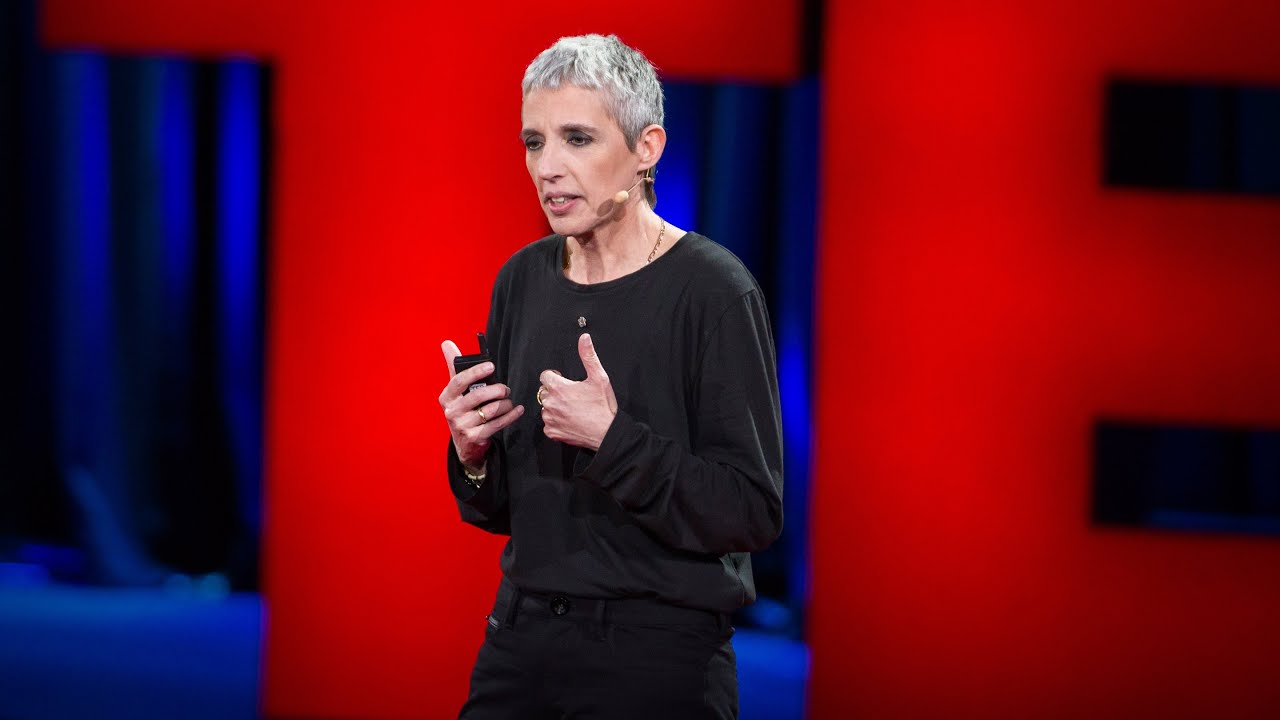
TLDRThis talk explores the fascinating world of deep-sea microbes that challenge our understanding of life on Earth. Ocean microbiologist at the University of Tennessee, the speaker highlights discoveries of diverse microbial ecosystems thriving far beneath the ocean floor, defying expectations. These microbes exist on minimal energy, with a different relationship to time and energy than humans, living on tiny energy gradients without sunlight. The speaker shares how studying these organisms could potentially lead to advances in fields like biomedical research and industrial applications. Ultimately, these microbes offer a glimpse into life’s potential beyond the Sun’s influence.
Takeaways
- 😀 John Parkes proposed the existence of a vast, deep microbial biosphere under the ocean in the 1980s, which was initially met with skepticism.
- 🌊 The deep ocean floor is a hostile environment, with no sunlight, oxygen, or food, making it seem like an unlikely place for life.
- 🧬 DNA analysis was key to identifying microbes in the deep-sea sediment, revealing a diverse and previously unknown ecosystem.
- 🔬 Despite years of research, no deep-sea microbes have been successfully grown in petri dishes, presenting a major challenge in microbiology.
- 🔍 The microbes discovered are genetically related to all forms of life on Earth, indicating that all life is connected through common ancestry.
- 💡 The deep-sea microbes have a very slow metabolic rate, requiring only tiny amounts of energy, leading to a vastly different relationship with energy compared to faster-growing organisms.
- ⚡ A single deep-sea microbe requires only one zeptowatt (10^-21 watts) of power to survive, which is far less than the energy needed by humans.
- ⏳ These microbes live at an incredibly slow pace, with growth rates so slow that they might take centuries to reproduce a single cell.
- 🌍 The deep subsurface environment, although seemingly boring to us, is actually ideal for these microbes, providing stability and slow, continuous growth over geological time scales.
- 🚀 The discovery of these microbes challenges our understanding of the limits of life, time, and energy, and may have broader implications for studying life on Earth and elsewhere in the universe.
Q & A
What was John Parkes' key idea about microbial life beneath the ocean?
-John Parkes believed that there was a vast and living microbial biosphere beneath the Earth's oceans, extending hundreds of meters into the seafloor, despite the seemingly inhospitable conditions.
Why did many scientists initially doubt Parkes' hypothesis about microbial life in the deep ocean?
-Scientists doubted the hypothesis because the deep ocean sediments lacked sunlight, oxygen, and fresh food sources, which were considered essential for life, making the environment seem too extreme for life to thrive.
How did Steven D'Hondt and his team prove Parkes' hypothesis about deep subsurface life?
-Steven D'Hondt and his team conducted an expedition using the JOIDES Resolution drillship, obtaining pristine deep-sea samples that confirmed the presence of living microbes, thus validating Parkes' hypothesis.
What challenge did scientists face when trying to identify these microbes from the deep subsurface?
-The challenge was that all microbes look similar under a microscope, so scientists had to rely on DNA sequencing to differentiate them and identify their species.
How do DNA sequences help scientists understand microbial relationships?
-DNA sequences allow scientists to compare species and identify common ancestors, helping to build evolutionary trees that reveal how closely related different organisms are to each other.
What was surprising about the DNA sequences of microbes from the deep ocean sediments?
-The deep-sea microbes turned out to be highly diverse and unlike anything previously known, suggesting the existence of an entirely new microbial ecosystem.
Why have scientists been unable to grow deep-sea microbes in petri dishes?
-Despite extensive efforts, these microbes have refused to grow in petri dishes, likely due to the unique and extreme conditions they require for survival, which are not replicated in laboratory settings.
What did researchers discover about the energy requirements of deep-sea microbes?
-Research revealed that each deep-sea microbial cell requires only a tiny amount of energy, approximately one zeptowatt, far less than humans or other organisms, challenging previous assumptions about the energy needs of life.
How do the microbes in the deep ocean survive on such minimal energy?
-These microbes exploit tiny energy gradients and have adapted to survive in conditions with very slow geological rhythms, enabling them to exist on minimal energy without relying on sunlight or fast growth cycles.
What broader implications could the study of deep-sea microbes have for science and medicine?
-Studying these microbes could reveal mechanisms for long-term survival and energy efficiency, potentially offering applications in fields like biomedical research, industrial processes, and even cancer treatment by mimicking their slow growth patterns.
Outlines

Этот раздел доступен только подписчикам платных тарифов. Пожалуйста, перейдите на платный тариф для доступа.
Перейти на платный тарифMindmap

Этот раздел доступен только подписчикам платных тарифов. Пожалуйста, перейдите на платный тариф для доступа.
Перейти на платный тарифKeywords

Этот раздел доступен только подписчикам платных тарифов. Пожалуйста, перейдите на платный тариф для доступа.
Перейти на платный тарифHighlights

Этот раздел доступен только подписчикам платных тарифов. Пожалуйста, перейдите на платный тариф для доступа.
Перейти на платный тарифTranscripts

Этот раздел доступен только подписчикам платных тарифов. Пожалуйста, перейдите на платный тариф для доступа.
Перейти на платный тарифПосмотреть больше похожих видео

Hydrothermal Vents | Oases in the Deep Sea

The remarkable discovery of microbial life

The Concept of Microorganisms: Historical Findings – Microbiology | Lecturio
Nathalie Cabrol: How Mars might hold the secret to the origin of life

Kehidupan Bumi Berasal Dari Luar Angkasa? Bagaimana Kehidupan Bumi Tercipta? | Learning By Googling

Life without Microbes: Impact on Earth's Ecosystem
5.0 / 5 (0 votes)

