Kita Semua Salah Paham Soal Waktu
Summary
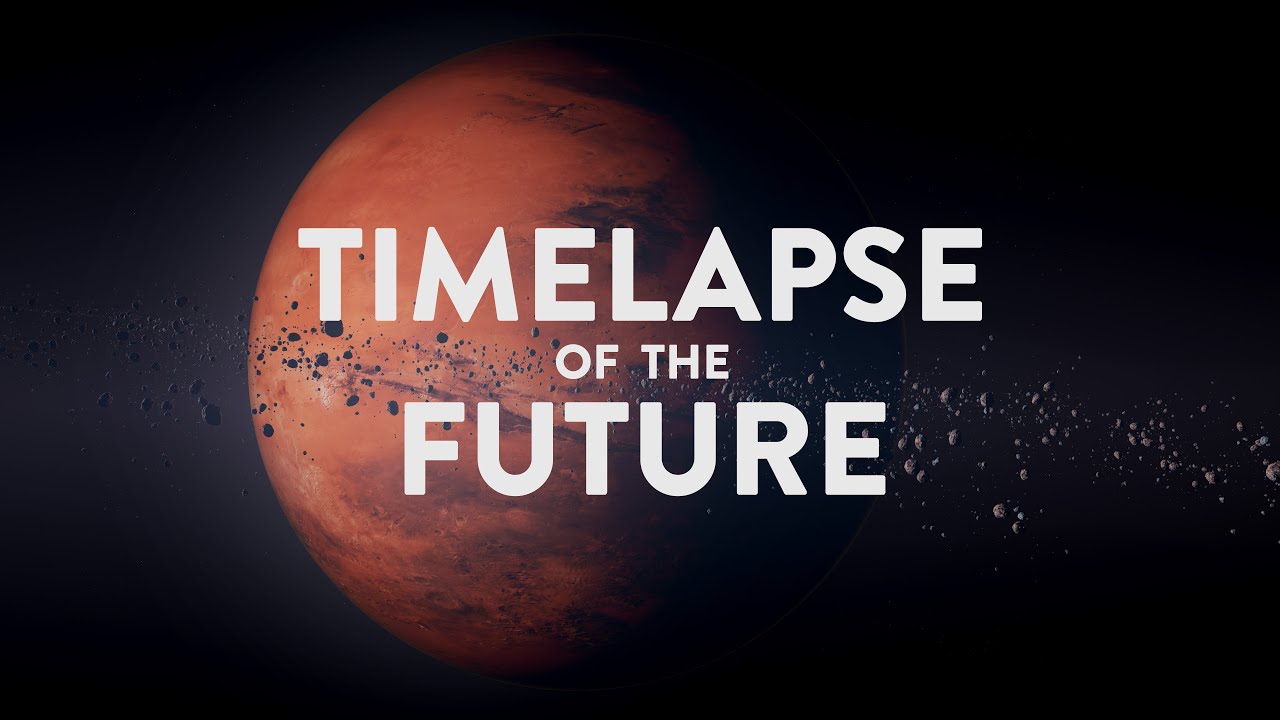
TLDRThe video explores the elusive nature of time, blending philosophical reflections with scientific insights. It begins with diverse personal interpretations—time as a sword, money, or a circular flow—and moves through historical understandings from observing celestial cycles to Newton's absolute time. Einstein's relativity introduces time as a flexible dimension intertwined with space, while quantum physics reveals time at its tiniest scales, where past and future can coexist. The concept of entropy explains our perception of time’s arrow, suggesting that time emerges from our limited observation. Ultimately, the video portrays time not as a ruler or spectator, but as a companion shaping our understanding of the universe and events around us.
Takeaways
- ⏳ Time is perceived differently by people: as a sword, money, valuable, continuous, branching, circular, or block-shaped.
- 🧠 Human understanding of time has evolved over millennia, from observing celestial cycles to creating mechanical clocks like pendulums and hourglasses.
- 🌌 Isaac Newton viewed time as universal and absolute, like a stage where all events occur independently of change.
- 🕵️♂️ Albert Einstein showed that time is relative and intertwined with space, forming a flexible fabric influenced by mass and energy.
- 🪐 Massive objects bend spacetime, which we experience as gravity, demonstrating that time and space are dynamic rather than fixed.
- 🔬 Quantum physics challenges classical ideas of time: at microscopic scales, events can be in superposition, and the sequence of events may not be fixed.
- 💡 Observation affects reality: experiments with light show that the act of measurement can change the outcome, suggesting time and events are not absolute.
- 🔥 The flow of time we experience is linked to entropy: systems evolve from order to disorder, giving a sense of past, present, and future.
- 🧩 Our perception of time is influenced by human limitations: memory, pattern recognition, and prediction shape how we sense its direction and passage.
- 🌍 Time may not control events or passively watch them; instead, it accompanies the unfolding of events, framing the universe as a collection of occurrences rather than just objects.
Q & A
What are some of the common metaphors people use to describe time?
-People in the script described time as a sword, money, a block, branching paths, or a circle, reflecting its perceived value, progression, relativity, and cyclical nature.
How did ancient humans measure time before modern clocks?
-Humans measured time by observing the sky, tracking the moon's cycles, and noting seasonal changes. Later, tools like pendulums and hourglasses were developed for more consistent measurements.
What was Newton's view of time?
-Newton considered time as universal and constant, independent of events. Time was like a stage on which all events occurred, flowing uniformly regardless of change.
How did Einstein change our understanding of time?
-Einstein introduced the idea that time is relative and interacts with space and matter. He showed that mass and energy can warp space-time, meaning time is not uniform everywhere but part of a dynamic fabric.
What is Planck time, and why is it significant?
-Planck time is the smallest measurable unit of time, representing the 'pixels' of time. It suggests that at a fundamental level, time is discrete, not continuous.
How does quantum physics challenge our conventional understanding of time?
-Quantum physics shows that events may exist in superposition, meaning a single event can occur in multiple sequences simultaneously. Time is not strictly linear at microscopic scales.
Why do we perceive time as always moving forward?
-Our perception of time's forward flow is influenced by entropy and memory. In daily life, events tend to become more disordered (increased entropy), and our brains process memories and predictions sequentially, creating a sense of linear time.
What role does entropy play in our experience of time?
-Entropy, a measure of disorder, gives us a sense of past, present, and future. Systems naturally move from order to disorder, which creates a directional arrow of time that humans perceive.
How does the script suggest we reframe our understanding of the universe?
-The script proposes viewing the universe as a collection of events rather than just objects. This perspective highlights processes, changes, and interactions, emphasizing dynamic stories rather than static matter.
Can time exist independently of change according to modern physics?
-Modern physics presents two views: some suggest time is defined by change (classical view), while Einstein and quantum insights suggest time can exist independently of events but behaves in complex, relative ways depending on space-time conditions.
Outlines

このセクションは有料ユーザー限定です。 アクセスするには、アップグレードをお願いします。
今すぐアップグレードMindmap

このセクションは有料ユーザー限定です。 アクセスするには、アップグレードをお願いします。
今すぐアップグレードKeywords

このセクションは有料ユーザー限定です。 アクセスするには、アップグレードをお願いします。
今すぐアップグレードHighlights

このセクションは有料ユーザー限定です。 アクセスするには、アップグレードをお願いします。
今すぐアップグレードTranscripts

このセクションは有料ユーザー限定です。 アクセスするには、アップグレードをお願いします。
今すぐアップグレード


5.0 / 5 (0 votes)

