MOVIMENTO UNIFORME | M.U FÍSICA
Summary
TLDRThis physics video explains the concept of Uniform Motion (Movimento Uniforme), focusing on constant velocity and zero acceleration. The key idea is that an object in uniform motion covers equal distances in equal time intervals. The instructor uses relatable examples, such as a car moving at a constant speed, to clarify how the velocity remains constant. Key formulas, like the 'sorvete' formula (S = S0 + v * t), are introduced to calculate position over time. The video also covers motion classification into progressive and retrograde motion based on direction and velocity, making the complex concepts easy to grasp.
Takeaways
- 😀 MRU (Uniform Rectilinear Motion) refers to motion in a straight line with constant speed and zero acceleration.
- 😀 In MRU, the velocity remains unchanged, meaning the object covers the same distance in equal time intervals.
- 😀 The core formula for MRU is S = S₀ + v * t, where S is the final position, S₀ is the initial position, v is velocity, and t is time.
- 😀 A key property of MRU is that the object moves with constant velocity, which means acceleration is zero.
- 😀 For MRU, if an object moves at a speed of 10 m/s, it will cover 10 meters every second, demonstrating constant motion.
- 😀 In MRU, if the object’s velocity is constant, the distance covered in each time interval is the same (e.g., 10 meters every second).
- 😀 The velocity in MRU can be classified into two types: positive velocity for progressive motion (moving away from the reference point), and negative velocity for retrograde motion (moving towards the reference point).
- 😀 The formula for velocity in MRU comes from the average velocity formula, which is derived from the change in position over the change in time.
- 😀 An object in progressive motion (positive velocity) moves away from the reference point, while an object in retrograde motion (negative velocity) moves towards it.
- 😀 To calculate the position of an object in MRU, use the formula S = S₀ + v * t. For example, if an object starts at 20 meters and moves at 3 m/s for 10 seconds, the final position will be 50 meters.
Q & A
What defines uniform motion (MRU)?
-Uniform motion is defined by constant velocity, meaning the object moves without changing its speed, resulting in zero acceleration.
What does it mean for an object to cover equal distances in equal time intervals?
-It means the object moves at a constant speed, covering the same distance every second (or any equal time interval), which is a key characteristic of uniform motion.
Why is acceleration zero in uniform motion?
-Acceleration is zero because there is no change in velocity over time; the speed and direction remain constant.
What is the main equation used in uniform motion?
-The main equation is S = S0 + v × t, where S is final position, S0 is initial position, v is constant velocity, and t is time.
How is the uniform motion equation derived?
-It is derived from the average velocity formula v = ΔS / Δt. By rearranging and considering constant velocity, we get S = S0 + v × t.
What is an example of solving for final position in uniform motion?
-If an object starts at 20 m and moves at 3 m/s for 10 seconds, its final position is S = 20 + (3 × 10) = 50 m.
What is a reference point in motion analysis?
-A reference point is a chosen position or observer used to determine whether an object is moving toward or away from it.
What characterizes progressive motion?
-Progressive motion occurs when an object moves away from the reference point, resulting in a positive velocity.
What characterizes retrograde motion?
-Retrograde motion occurs when an object moves toward the reference point, resulting in a negative velocity.
How do you determine velocity from a position-time equation?
-Velocity is the coefficient of time (t) in the equation. For example, in S = 40 + 3t, the velocity is 3 m/s.
How can you determine the type of motion from the velocity sign?
-If velocity is positive, the motion is progressive. If velocity is negative, the motion is retrograde.
How do you find the time when an object passes the origin?
-Set the position equation equal to zero (S = 0) and solve for time. For example, 0 = 20 - 5t gives t = 4 seconds.
What is the importance of using the International System of Units (SI) in these problems?
-Using SI units ensures consistency and correctness in calculations, typically using meters for distance and seconds for time.
What does displacement represent in uniform motion?
-Displacement is the change in position, calculated as the difference between final and initial positions.
Outlines

このセクションは有料ユーザー限定です。 アクセスするには、アップグレードをお願いします。
今すぐアップグレードMindmap

このセクションは有料ユーザー限定です。 アクセスするには、アップグレードをお願いします。
今すぐアップグレードKeywords

このセクションは有料ユーザー限定です。 アクセスするには、アップグレードをお願いします。
今すぐアップグレードHighlights

このセクションは有料ユーザー限定です。 アクセスするには、アップグレードをお願いします。
今すぐアップグレードTranscripts

このセクションは有料ユーザー限定です。 アクセスするには、アップグレードをお願いします。
今すぐアップグレード関連動画をさらに表示
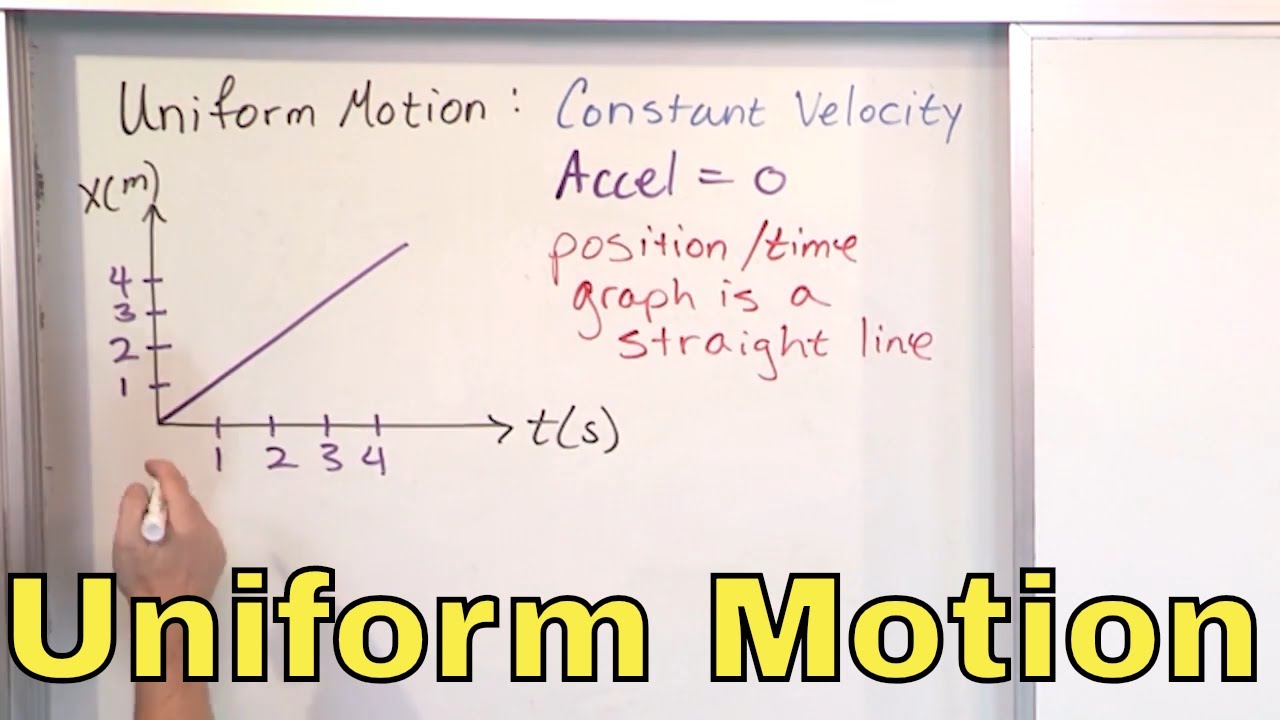
16 - Uniform Motion in Physics, Part 1
Me Salva! CIN11 - MCU

Constant Velocity compared to Constant Acceleration

FISIKA KELAS X: GERAK LURUS (PART 2) Materi dan Contoh Soal GLB dan GLBB

Acceleration | Motion | Physics class 9 | Khan Academy
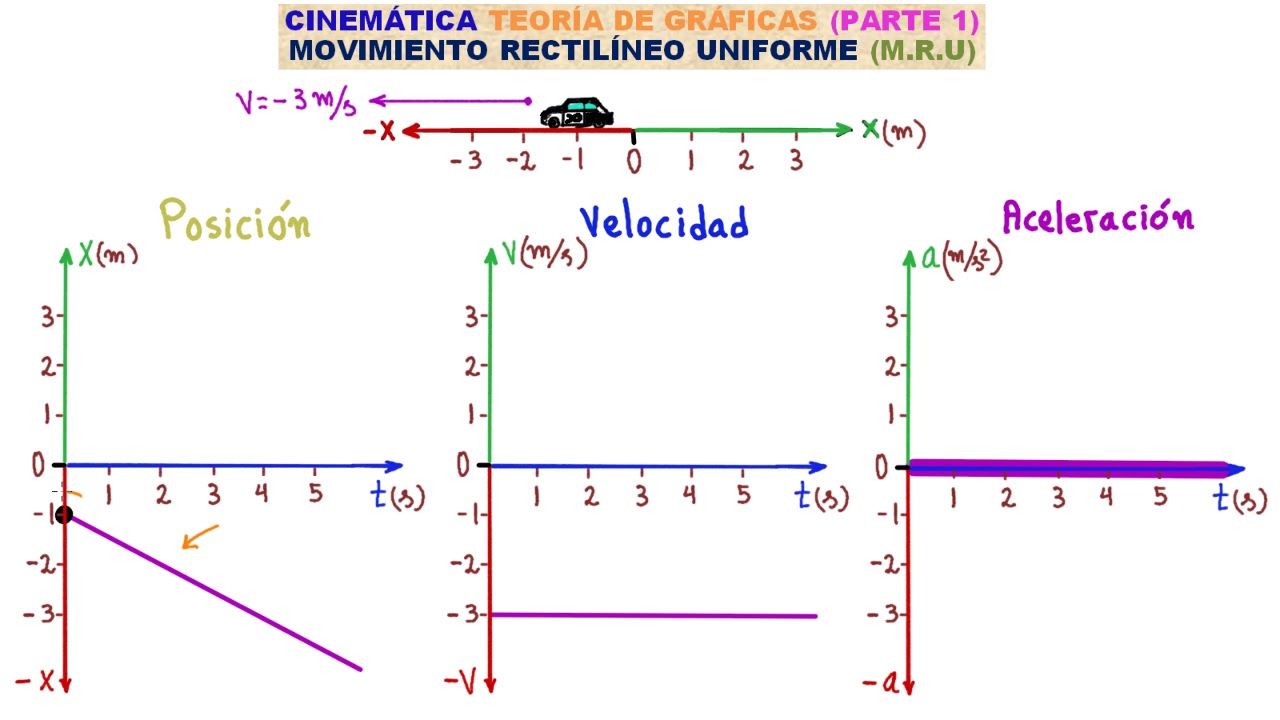
CINEMÁTICA. GRÁFICAS DEL M.R.U TEORÍA 1 [APRENDE LOS GRÁFICOS DE POSICIÓN, VELOCIDAD Y ACELERACIÓN]
5.0 / 5 (0 votes)

