IPA Kelas 8 : Lensa Cekung
Summary
TLDRThis video explains the concept of concave lenses, focusing on their structure, properties, and how they work. Concave lenses, also known as diverging or negative lenses, have a thinner center and thicker edges. They spread light rays, and their images are always virtual, upright, and smaller. The video also covers the three main types of concave lenses: biconcave, plano-concave, and meniscus lenses. Through the discussion of ray diagrams, it highlights how concave lenses form virtual images by bending light in specific ways, just like convex mirrors. The explanation concludes with an emphasis on the consistent nature of image formation in concave lenses.
Takeaways
- 🔹 Lenses can be classified by shape; a concave lens curves inward and is thinner at the center than at the edges.
- 🔹 A concave lens is also called a concave or negative lens.
- 🔹 Concave lenses diverge light rays and have a negative focal point.
- 🔹 There are several types of concave lenses: biconcave, plano-concave, and concave-convex (one side concave, one side convex).
- 🔹 The properties of concave lenses are similar to those of a convex mirror.
- 🔹 Object and image positions in concave lenses follow a similar division of space as convex mirrors.
- 🔹 There are three special rays used to trace concave lens images: parallel to axis (refracted through focal point), through focal point (refracted parallel), and through the optical center (goes straight).
- 🔹 At least two special rays are needed to locate the image.
- 🔹 Images formed by concave lenses are always virtual, upright, and smaller than the object.
- 🔹 The properties of concave lens images remain consistent regardless of the object's position.
Q & A
What is a concave lens?
-A concave lens is a lens that is curved inward, making its center thinner than its edges. It is also known as a diverging lens because it spreads light rays apart.
What is the alternative name for a concave lens?
-The alternative name for a concave lens is a 'concave lens' or 'concave.'
Why is a concave lens referred to as a negative lens?
-A concave lens is called a negative lens because its focal point is virtual and negative, meaning it causes light rays to diverge rather than converge.
What are the three types of concave lenses?
-The three types of concave lenses are: 1) Biconcave, where both sides are concave. 2) Concave-convex, where one side is concave and the other is convex. 3) Plano-concave, where one side is flat and the other is concave.
How does a concave lens affect light?
-A concave lens causes light to diverge, meaning it spreads the rays of light apart after passing through the lens.
What are the similarities between a concave lens and a concave mirror?
-Both concave lenses and concave mirrors share similar properties in that they cause light to diverge and have a virtual, negative focal point. They also share similar ray diagrams and principles of image formation.
What happens to light rays when they pass through a concave lens?
-When light rays pass through a concave lens, they diverge. For example, if a parallel ray of light hits the lens, it will bend outward as though it came from the focal point behind the lens.
What are the key properties of the image formed by a concave lens?
-The image formed by a concave lens is always virtual, upright, and diminished (smaller than the object). It also appears on the same side as the object.
What are the three special rays used to form an image with a concave lens?
-The three special rays for a concave lens are: 1) A ray parallel to the principal axis, which diverges as if originating from the focal point. 2) A ray directed toward the focal point, which refracts parallel to the axis. 3) A ray passing through the optical center, which continues in a straight line without bending.
What is the nature of the image when the object is placed in front of a concave lens?
-When the object is placed in front of a concave lens (in space 4), the image is always virtual, upright, and reduced in size.
Outlines

このセクションは有料ユーザー限定です。 アクセスするには、アップグレードをお願いします。
今すぐアップグレードMindmap

このセクションは有料ユーザー限定です。 アクセスするには、アップグレードをお願いします。
今すぐアップグレードKeywords

このセクションは有料ユーザー限定です。 アクセスするには、アップグレードをお願いします。
今すぐアップグレードHighlights

このセクションは有料ユーザー限定です。 アクセスするには、アップグレードをお願いします。
今すぐアップグレードTranscripts

このセクションは有料ユーザー限定です。 アクセスするには、アップグレードをお願いします。
今すぐアップグレード関連動画をさらに表示
Qualitative Characteristics (Orientation, Types, and Magnification) of Images Formed by Lenses
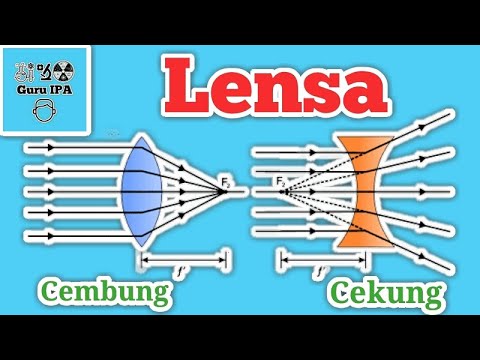
Lensa Cekung dan Lensa Cembung

Pemantulan dan Pembiasan Cahaya dengan KIT OPTIK
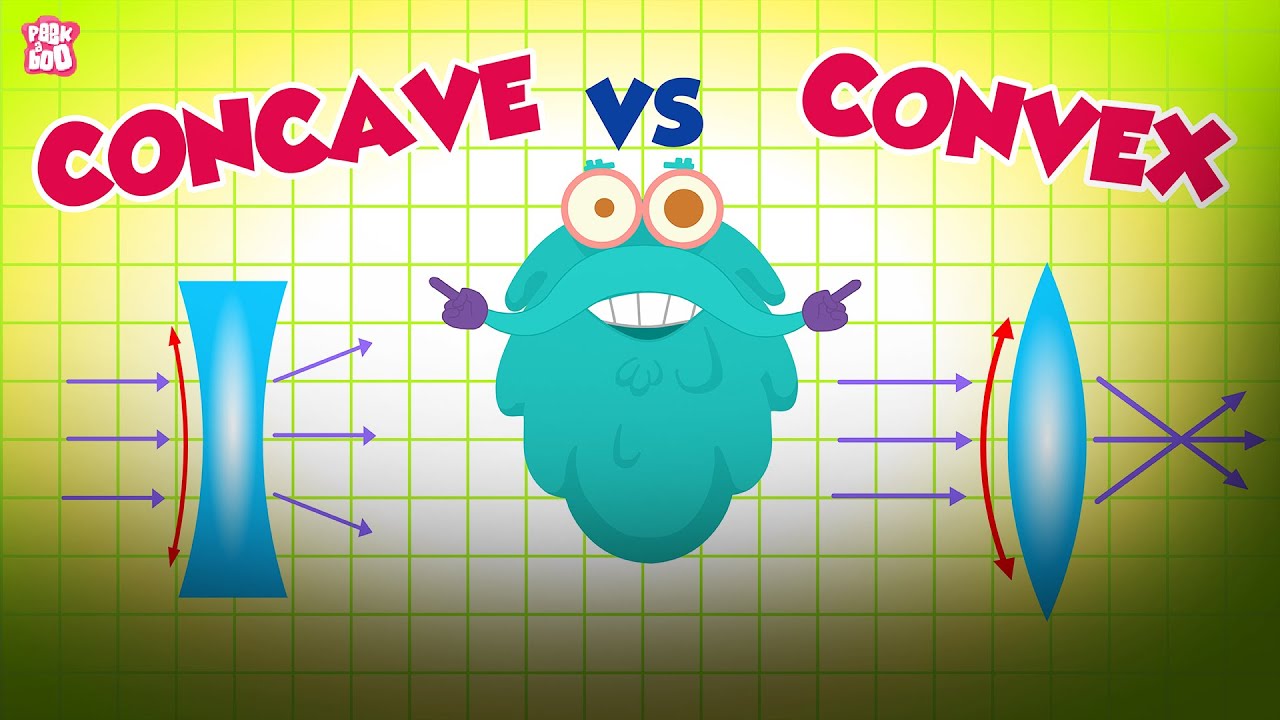
Why Does Light Bend? | Concave & Convex Lenses | The Dr Binocs Show | Peekaboo Kidz
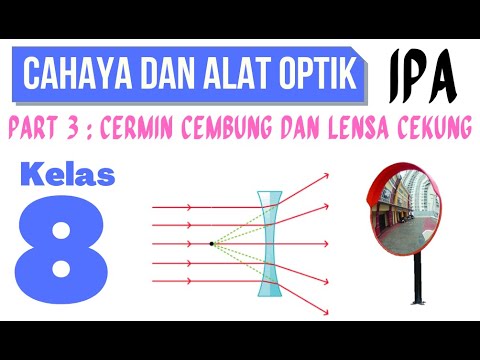
CAHAYA DAN ALAT OPTIK (PART 3) : CERMIN CEMBUNG DAN LENSA CEKUNG IPA KELAS 8 SMP

Alat Optik • Part 1: Mata, Gangguan Penglihatan Miopi Hipermetropi, & Kacamata
5.0 / 5 (0 votes)

