Linguagem C - Começando do absoluto zero - gratuito (2022)
Summary
TLDRIn this course introduction, Professor Pietro Martins presents a comprehensive roadmap for beginners in programming using the C language. He emphasizes developing logical thinking skills, starting from fundamental concepts like development interfaces, debugging, and simple coding exercises. The course progresses through input/output operations, variables, arithmetic operations, conditional statements, loops, arrays, strings, matrices, and custom data types. Advanced topics include functions and multi-file C projects. Pietro encourages interactive learning, problem-solving, and utilizing social media for additional support. The course is structured to gradually build both practical programming skills and a solid understanding of programming logic, making it accessible for learners of all levels.
Takeaways
- 😀 The course is designed for beginners to programming and focuses on developing logical thinking skills.
- 😀 Professor Pietro will guide students through the basics of the C programming language.
- 😀 The course begins with an introduction to the development interface and writing simple programs.
- 😀 Students will learn how to debug programs and identify why code might not work as expected.
- 😀 The course progresses to handling input and output, teaching how programs interact with users.
- 😀 Variables, memory allocation, and arithmetic operations form the foundation of programming in the course.
- 😀 Control flow concepts, including conditional statements (if, else, switch) and logical operators, are covered.
- 😀 Loops and repetition structures (for, while, do-while) are explained, along with control commands like break and continue.
- 😀 Advanced topics include arrays, strings, matrices, structs, and creating user-defined data types in C.
- 😀 The course concludes with functions, multi-file projects, and guidance on seeking help via social media and the instructor's YouTube channel.
Q & A
Who is the instructor of the course and what is the main focus?
-The instructor is Professor Pietro, and the main focus of the course is teaching the basics of programming in C, emphasizing programming logic and problem-solving.
What is the primary goal of the course according to Professor Pietro?
-The primary goal is to develop the logical thinking skills needed for programming, helping students exercise their problem-solving abilities regardless of prior experience.
What is introduced in Lesson 1.1 of the course?
-Lesson 1.1 introduces the development interface, showing the program where students will write their code.
What is the purpose of Lesson 1.2 on debugging?
-Lesson 1.2 teaches how to debug programs, helping students identify errors and understand the execution flow to ensure the program works as intended.
What topics are covered in Lessons 2.1 and 2.2?
-Lesson 2.1 covers outputting data to the user, while Lesson 2.2 focuses on input, teaching how programs receive information entered via the keyboard.
How does the course address variables and arithmetic operations?
-Lesson 3.1 introduces variables and memory allocation, and Lesson 3.2 covers arithmetic operations, providing the mathematical foundation for programming.
What are control flow structures and how are they taught in the course?
-Control flow structures allow programs to make decisions. Lessons 4.1 to 4.3 cover if/else statements, logical operators, and switch/case commands to manage different execution paths.
Which lessons focus on loops and repetition, and what is their importance?
-Lessons 5.1 to 5.4 focus on loops, including for and while commands, and control commands like break and continue. These structures allow repetitive execution of code blocks, essential for efficient programming.
What data structures are introduced in Lessons 6.1 to 8?
-Lesson 6.1 introduces vectors, Lesson 6.2 introduces strings, Lesson 7 covers matrices, and Lesson 8 covers structs and records. These structures help organize and manipulate data efficiently.
How does the course approach functions and final projects?
-Lesson 9.1 teaches functions for code reuse, while Lesson 9.2 guides students through a final project in C with multiple source files, allowing practice with more complex and robust code.
What additional resources does Professor Pietro recommend for further engagement?
-He recommends following his social media and YouTube channel (search for Pietro Martins de Oliveira, Professor Pietro Martins) to interact, ask questions, and engage in discussions beyond the course videos.
Outlines

このセクションは有料ユーザー限定です。 アクセスするには、アップグレードをお願いします。
今すぐアップグレードMindmap

このセクションは有料ユーザー限定です。 アクセスするには、アップグレードをお願いします。
今すぐアップグレードKeywords

このセクションは有料ユーザー限定です。 アクセスするには、アップグレードをお願いします。
今すぐアップグレードHighlights

このセクションは有料ユーザー限定です。 アクセスするには、アップグレードをお願いします。
今すぐアップグレードTranscripts

このセクションは有料ユーザー限定です。 アクセスするには、アップグレードをお願いします。
今すぐアップグレード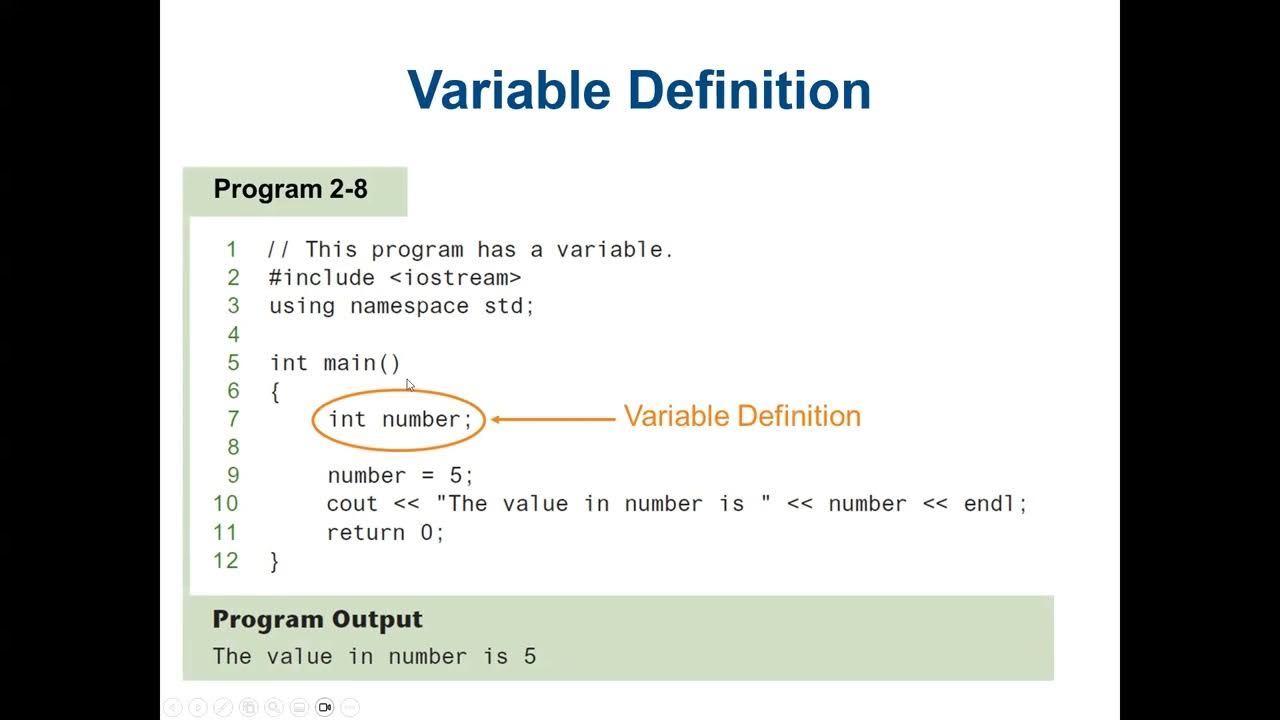

5.0 / 5 (0 votes)

